While e in terms of character arcs and heartfelt moments, a number of its jokes and themes feel outdated today. Casual misogyny, homophobia, and gender stereotypes were often played for laughs in ways that now feel uncomfortable. This list focuses specifically on full episodes where those elements are central to the story, rather than just isolated jokes.
Scrubs Season 1, Episode 12 “My Blind Date”
In “My Blind Date,” J.D. becomes fixated on the idea of dating a woman he’s never seen, as she’s temporarily stuck inside an MRI machine. The episode revolves around his internal debate over whether to pursue the relationship without knowing what she looks like, creating a storyline built on curiosity and insecurity.
20 Reasons JD From Scrubs Was The Least Likable Character
JD’s worst Scrubs moments reveal selfishness, betrayal, and tone-deaf humor, proving he’s far less lovable than the show wants you to believe.
Ultimately, J.D. decides to ask her out regardless, suggesting some level of personal growth. However, much of the episode’s humor hinges on his repeated concern that she might be “an ugo,” with conversations that reduce her worth to physical appearance.
While framed as comedic indecision, these moments come across as shallow and uncomfortable today. The narrative leans heavily on outdated ideas about attraction, where a woman’s appearance is more valuable than her personality It makes the episode feel mean-spirited rather than insightful.
Scrubs Season 3, Episode 1 “My American Girl”
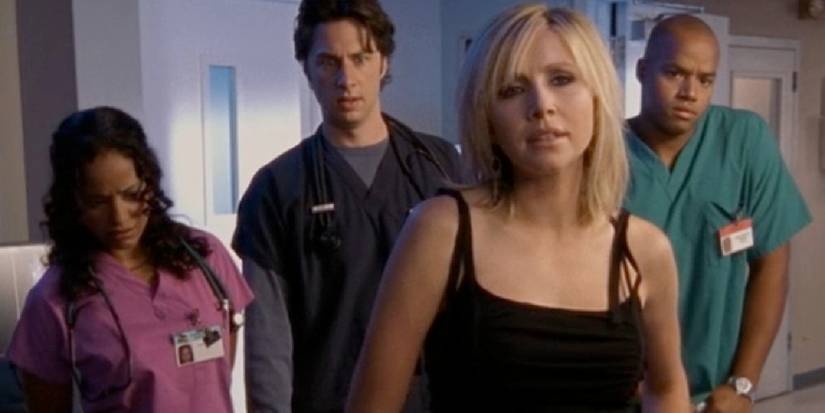
“My American Girl” focuses on Elliot Reid as she attempts to reinvent herself following a period of self-doubt. The episode presents her transformation into a more confident doctor. Sadly, it frames this growth almost entirely through a physical makeover.
Elliot’s newfound assertiveness is tied closely to her appearance, with other characters reacting more positively to her once she becomes more conventionally attractive. While intended as an empowering arc, the execution feels incredibly reductive by modern standards. It reinforces the idea that a woman’s value increases when she aligns with traditional beauty standards.
Worse still, it’s clearly filtered through a male perspective. Instead of celebrating Elliot’s professional competence, the story emphasizes her looks, undermining the message it tries to convey and making the character’s development feel superficial and dated.
Scrubs Season 5, Episode 1 “My Intern’s Eyes”
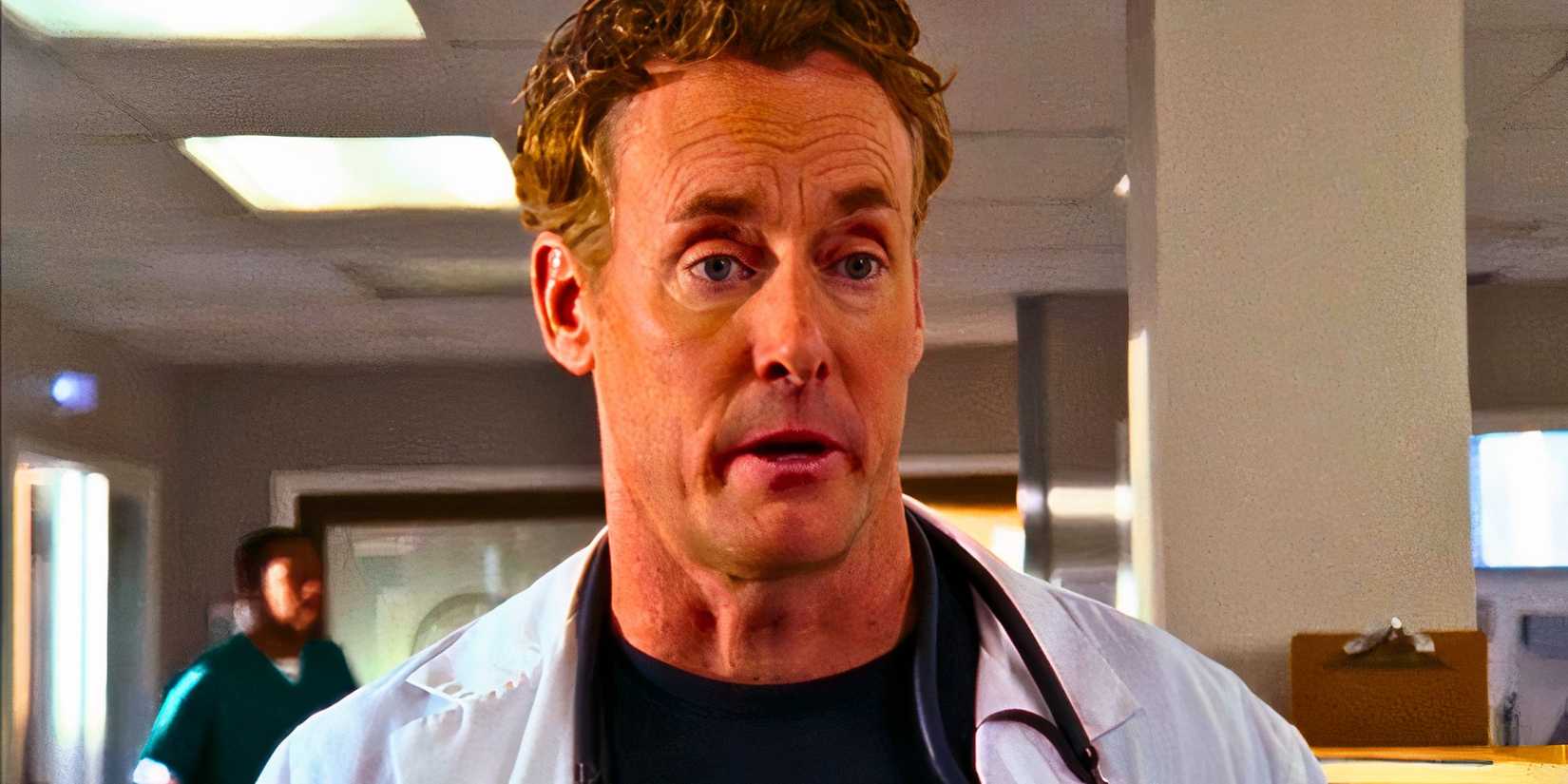
In “My Intern’s Eyes,” multiple storylines intersect, including Turk secretly giving Carla birth control pills to prevent pregnancy, despite them actively trying to conceive. Meanwhile, Dr. Cox introduces “man cards” to police J.D.’s behavior. Both plots are played for laughs but land very differently today.
Turk’s actions undermine Carla’s bodily autonomy in a way that feels deeply uncomfortable rather than comedic. At the same time, the “man card” concept reinforces rigid and outdated ideas about masculinity, using femininity as an insult. This is a major running joke in Scrubs, but the Man Cards addition exemplifies the issues.
It reflects a broader trend of early-2000s humor that equates manliness with worth, while dismissing anything perceived as feminine. These make “My Intern’s Eyes” one of the show’s most dated entries.
Scrubs Season 3, Episode 2 “My Journey”
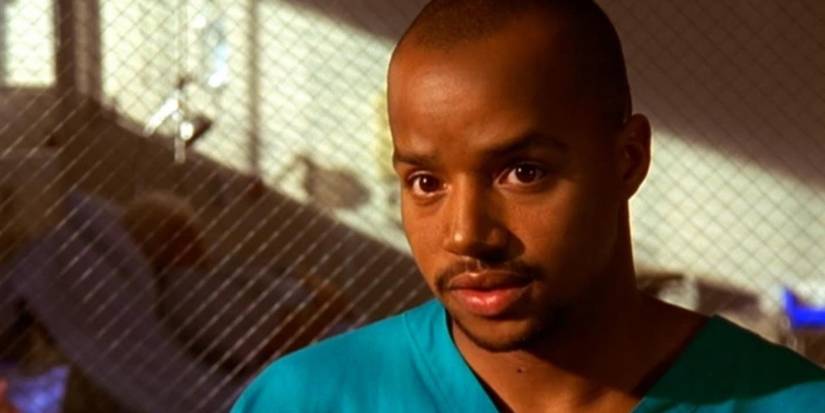
“My Journey” follows Turk as he treats a patient whose sexuality challenges his personal biases. Throughout the episode, Turk displays open discomfort and makes several insensitive remarks, initially failing to see any issue with his behavior. While the narrative ultimately pushes him toward growth, much of the humor relies on his homophobia being played as a character quirk.
Additionally, the episode continues the show’s recurring jokes about J.D. and Turk being mistaken for a couple, with both characters reacting in exaggerated fear. Even at the time, these jokes felt overused, but today they come across as particularly dated.
Although the episode attempts to address prejudice, its reliance on stereotypes and discomfort-based humor undermines its message. It claims to be challenging homophobia, while still making gay panic jokes. It’s one of the more difficult episodes to revisit.
Scrubs Season 3, Episode 11 “My Clean Break”
“My Clean Break” follows J.D. dealing with relationship fallout while Elliot Reid faces scrutiny from those around her. The episode mixes emotional beats with the show’s usual comedic tangents. One major strand focuses on Elliot’s appearance and multiple throwaway jokes from other characters.
What stands out today is how frequently Elliot’s looks are picked apart, often played for easy laughs rather than meaningful character insight. This feels incredibly dismissive and inappropriate with modern sensibilities regarding women in the workplace. The episode also includes a pair of particularly uncomfortable gay jokes.
One from Dr. Cox expressing concern about his son’s sexuality, and another suggesting J.D. has a boyfriend as a punchline. Unlike other moments in the series, these jokes don’t attempt satire or commentary. Instead, they rely on the assumption that being gay is inherently humorous, which feels especially dated and unnecessarily hurtful now.
Scrubs Season 2, Episode 22 “My Dream Job”
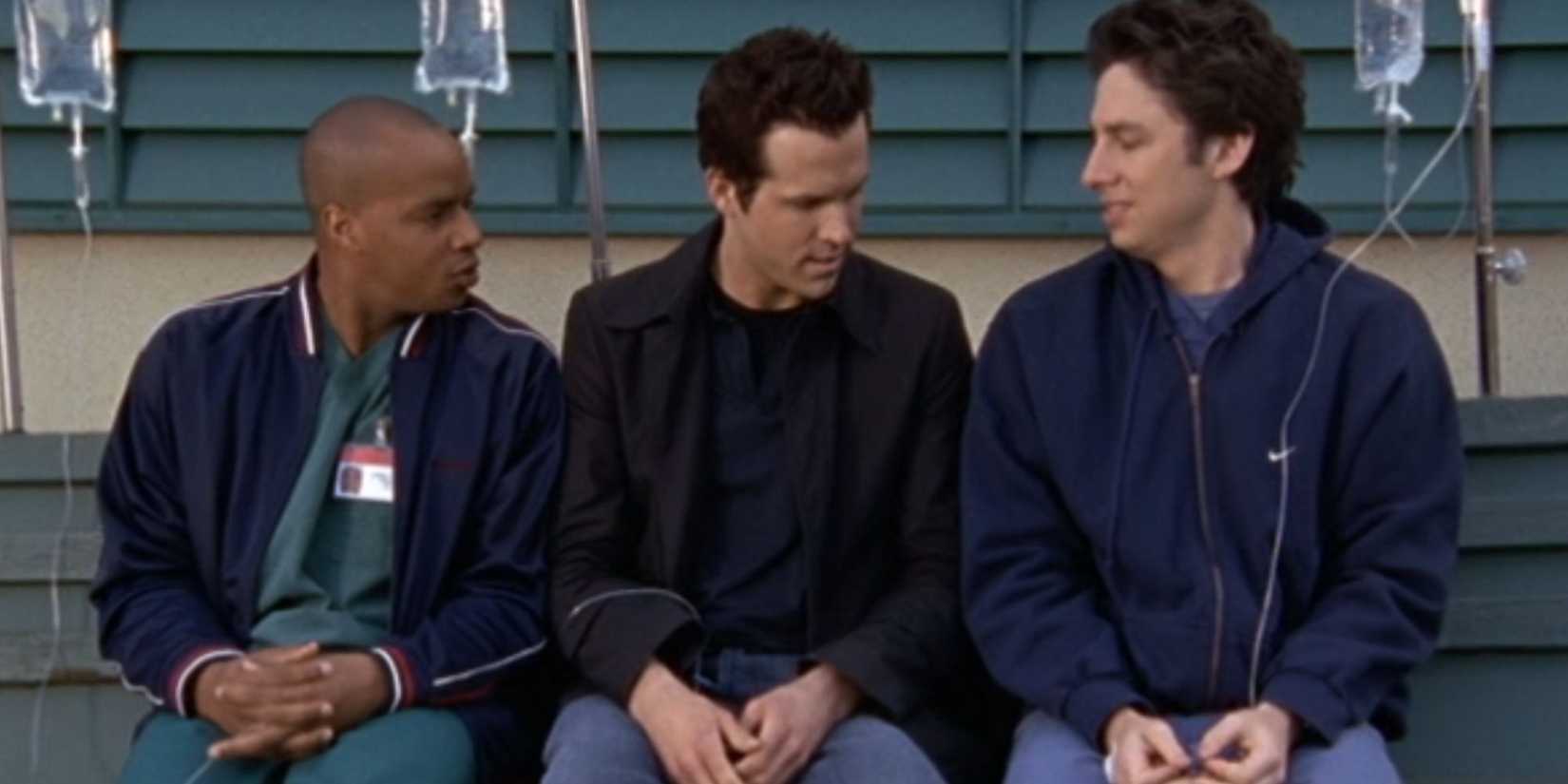
In “My Dream Job,” J.D. and Turk’s old fraternity friend comes to town, instigating a night of drinking that causes problems for the group. It’s mentioned that Spence is in town because their frat brothers are getting married to each other. Rather than treating this revelation as normal, J.D. and Turk react with visible discomfort.
They sigh and cringe whenever the couple’s relationship is mentioned. The humor is built almost entirely around their unease, framing the situation as awkward or strange.
From a modern perspective, this reaction feels regressive, reinforcing the idea that same-sex relationships are something to be tolerated at best and mocked at worst. Even by early-2000s standards, the jokes feel lazy, and today they stand out as an example of how casually dismissive attitudes were normalized in Scrubs.
Scrubs Season 4, Episode 17 “My Life In Four Cameras”
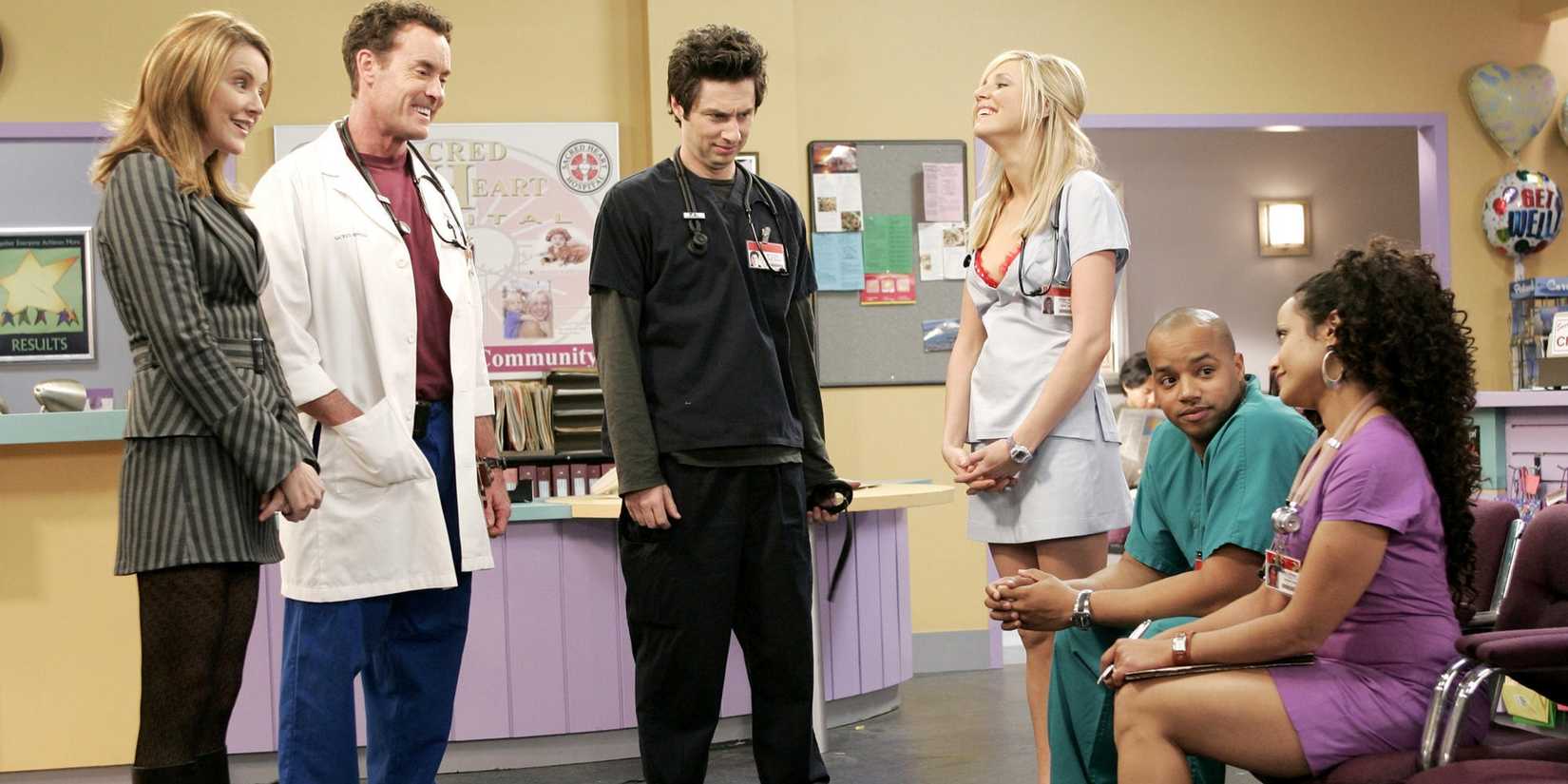
“My Life in Four Cameras” is an experimental episode of Scrubs that imagines the characters existing within a traditional multi-camera sitcom format. It’s complete with a laugh track and exaggerated performances. J.D. initially embraces the simplicity and upbeat tone of this imagined world, but the illusion eventually begins to crack.
The concept is clearly intended as a meta-commentary on sitcom conventions. It contrasts Scrubs’ usual single-camera style with a more artificial format. However, the execution doesn’t quite land. The jokes feel broad and predictable, and the satire lacks the sharpness needed to fully critique the style it imitates.
While not offensive in the same way as other entries on this list, the episode has aged poorly because its novelty has worn off. Without stronger humor or insight, it feels more like a gimmick than a meaningful or entertaining experiment.
Scrubs Season 7, Episode 11 “My Princess”
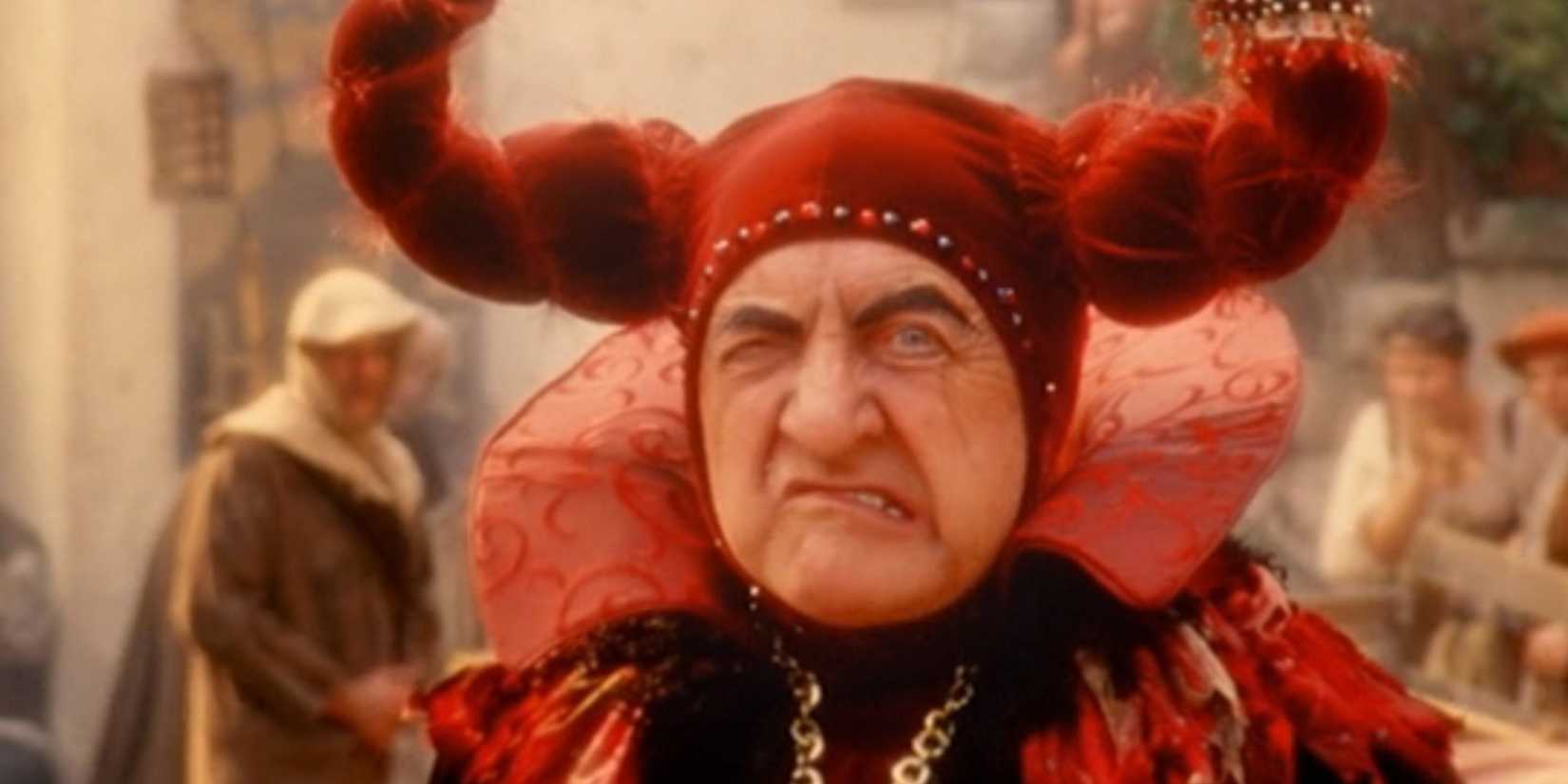
“My Princess” presents a fantasy-style story in which Dr. Cox tells his son a medieval fairy tale featuring reimagined versions of the Sacred Heart staff. J.D. becomes an awkward hero, while other characters take on exaggerated archetypal roles in a stylized setting.
Produced during the writers’ strike, the episode leans heavily on its gimmick, prioritizing spectacle over substance. While Scrubs often used fantasy sequences effectively, this installment stretches the concept across an entire episode without enough strong material to support it. The humor feels forced, and the story lacks the emotional grounding that typically balances the show’s sillier elements.
Rather than feeling inventive, it comes across as overindulgent and unfocused. Over time, what might have once seemed quirky now feels more irritating than entertaining, making it one of the weaker and more dated episodes in Scrubs history.
Scrubs Season 5, Episode 23 “My Urologist”
In “My Urologist,” J.D. befriends a confident new doctor while also navigating his ongoing romantic struggles. One of the episode’s central gags involves J.D.’s inability to notice women wearing wedding rings, effectively filtering out anyone he perceives as unavailable. This leads directly into the introduction of a new potential love interest.
While played as a harmless quirk, the joke reflects a broader issue with the show’s perspective on relationships and women. Women are often framed primarily in terms of their availability to J.D., reducing them to romantic or sexual prospects rather than fully realized individuals.
The idea that unavailable women are “invisible” reinforces a narrow and male-centric worldview that the only value women have is sex. Compounding the issue, the episode doesn’t meaningfully challenge this behavior, instead using it as a comedic device to introduce a new love interest, literally rewarding J.D.’s sexist perspective.
The Blackface Episodes
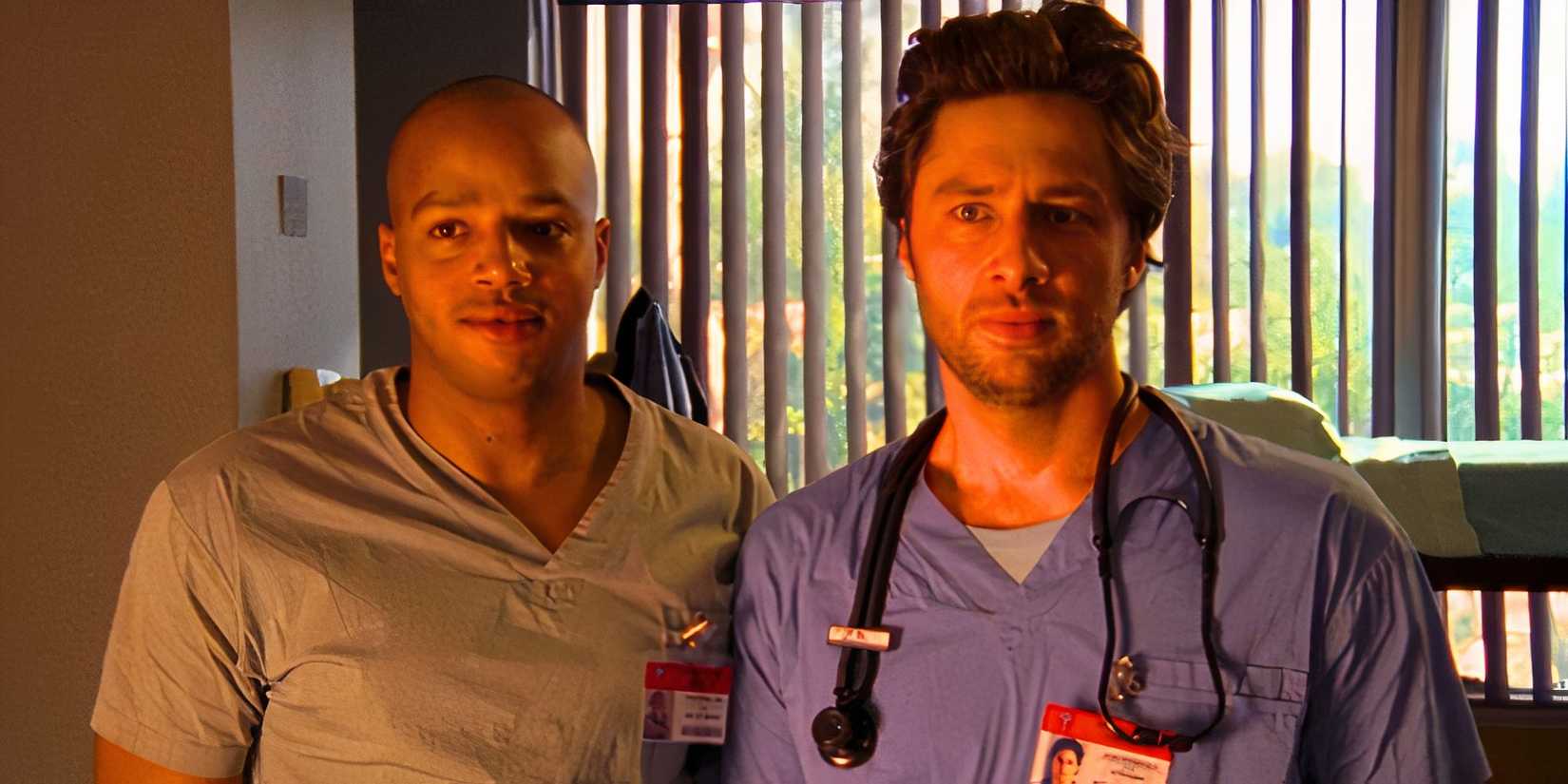
Across three Scrubs episodes (“My Fifteen Seconds,” “My Jiggly Ball,” and “My Chopped Liver”), fantasy sequences feature characters briefly appearing in blackface as part of visual gags. These moments were later removed from streaming versions of the show in the wake of the Black Lives Matter movement.
Even within the context of the show’s surreal humor, these scenes are deeply uncomfortable to revisit. Blackface carries a long and painful history rooted in racism and caricature, and its use (even in fleeting comedic cutaways) feels jarring and inappropriate. What makes these moments particularly frustrating is that Scrubs specifically criticized blackface in earlier episodes.
Including it later undermines that awareness and highlights a disconnect in the show’s approach. For a show centered around an interracial friendship, it’s preposterous that anybody ever thought this was appropriate in the 2000s. It undermines J.D. and Turk’s relationship and dates Scrubs horribly.
- Release Date
-
2001 – 2010-00-00
- Showrunner
-
Bill Lawrence
- Directors
-
Michael Spiller, Chris Koch, Ken Whittingham, Adam Bernstein, Gail Mancuso, Marc Buckland, John Inwood, John Putch, Will Mackenzie, Victor Nelli Jr., Craig Zisk, Lawrence Trilling, Linda Mendoza, Michael McDonald, John Michel, Rick Blue, Richard Alexander Wells, Henry Chan, Joanna Kerns, Mark Stegemann, Matthew Diamond, Peter Lauer, Elodie Keene, Jason Ensler
- Writers
-
Mike Schwartz, Gabrielle Allan, Bill Callahan, Matt Tarses, Kevin Biegel, Aseem Batra, Tad Quill, Clarence Livingston, Andy Schwartz, Dave Tennant, Sean Russell, Ryan Levin, Danny Rubin, Jonathan Groff, Robert Lopez, Stephen Cragg, David Feinberg, Jeff Marx, Justin Spitzer, Rich Eustis, Steven Cragg, Lon Zimmet, Mark Schwartz, Devin O. Mahoney
-
 Donald Faison
Christopher Turk
-
Zach Braff
John ‘J.D.’ Dorian