

The Bifrost Sword
Thor
Heimdall’s sword in the Thor films is one of the MCU’s most understated power objects. Referred to as Hofund in Norse mythology, its mythological roots are clear, functioning primarily as the key that activates the Bifrost.
Unlike Thor’s hammer, Mjölnir, the sword shows no signs of sentience or selective loyalty. It doesn’t determine worthiness. Instead, it’s treated as a tool, albeit an incredibly powerful one. That distinction becomes especially apparent when Heimdall deliberately removes the sword in Thor: Ragnarok to prevent enemies like Hela from accessing the Bifrost, rather than leaving it behind as a safeguard.
Still, the sword isn’t just a cosmic key. Heimdall wields it with lethal precision across multiple MCU appearances, proving it’s just as effective in combat as it is in transportation. That dual function, paired with Heimdall’s watchful presence, gives the weapon a quiet but undeniable cool factor.
Michonne’s Katana
The Walking Dead
Michonne’s katana in The Walking Dead is a defining piece of character storytelling. From her very first appearance, the blade signals precision, control, and survival in a world ruled by chaos. While most survivors rely on guns, Michonne’s choice of a katana sets her apart instantly, giving her a mythic, almost samurai-like presence that feels both grounded and larger-than-life.
Season after season, the katana remains her signature, used with unmatched efficiency against walkers and human threats alike. Michonne, silhouetted with her sword and flanked by chained walkers, was one of the show’s most enduring images until her exit in The Walking Dead season 10. In a series full of weapons, Michonne’s katana stands alone as a symbol of strength, solitude, and mastery.
King Leonidas’ Sword
300
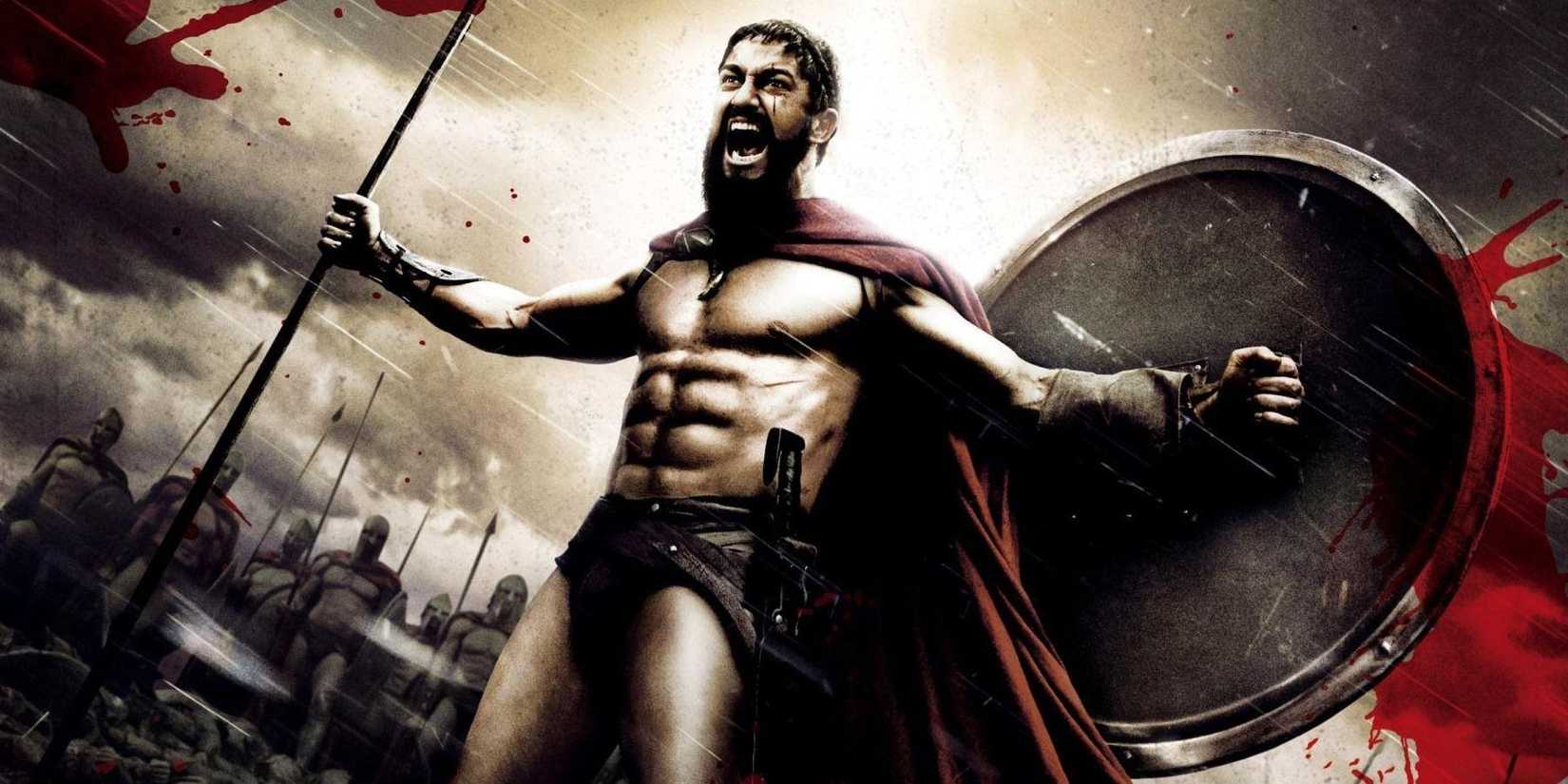
In 300, King Leonidas’ sword is a brutally grounded weapon: short, efficient, and perfectly suited to the tight, disciplined fighting style of the Spartans. In a film defined by stylization and slow-motion combat, the sword becomes an extension of Leonidas himself, delivering precise, devastating strikes in carefully choreographed bursts of violence.
Wielded by King Leonidas during one of the most famous last stands in cinematic history in the 300 epic final battle, the blade is tied directly to themes of sacrifice, defiance, and warrior pride. The combination of shield, spear, and sword in rhythmic combat helped define the film’s aesthetic. Leonidas’ sword isn’t magical, but it feels legendary because of the man behind it.
Geralt’s Steel Sword
The Witcher
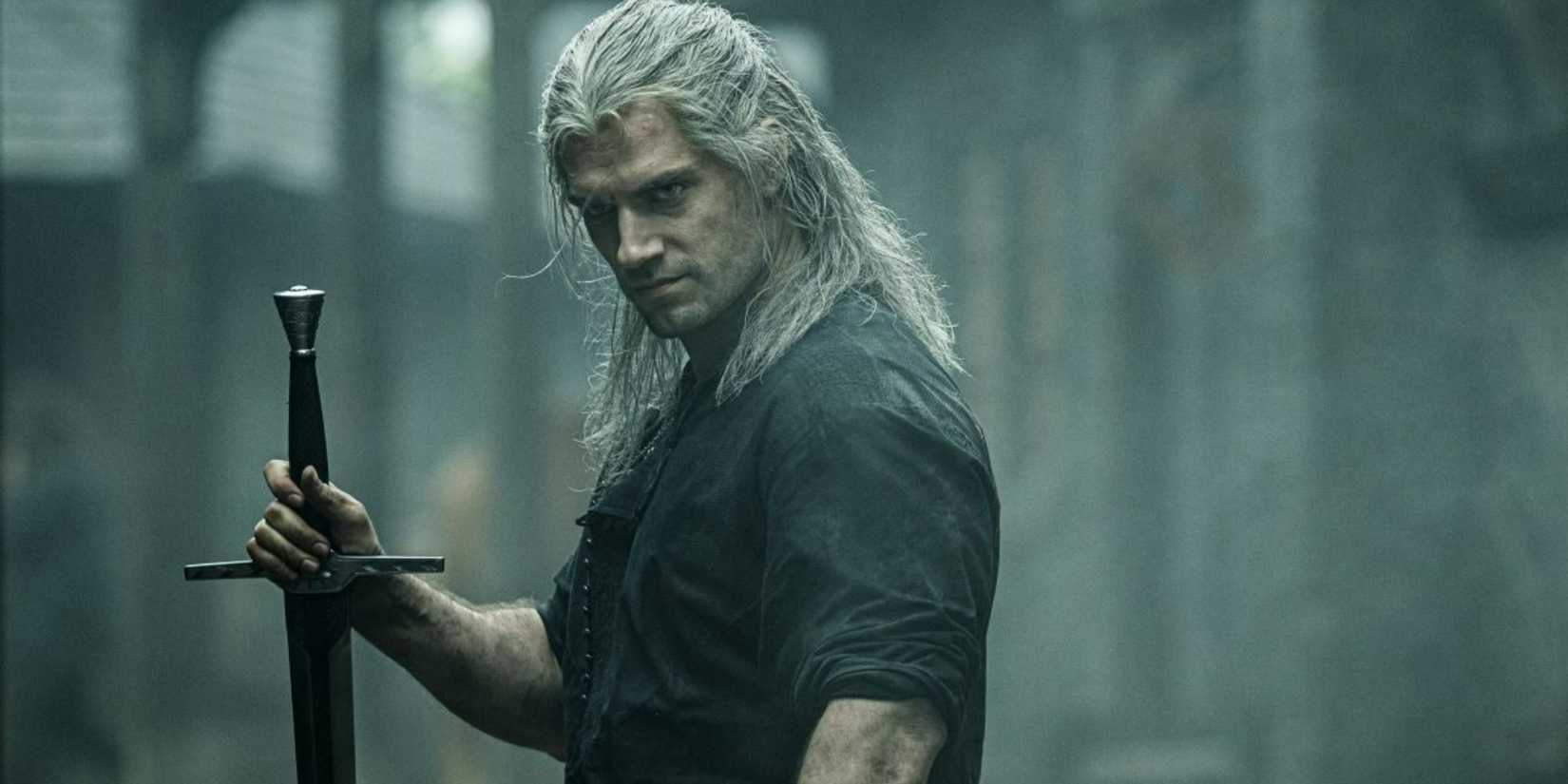
Unlike Geralt’s silver blade, which is reserved for monsters, the steel sword is what he uses against humans, and that distinction adds weight to every fight in The Witcher. These are people he’s cutting down, often in messy, morally gray situations.
Geralt’s fighting style in The Witcher is fast, fluid, and brutally efficient, with long, unbroken takes that showcase precise choreography. The Butcher of Blaviken fight alone turned the steel sword into an instant signature, blending elegance with sheer lethality.
It also reinforces Geralt’s identity. Carrying two swords is iconic on its own, but the steel blade grounds Geralt in the human world he never fully belongs to. It’s practical, deadly, and constant — just like him.
Atlantean Sword
Conan The Barbarian
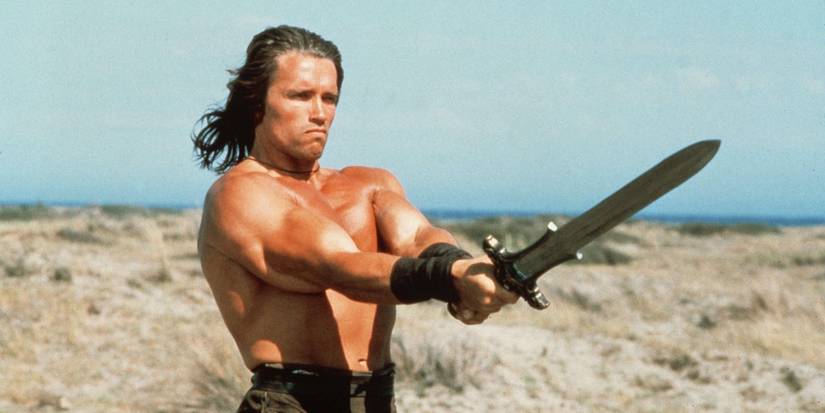
The Atlantean Sword in Arnold Schwarzenegger’s Conan the Barbarian is pure myth made metal. It’s not just a weapon Conan finds; it feels like something ancient choosing him. Discovered in a forgotten tomb, the sword carries an immediate sense of history and power, reinforced by its distinctive, almost otherworldly design that sets it apart from standard fantasy blades.
Once he claims it, the sword becomes an extension of his raw strength and unstoppable presence. The broad blade and intricate hilt give it a legendary silhouette, while its repeated use in brutal, high-stakes battles cements its status. It doesn’t need magic spells or lore dumps; it feels powerful simply because Conan wields it.
Green Destiny
Crouching Tiger, Hidden Dragon
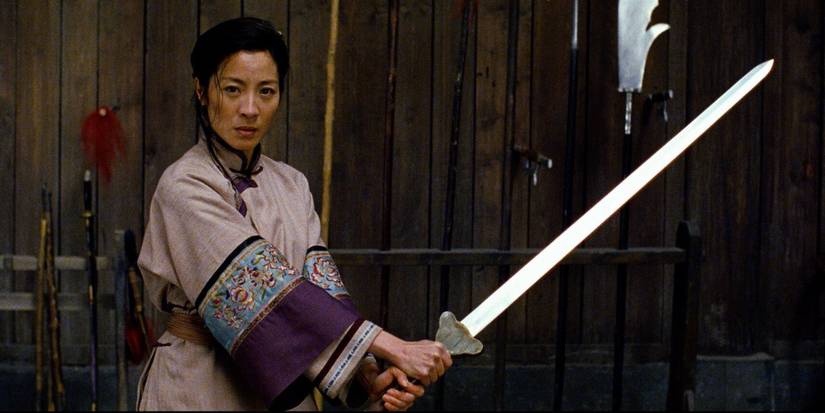
Green Destiny in Crouching Tiger, Hidden Dragon is a symbol of mastery, desire, and restraint. Said to be impossibly sharp and perfectly balanced, it represents the peak of martial skill, which is why every character who encounters it either reveres it or covets it.
The sword’s theft sets everything in motion, but more importantly, it becomes a reflection of the characters themselves. For Li Mu Bai, it’s a burden he’s ready to let go of. For Jen, it’s power she’s desperate to claim before she’s ready to wield it.
Green Destiny stands out in the film’s breathtaking fight choreography, slicing effortlessly through weapons and defenses alike. In a world where emotion and movement are intertwined, the Green Destiny feels less like an object and more like a catalyst for everything the characters can’t quite control.
The Sword Of Gryffindor
Harry Potter
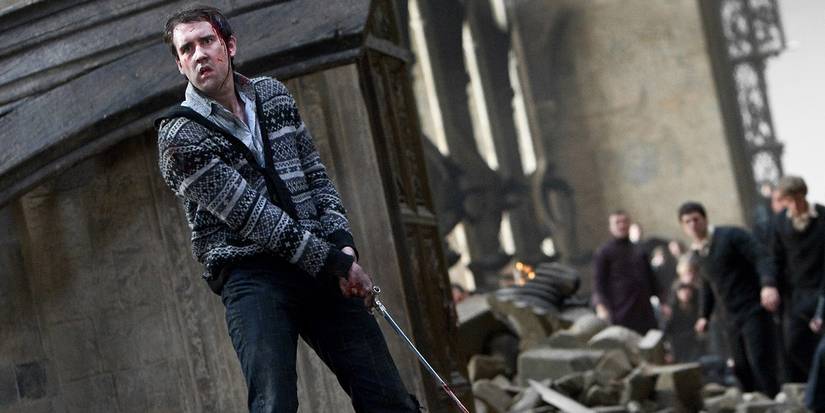
The Sword of Gryffindor in the Harry Potter film series stands out because it feels alive with history and purpose. Originally, the sword was forged by goblins for Godric Gryffindor, so it carries the legacy of one of Hogwarts’ founders, but its real power lies in who can wield it.
Rather than belonging to a single owner, the Sword of Gryffindor presents itself to those who embody true Gryffindor traits — bravery, nerve, and chivalry — often appearing through the Sorting Hat at pivotal moments. But its magic goes even further.
The blade absorbs what makes it stronger, most notably when Harry Potter uses it to kill the Basilisk in Chamber of Secrets, imbuing it with venom powerful enough to destroy Horcruxes. That evolution pays off when Neville Longbottom uses it to kill Nagini in Deathly Hallows: Part 2, delivering one of the saga’s most triumphant moments.
Longclaw
Game Of Thrones
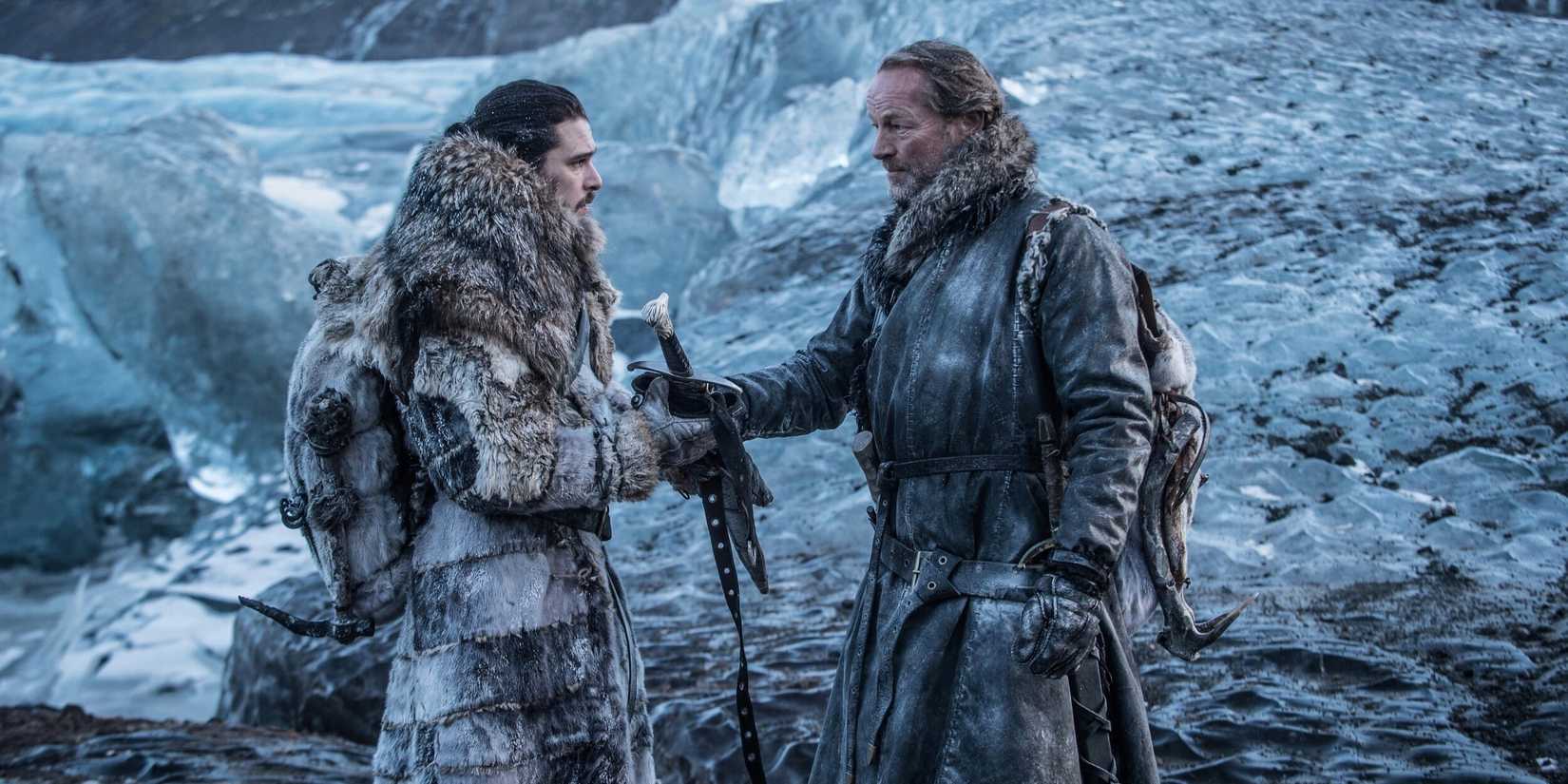
Game of Thrones has many iconic blades — from Arya’s cleverly named Needle to Joffrey’s horrific Widowmaker — but no weapon carries more emotional and narrative weight than Longclaw. A Valyrian steel weapon once belonging to House Mormont, it’s gifted to Jon Snow by Jeor Mormont after Jon saves his life, marking a turning point in Jon’s journey.
The transformation of the hilt from a bear to a direwolf subtly but powerfully aligns the blade with Jon’s identity. From there, Longclaw becomes his constant companion, carried through defining battles against both men and White Walkers alike.
Its Valyrian steel makes it one of the few weapons capable of killing those supernatural threats, elevating the sword from symbolic to essential. Many speculated it would be the weapon used to kill the Night King. Longclaw isn’t just iconic — it’s inseparable from Jon himself.
Excalibur
Excalibur
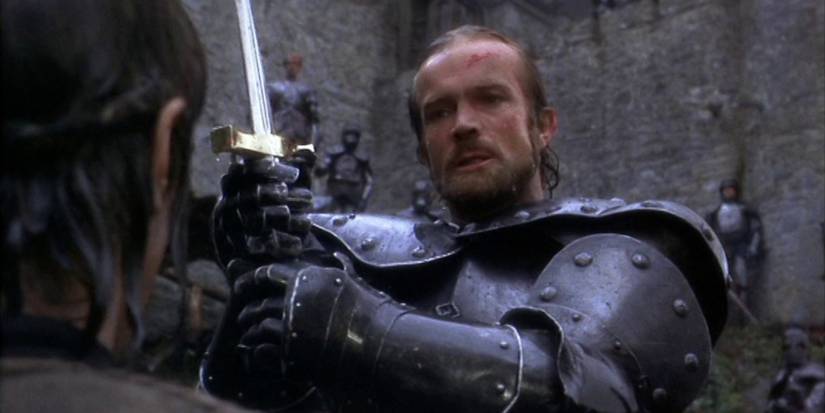
Excalibur is the ultimate symbol of power, legitimacy, and destiny in the legend of King Arthur. Forged with magic and often gifted by mystical forces like the Lady of the Lake, Excalibur grants its wielder unparalleled authority and marks the true king of Britain.
In legend, it’s not just a weapon but a symbol of divine right and honor, often endowed with magical properties like unbreakable strength and a shining aura that strikes fear into enemies. On screen, Excalibur’s visual and narrative power translates beautifully.
Films like Excalibur and countless adaptations portray it as luminous, awe-inspiring, and nearly sentient, emphasizing its role as a marker of destiny. When King Arthur wields it, the sword embodies the ideals of leadership, courage, and justice. Excalibur’s mythic status ensures it remains one of the most iconic and evocative swords in cinematic history.
Andúril
The Lord Of The Rings
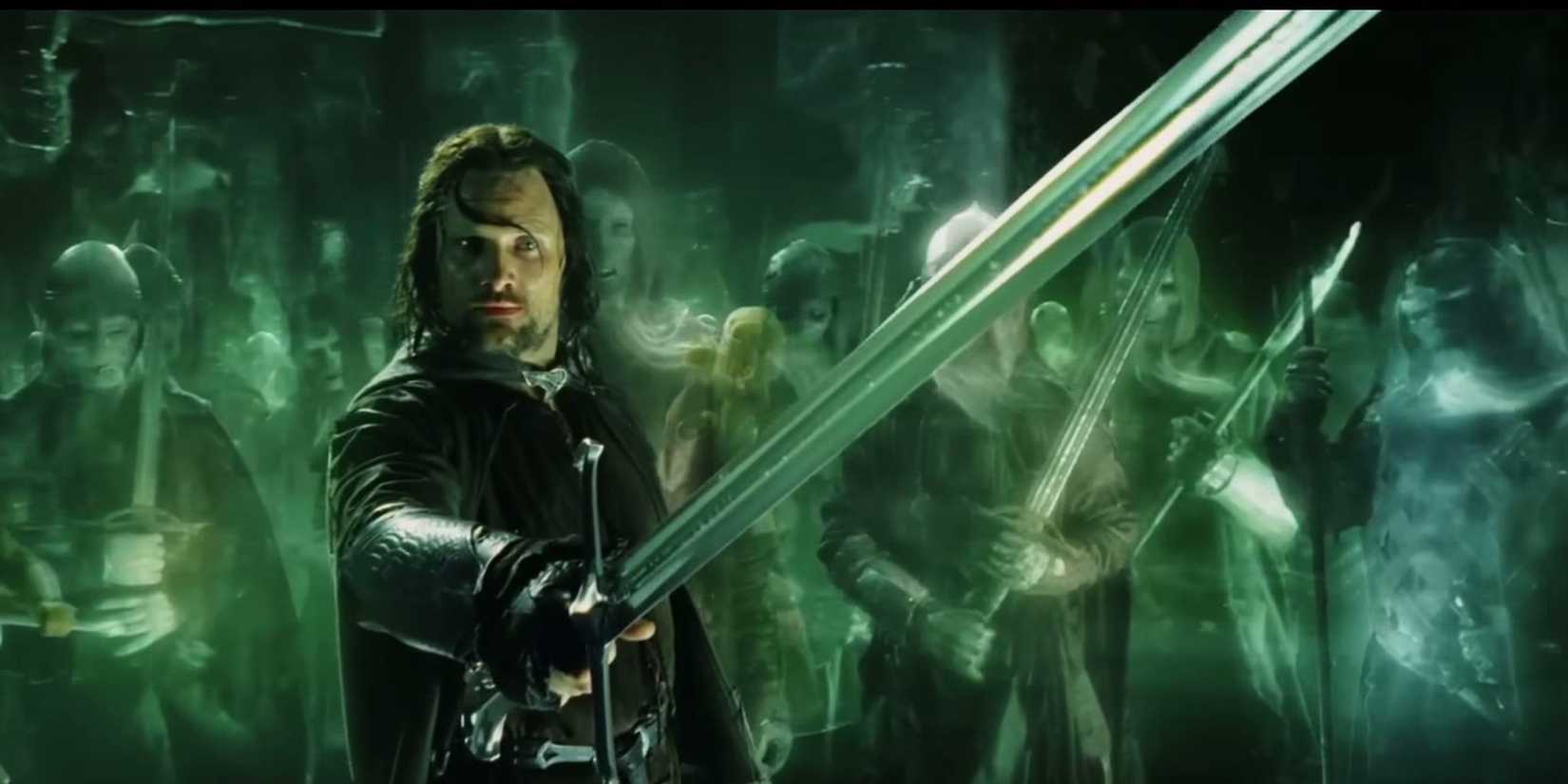
Andúril, reforged from the shards of Narsil, is one of the most iconic swords in The Lord of the Rings. Its power isn’t just physical; it carries the weight of history, lineage, and destiny. Once wielded by Elendil to fight Sauron, the sword is broken at his death, only to be reforged for Aragorn.
In this sense, Andúril embodies the hope of Middle-earth, symbolizing the return of the rightful king and the uniting of men against darkness. On screen, the sword is visually striking, with inscriptions that glow when Sauron’s power rises, signaling its magical and symbolic significance.
In battle, Andúril is deadly, but its true strength lies in its aura of authority and inspiration. When Aragorn wields it, enemies recoil, allies are emboldened, and the audience senses that history itself is in motion. Andúril is the literal and figurative sword of kingship.