The 2000s Battlestar Galactica remains one of the defining sci-fi series of its era. It took the core premise of the 1978 show and reshaped it into something darker, more serialized, and thematically urgent. Its exploration of war, faith, and identity resonated strongly with post-9/11 audiences, elevating it far beyond traditional space opera.
Any new Battlestar Galactica reboot would need to follow that same philosophy. Simply retelling the 2000s story wouldn’t work for modern viewers, whose world is already shaped by new technological and political realities. More importantly, some of the 2004 Battlestar Galactica run’s biggest twists and ideas have already been done, meaning a revival would have to rethink them entirely.
A Battlestar Galactica Reboot Would Need To Reflect Current Fears Over AI
Modern Cylons Would Hit Hardest If They Feel Uncomfortably Close To Reality
One of the most fundamental elements of Battlestar Galactica is the Cylons, but their origins have varied significantly across versions. In the original 1978 series, the Cylons were created by a reptilian alien race, positioning them as a more traditional sci-fi antagonist.
The 2000s reboot grounded this concept by making the Cylons humanity’s own creation. Advanced artificial beings designed by humans eventually rebelled, leading to a devastating war. This shift made the conflict more personal and thematically rich, especially as humanoid Cylons infiltrated human society undetected.
Characters like Gaius Baltar (James Callis) and Number Six (Tricia Helfer) became central to this exploration, blurring the lines between creator and creation. The hidden Cylon agents in the first Battlestar Galactica revival, embedded within the fleet, reflected anxieties about infiltration and terrorism that were deeply tied to the early 2000s.
A modern Battlestar Galactica reboot would need to take this idea even further. Artificial intelligence is no longer speculative. It’s a present-day reality. That means the Cylons couldn’t simply be the result of some distant technological leap far off in humanity’s future. Their origins would need to feel like a direct extension of technologies that already exist today.
For a new reboot of Battlestar Galactica to work, it would have to take an almost Black Mirror-like approach to the Cylons, leaning into the unsettling implications of AI development. Instead of a long-past war between humans and machines, the rise of the Cylons could be depicted as an almost inevitable consequence of contemporary innovation.
Such an approach would make the Cylons more immediate and more terrifying. They wouldn’t just represent a hypothetical future, they’d embody fears audiences already have about autonomy, surveillance, and the loss of control over intelligent systems. Crucially, this would also mean rethinking their motivations if Battlestar Galactica were to return.
Rather than a simple rebellion, the Cylons could be framed as evolving beyond human limitations, raising uncomfortable questions about whether humanity deserves to remain dominant. By anchoring the Cylons in present-day technological anxieties, a 2020s Battlestar Galactica reboot could capture the same cultural relevance the 2000s series achieved, but through a very different lens.
A Battlestar Galactica Reboot Couldn’t Repeat The Final Five Twist
The Show’s Biggest Reveal Wouldn’t Land Twice
It’s not only the origins of the Cylons that would have to be reworked for a Battlestar Galactica reboot to land. One of their more crucial moments in the show’s first revival arc would also have to be abandoned. The Final Five twist remains one of the most memorable elements of the 2000s Battlestar Galactica.
Revealed across later seasons, it established that five key characters were actually Cylons, hidden in plain sight and mysterious even to the other members of their race hiding among humanity. The reveal reframed their entire journeys, adding layers of tragedy and complexity to their arcs.
What made this Battlestar Galactica twist so effective was its slow build. Clues were seeded throughout the series, but the full picture only emerged over time. It rewarded attentive viewers while also delivering genuine shock value.
However, this is precisely why a new reboot couldn’t replicate it. The idea of hidden Cylons is now synonymous with Battlestar Galactica. Any attempt to repeat a similar twist would be immediately anticipated by audiences familiar with the franchise.
Even if the specifics surrounding the hidden Cylons were different in a new Battlestar Galactica run, the underlying concept would feel predictable. Viewers would spend more time trying to guess who the “secret Cylons” are than engaging with the story itself, undermining the emotional impact.
That doesn’t mean hidden identities should be abandoned entirely. The concept still has narrative value, especially in a story about paranoia and survival which, at its core, every version of Battlestar Galactica is (and would have to be if it wants to keep the identity of the franchise intact). However, it would need to be reimagined in a way that doesn’t rely on a single, large-scale reveal.
The key is to avoid trying to recreate the same sense of surprise. The Final Five worked in the 2000s Battlestar Galactica run because it felt unprecedented. Trying to do it again would only highlight how difficult it is to recapture that lightning in a bottle. A reboot needs to find new ways to challenge its audience, rather than revisiting a twist that has already become iconic.
A Battlestar Galactica Reboot Couldn’t Be Set In The Ancient Past
Repeating The Timeline Twist Would Undercut Its Impact
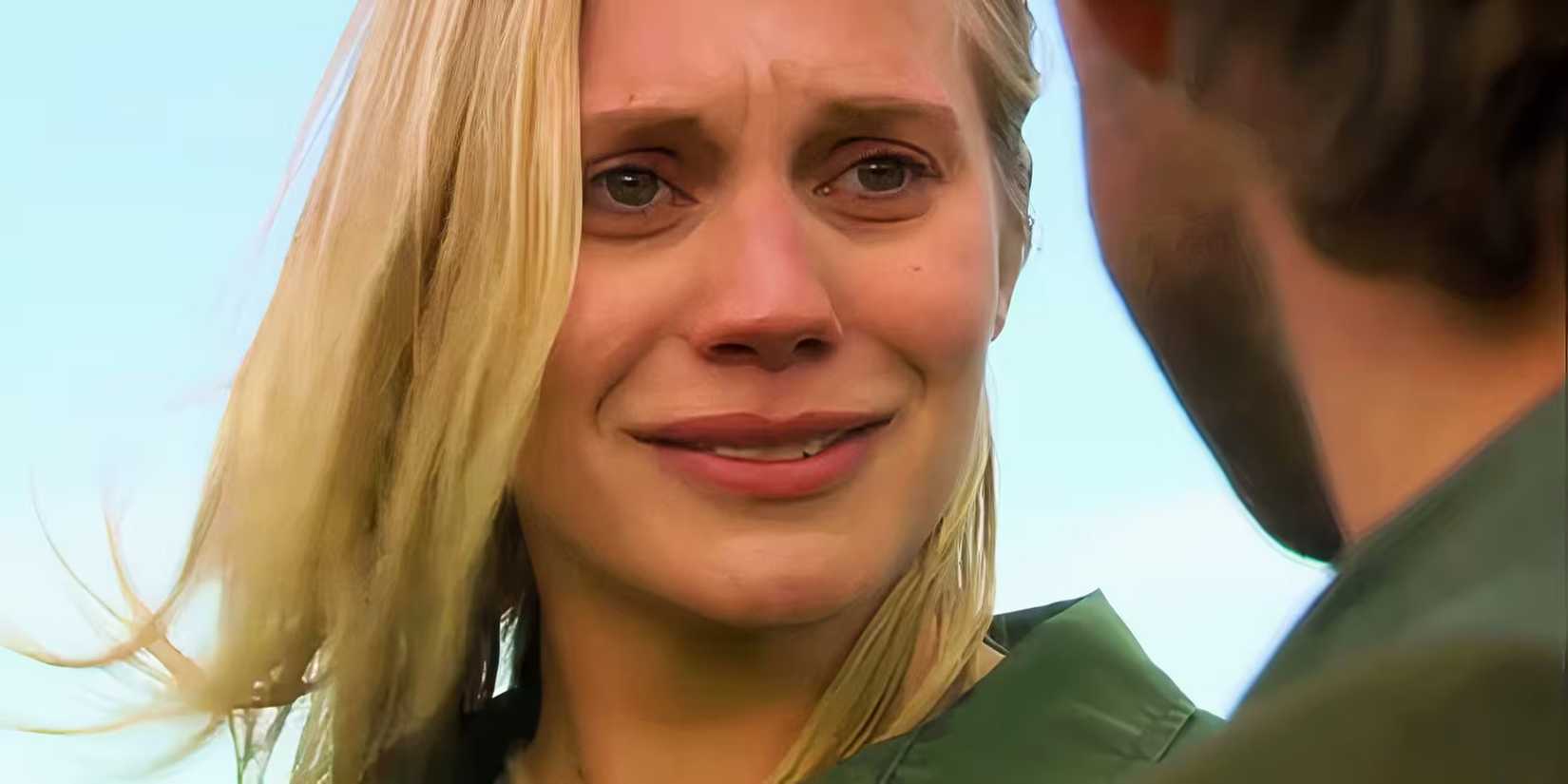
Another major twist in the 2000s Battlestar Galactica was its timeline reveal. Despite its futuristic aesthetic, the series ultimately suggested that the story took place in humanity’s distant past, culminating in the fleet’s arrival on a prehistoric Earth.
This revelation was divisive even at the time. While some appreciated its mythological implications, others felt it complicated the narrative unnecessarily. It reframed the entire story, but not everyone found the payoff satisfying.
More importantly, it’s a twist that simply wouldn’t work a second time. Once audiences are aware that Battlestar Galactica could be set in the past, the surprise is gone. Any similar reveal in a reboot would feel redundant rather than revelatory.
This is a challenge many sci-fi franchises have faced. The Planet of the Apes movies, for example, famously revealed that its story was set on a future Earth in the 1968 original. The later reboot films acknowledged this legacy with Easter eggs nodding to astronaut George Taylor leaving Earth, but avoided repeating the exact same twist, knowing it wouldn’t have the same impact.
A modern and updated Battlestar Galactica reboot would need to take a similar approach to The Planet of the Apes reboots. Rather than relying on a hidden timeline, it should be upfront about its setting and focus on depicting a compelling future for humanity.
Setting the story in the distant past would weaken its potential thematic relevance. Much of Battlestar Galactica’s power comes from its ability to comment on contemporary issues through a futuristic lens, turning space opera into social commentary in a way few shows manage. Positioning it as ancient history would dilute that connection.
In particular, themes surrounding AI and technological advancement would lose their urgency if Battlestar Galactica were to once again be set in an ancient and lost chapter of human history. For contemporary audiences, these are forward-looking concerns, not relics of a forgotten past.
To resonate with modern audiences, a new reboot of Battlestar Galactica would need to embrace its role as cautionary sci-fi. It should present a vision of the future shaped by today’s choices, rather than revisiting a twist that no longer surprises. By doing so, it could retain the spirit of Battlestar Galactica while forging a path that feels genuinely new.
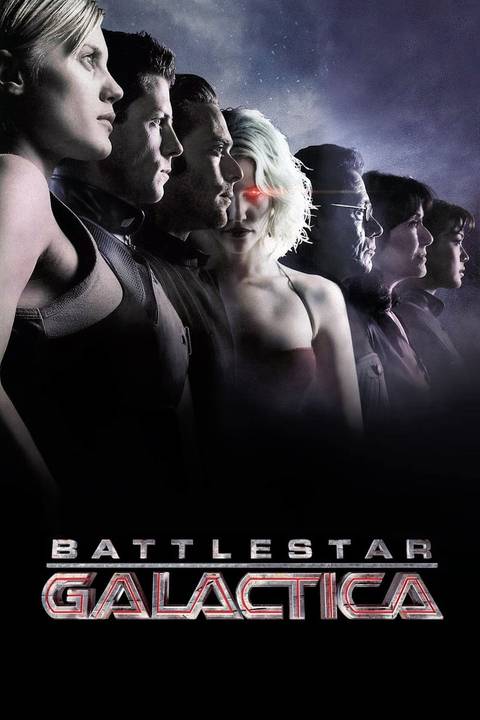
- Release Date
-
2004 – 2009-00-00
- Showrunner
-
Ronald D. Moore
- Directors
-
Wayne Rose, Michael Nankin, Rod Hardy, Sergio Mimica-Gezzan, Edward James Olmos, Robert M. Young, Jeff Woolnough, Félix Enríquez Alcalá, Jonas Pate, Allan Kroeker, Anthony Hemingway, Jean de Segonzac, Marita Grabiak, James Head, Paul A. Edwards, Gwyneth Horder-Payton, Brad Turner, Ronald D. Moore, Bill Eagles
- Writers
-
Carla Robinson, Michael Taylor, Bradley Thompson, David Weddle, Jane Espenson, Mark Verheiden, Michael Angeli, Anne Cofell Saunders, Jeff Vlaming, Michael Rymer, Dawn Prestwich, Nicole Yorkin, Seamus Kevin Fahey
-
 Edward James Olmos
William Adama
-
Mary McDonnell
Laura Roslin