

Comic books had been in existence before Superman kicked the door open for superheroes in 1938, but the character brought them to the forefront of the minds of America’s youth. Before long, the nascent comics industry was turning books out as quick as kids could consume them. The superhero genre dominated until around the end of the Second World War, at which point many characters and books devoted to them folded.
In the absence of superheroes, the other genres Superman and Captain America competed with flourished. The late 1940s saw an explosion in horror, science fiction, romance, western and crime comics, as well as increased scrutiny from parents and politicians. This led to Congressional hearings and book burnings, and eventually the implementation of the Comics Code Authority, or the CCA. The CCA was written in such a prohibitive fashion that many of the burgeoning genres disappeared completely, leading to the return of superhero comics. Now, nearly 70 years later, IDW is looking to reposition the crime genre at the forefront of comics with a new imprint.
Now, nearly 70 years later, IDW is looking to reposition the crime genre at the forefront of comics with a new imprint.
IDW Is One of America’s Biggest Comic Book Publishers
IDW Has Already Published a Diverse Slate of Comics, Making Them Perfect to Bring Back the Crime Genre
IDW has been one of the biggest players on the American comics’ scene for over 20 years. Building their publishing empire around original, franchise-starting properties such as 30 Days of Night as well as licensed titles like Star Trek or Teenage Mutant Ninja Turtles, IDW is the perfect company to help reintroduce the comic book reading public to the crime genre. Crime comics have been on the comeback trail already, thanks to books such as Image’s The Good Asian. IDW is going to build on the foundations laid down by these innovators.
IDW Crime kicks off with three awesome offerings, each going on sale in the months ahead. The first, titled Seven Wives, is a murder mystery set against the backdrop of a fundamentalist religious order. The next book, Killer Influences, looks at the darker aspects of influencer culture. Finally, Fixation turns an eye towards the obsessive nature of fandom. Each of IDW Crime’s initial offerings will be three issues each.
|
A Guide to the First Three IDW Crime Titles |
||
|---|---|---|
|
Title |
Creative Personnel |
On-Sale Date |
|
Seven Wives |
Zoe Tunnell and V Gagnon |
May 20 |
|
Killer Influences |
Joey Esposito and Valeria Burzo |
July 1 |
|
Fixation |
Amy Chase and Savanna Mayer |
September 9 |
Seven Wives Finds a Dark Secret in a Fundamentalist Religious Cult
Writer Zoe Tunnell Did Serious Research Before Writing Seven Wives
Seven Wives is the first iDW Crime title out of the gate. Written by Zoe Tunnell and drawn by V. Gagnon, the book opens with a murder at a compound run by members of the Fundamentalist Church of Jesus Christ of Latter Day Saints. The two detectives assigned to the case quickly discover that all is not well in the compound, leading to the revelation of secrets and affairs.
Tunnell, who made a name for herself creating the webcomic Blade Maidens, will be guiding readers on a three-issue descent into the world of religious fundamentalism. The Fundamentalist LDS Church, popularized on reality shows such as Sister Wives, is at the center of the book. Tunnell, who told ScreenRant that she “was not much of a church kid growing up,” had this to say about prepping for the writing of Seven Wives:
It felt like a story worth telling. Before I officially signed on I did plenty of research, both in specific and with cults in general, and as emotionally draining as that was it really solidified the horrors that go on in these places and SEVEN WIVES could tackle as a series.
It’s always scary when you dip your toe into more real-world subject matter, I think. And while I cannot stress enough that SEVEN WIVES is an entirely fictional story, it is one that I think will resonate with folks and provide a specific perspective on the genre that doesn’t crop up in comics all that often.
To get into the headspace necessary to bring Seven Wives to life, Tunnell immersed herself in documentaries about the subject, as well as reading accounts of survivors.
Tunnell, whose work has also appeared in books such as Marvel Pride and Mighty Morphin Power Rangers, was asked about the resurgence of the crime genre in the comics’ industry. Acknowledging the rich history of crime comics, she had this to say:
I think it’s almost a cyclical thing, y’know? Horror was the same way, it was so huge for decades and then had an ’80s revival, faded, and is now in the middle of a true golden age. I’m sure there’s some very smart analysis to be made about global recessions and rough periods and renewed interest in dark genres like crime or horror but I am not the woman to make it. Either way, I am thrilled to live in a world where something like IDW Crime gets to exist.
Seven Wives promises to be a great first outing for IDW Crime.
A Podcaster Meets a Serial Killer. What Could Go Wrong?
Influencer culture is, for better or for worse, now a part of the fabric of pop culture, and Killer Influences skews this trend, throwing serial killers into the mix. A sharp commentary on the narcissism bred by social media, Killer Influences, written by Joey Esposito and drawn by Valeria Burzo, is the second offering from IDW Crime.
Killer Influences is the story of Melvin, a fledgling serial killer. His killing spree has been going on for months, but he has yet to gain the notoriety he feels entitled to. Melvin meets podcaster Kyle, a true crime devotee who helps him “build his brand.” Soon, events spiral out of control, and it is only a matter of time before Melvin turns on Kylie.
Esposito, who has worked on books such as Batman as well as his own title The Pedestrian, acknowledges how tricky it can be crafting characters like Kyle and Melvin. Speaking with ScreenRant, he had this to say:
We’re lucky because it’s comics, so we have art geniuses like Valeria Burzo and Inaki Azpiazu to bring the performance of the characters to life, much as an actor would on screen, which helps bring them a humanity that lets you recognize them as a person even if they are really a monster.
It is a balancing act for sure, but I also don’t think they have to be particularly likable. Walter White, while not a serial killer, is not a good guy. But you understand him. Part of the magic of the crime genre is forcing the reader to engage with characters who are objectively bad people and confront their own motivations when they find themselves empathizing with them — or at the very least intrigued by their lifestyle — even if you know in your heart they are no good.
And I think in this instance, we’re satirizing those who DO glamorize a killer’s actions — people like Kylie, our protagonist, who knows what her listeners want: the bloody details.
Speaking on the return of the crime genre, Esposito said:
Crime is as much a part of comics history as superheroes, from Jack Cole to Simon and Kirby to Dr. Wertham’s witch-hunt nearly ending them entirely. Yet here we are. Crime is always relevant, always evolving, yet always hits close to home. Crime lets you put people under a microscope and really scrape back the false layers to show who they really are in a crisis.
Indeed, Killer Influences, with its social commentary, is the perfect example of what Esposito was saying.
Your Newest Fixation Has Arrived in This IDW Crime Title
Has Fan Culture Finally Gone too Far?
In Fixation, the third offering from IDW Crime, writer Amy Chase and artist Savanna Mayer look at an issue relevant to comics: the toxic and obsessive nature of fandom. Nerd culture has always had a dark underbelly, be it entitled or overzealous fans, rampant sexism and sexual harassment, as well as gatekeeping. As the culture went mainstream in the 2000s, these tendencies only grew worse, expressed in movements such as “Comicsgate” and the “Restore the SnyderVerse” campaign.
As the culture went mainstream in the 2000s, these tendencies only grew worse, expressed in movements such as “Comicsgate” and the “Restore the SnyderVerse” campaign.
Fixation is set against the backdrop of a reunion for the cast of Blood Mountain, a vampire television show. Fan Taylor wins a trip to the reunion, but soon affairs grow dark as someone turns up dead. Tensions flare as the reunion organizers try to keep the murder a secret, but soon Taylor finds herself descending into a nightmarish world of obsession, where every person, from fans to actors to producers, is a suspect. Can Taylor stay one step ahead of the killer?
Writer Amy Chase is known for her work with publishers such as Mad Cave and Archie Comics, and will help IDW Crime kick off with Fixation. When asked about fandom, and the role it plays in Fixation, she had this to say:
Especially with modern fandoms, there’s this unrealistic idea that the media you consume equates to whether or not you’re a good person. It’s become far more parasocial in younger circles thanks to social media giving instant access to actors, creators, and even other fans. When these franchises become your entire identity (also known as a hyperfixation), you can get fiercely protective and even combative over them. I think that sets a perfect stage for combining it with the crime genre. Fixation is as much a love letter to fangirls as it is an examination of how this kind of emotional investment and entitlement can inspire crimes of passion.
More specifically, Fixation pays tribute to vampire media fandoms before it, notably in the vein (hah) of Buffy, Twilight, and The Vampire Diaries. There’s a very specific time and place these stories were at their zenith, and there’s a lot of preconceived notions about what types of people those fans are. There’s also an undeniable element of cringe (affectionate) that comes with being a passionate fangirl. Ask me how I know!
Reflecting on crime comics, and their rise in popularity, Amy said:
Beyond the flashiness of a murder or the value of a stolen treasure, crime is also a fascinating study in character. We want to know “whodunnit” as much as “how” and “why”. Killers, victims, thieves, and detectives are all such unique variables, you change one thing and the story’s logic takes an entirely new spin. As long as there are rules to break, crime will be a fertile ground for exploring those human extremes.
Amy has also worked on other crime comics, such as Image’s Newburn.
Crime Comics Were Once Very Popular, and They Can Be Again
IDW Has Already Struck Gold With its Horror Imprint
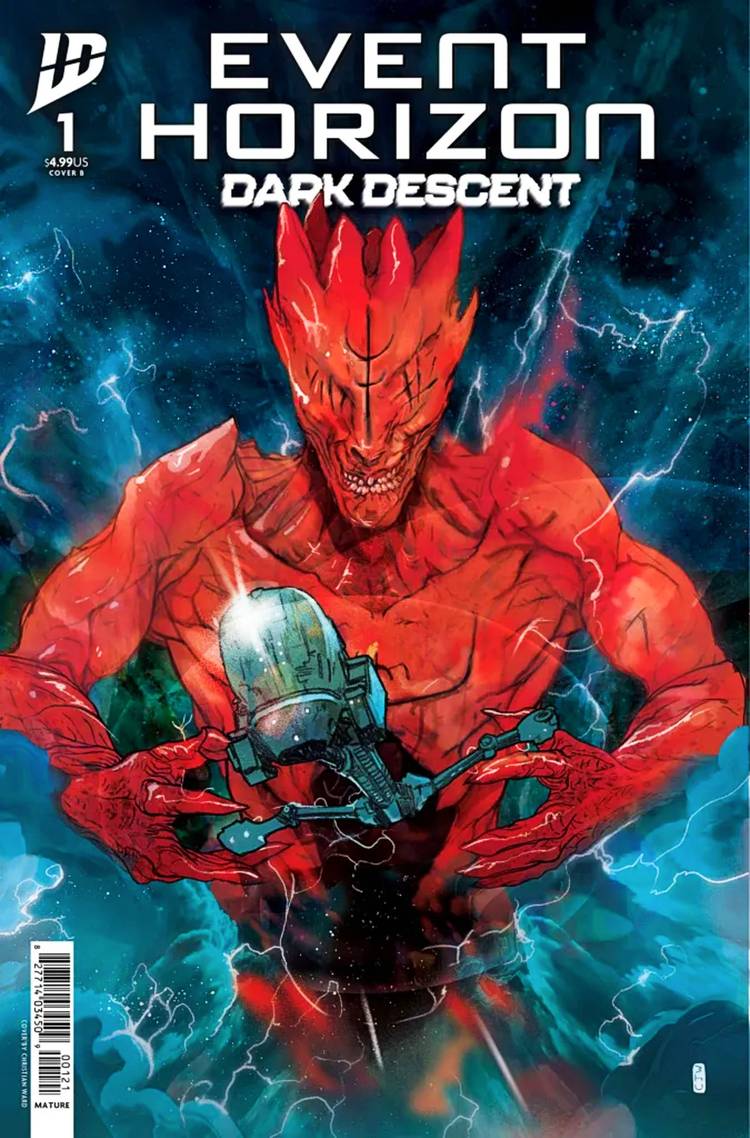
IDW captured the hearts and minds of fans over two decades ago, and today has become one of comics’ biggest publishers. IDW’s other themed imprint, IDW Dark, has become a go-to destination for compelling horror comics, such as the Event Horizon prequels. Horror comics once occupied a vaunted position within comics, and they have successfully returned to greatness. Now the time has come for crime comics to shine, and IDW will be leading the way.