

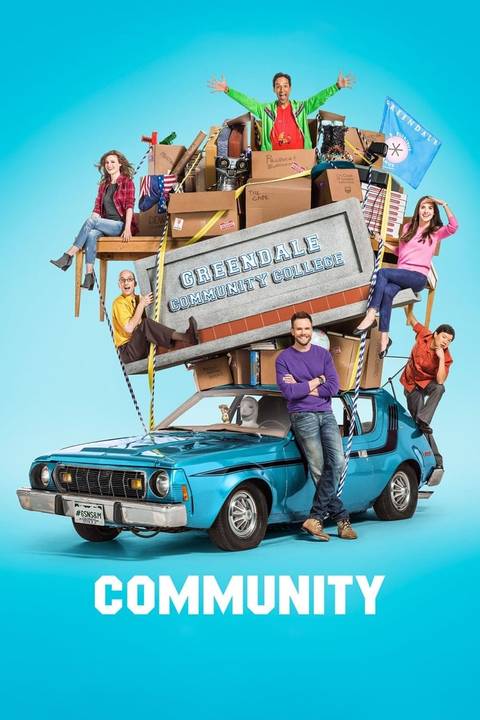
Dan Harmon’s community college comedy was streets ahead of its competitors, and its deft meta-humor was matched only by cult hits like 30 Rock and Arrested Development. While Arrested Development redefined sitcoms with its mockumentary-style storytelling, Community took self-aware comedy even further with a sitcom that seemingly knew it was a sitcom.
Abed often commented on the familiar sitcom tropes that the series was using, and, after a while, even the supporting characters became comfortable referencing their own roles in the show. The result was a series that was at once both ironic and sincere, deconstructing its sitcom premise while also simultaneously functioning as a fun and very funny sitcom.
“Remedial Chaos Theory” Brought Multiverse Theory To The Mainstream
There are plenty of episodes of Community that deserve to be spotlighted for their contributions to TV history, as the show’s ambition allowed what could have been a routine network sitcom to push the boundaries of its format. However, one outing was so notable that its influence now looms large over the entire media landscape.
On October 11, 2011, season 3, episode 4, “Remedial Chaos Theory,” aired for the first time. Effectively another one of Community’s iconic bottle episodes, the outing saw the study group convene for a housewarming party at Troy and Abed’s new shared apartment. There, the group plays Yahtzee.
Jeff uses a die roll to decide who will pick up their pizza delivery from downstairs, and, from there, “Remedial Chaos Theory” splits off into seven different timelines. There are six different versions of events wherein each character leaves, causing unique knock-on events, and a seventh, “Canonical” timeline, where Abed catches the dice before it can land.
On its own, “Remedial Chaos Theory” is a funny experimental episode that manages to get a lot of laughs from its simple premise. Each timeline grows increasingly absurd, surreal, and unlikely, with the “Darkest timeline” even leading to a fire in the apartment and Pierce being shot.
While the episode is a lot of fun, its impact wasn’t immediately noticeable in the context of the larger season. Community season 3 was firing on all cylinders and is still considered the best season of Community by many fans. Indeed, the very next episode, “Horror Fiction in Seven Spooky Steps,” was another anthology outing that split its 21-minute story into seven sub-stories.
However, in the 15 years since its initial release, it has become increasingly clear that “Remedial Chaos Theory” was one of the most important sitcom episodes ever recorded. For many viewers who were used to network sitcoms remaining relatively straightforward in their storytelling, this plot was an early introduction to the concept of multiverses and parallel realities.
Admittedly, Community was not the first show on television to pioneer the concept of a multiverse. Among others, JJ Abrams’ acclaimed sci-fi series Fringe introduced this idea to viewers around the same time with its knotty plots involving intersecting realities. However, Community wasn’t a complex, self-serious sci-fi show, so its multiverse storyline felt fundamentally different.
In fact, “Remedial Chaos Theory” isn’t even listed in a lot of online rundowns of multiverse episodes from major TV shows. This is likely because the episode’s Yahtzee-centric premise was simple enough not to require much in the way of exposition, but its premise still incorporated the butterfly effect and normalized the idea of diverging timelines.
Not content with the acclaim this episode received upon release, Community repeatedly returned to the Darkest Timeline as a running gag, and the storyline set up in “Remedial Chaos Theory” became a recurring subplot throughout the rest of seasons 3 and 4. This further normalized what was once considered a complicated sci-fi plot device, thus changing TV history.

After Community explored the multiverse, all bets were off when it came to mainstream shows tackling knotty, complex concepts like intersecting versions of the same reality. Harmon’s own later hit Rick and Morty often jumped between different versions of reality, while The Big Bang Theory featured an episode with seven different realities resulting from Sheldon’s absence.
On the big screen, 2018’s Spider-Man: Into the Spider-Verse and the MCU made the multiverse a staple of blockbusters, while A24’s breakout indie hit Everything Everywhere All at Once dominated the Oscars in 2023 with its surreal, trippy multiverse story. Deadpool Vs Wolverine borrowed Community’s comedic approach to the theory, as did 2022’s Doctor Strange in the Multiverse of Madness.
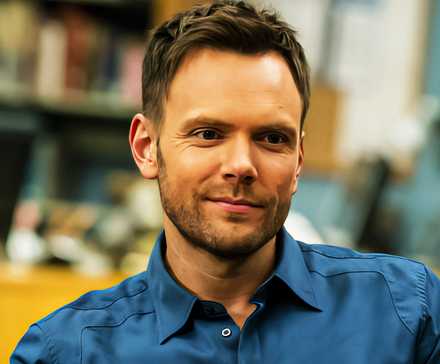
Community’s Worst Season Was So Bad, It Actually Made The Show Better
Community viewers typically agree on which season of the show was the very worst, but when you think about it, season 4 actually made the show better.
These movies and shows ranged in terms of tone, style, and genre, with only one thing in common. This lone link was that, without one iconic episode of Community, there is no knowing how long it would have taken for concept of the multiverse to make its way to the mainstream.
- Release Date
-
2009 – 2015-00-00
- Network
-
NBC, Yahoo! Screen
- Directors
-
Tristram Shapeero, Joe Russo, Anthony Russo, Rob Schrab, Jay Chandrasekhar, Adam Davidson, Justin Lin, Steven K. Tsuchida, Kyle Newacheck, Victor Nelli Jr., Nat Faxon, Michael Patrick Jann, Anthony Hemingway, Ken Whittingham, Steven Sprung, Tricia Brock, Jeff Melman, Gail Mancuso, Duke Johnson, Fred Goss, Bobcat Goldthwait, Richard Ayoade, Seth Gordon, Beth McCarthy-Miller
- Writers
-
Chris McKenna, Hilary Winston, Andrew Guest, Tim Hobert, Karey Dornetto, Stephen Basilone, Emily Cutler, Annie Mebane, Alex Rubens, Tim Saccardo, Paul Isakson, David Seger, Maggie Bandur, Monica Padrick, Matt Murray, Liz Cackowski, Lauren Pomerantz, Dan Guterman, Matt Roller, Ryan Ridley, Carol Kolb, Jon Pollack, Dino Stamatopoulos, Donald Diego