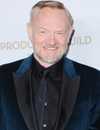
Adapted from Isaac Asimov’s legendary novel series, Foundation chronicles the fall of a galactic empire and a plan to shorten a coming dark age. The story spans planets, dynasties, revolutions, and centuries of calculated destiny. It blends political drama, hard science fiction, and intimate character study on a canvas rarely attempted on TV.
Despite drawing from one of the densest sci-fi sagas ever written, Foundation is remarkably cohesive and accessible. Even more impressively, its narrative clarity never comes at the expense of intellectual weight or visual spectacle. Across three seasons, momentum and acclaim have grown steadily. Viewers who’ve experienced it understand why, too – this is a genre-redefining epic that has permanently raised the ceiling for sci-fi TV shows.
The Scale Of Foundation’s Story Has To Be Seen To Be Believed
A Galaxy Spanning Narrative That Makes Most Epics Feel Small
Large-scale sci-fi and fantasy storytelling on the small-screen is nothing new, but Foundation operates on a different magnitude. Its narrative isn’t built around a single war, kingdom, or spaceship crew. It tracks the calculated collapse and rebirth of civilization itself. Empires fracture, ideologies evolve, and consequences ripple across centuries rather than seasons.
The timeline of Foundation moves with such bold confidence that it almost defies belief. Decades pass between episodes. Entire political eras rise and fall in the background of personal journeys. Events that seem contained to one moment resurface generations later, reshaped by time and perspective. History is not a backdrop or part of the worldbuilding in Foundation; it is the engine driving every decision.
Characters in Foundation are bound by destiny even when separated by lifetimes. Hari Seldon (Jared Harris) exists as both man and mathematical legacy, guiding futures he will never physically see. Gaal Dornick (Lou Llobell) becomes a bridge across time, her choices echoing far beyond her own era. Their arcs, and those of many others, feel intimate yet cosmically significant.
Meanwhile, the Genetic Dynasty storyline in Foundation, which was created specifically for the show, embodies scale through continuity. Brother Day (Lee Pace) rules as one clone in an unbroken imperial line, each iteration inheriting power and psychological burden. The same face governs across decades, creating a haunting sense of institutional immortality and personal fragility.
The theatrical quality of the visuals in Foundation reinforces that vastness. As a result, the universe feels truly alive despite the narrative being so detached from a single present. Most sci-fi series expand outward from a single narrative point or event. Foundation expands its saga from entire chapters of galactic history, making even the grandest fantasy and sci-fi shows feel tiny by comparison.
Foundation Proves That Even “Unadaptable” Stories Can Work On TV
A Legendary Literary Challenge Finally Cracked For The Screen
For decades, Isaac Asimov’s Foundation novels were considered unadaptable. The books are dense, idea-driven, and structurally unconventional. Action often gives way to philosophical debate. Characters frequently serve as vessels for sociological and mathematical theory. Translating that into a successful TV show seemed commercially and creatively risky.
That challenge is exactly what makes Foundation such an achievement. Rather than simplifying the material, the series reframes it. Abstract concepts become dramatic stakes. For example, Psychohistory isn’t just theoretical math; it’s a predictive force shaping political decisions, rebellions, and moral dilemmas across the galaxy.
Apple TV’s Foundation adaptation also solves the novels’ structural distance. Where the books leap across time with minimal emotional continuity, the show anchors viewers through character throughlines. Seldon’s presence persists beyond mortality. Gaal’s journey personalizes cosmic stakes. Emotional investment becomes the glue holding epic scope together.
Crucially, the Foundation TV show respects audience intelligence. It doesn’t dilute terminology or flatten ideological conflict. Power struggles remain complex. Motivations remain layered. Political strategy and existential philosophy share space with spectacle and suspense.
The result is a sci-fi series that feels intellectually faithful without becoming inaccessible. It proves ambitious science fiction doesn’t need to be trimmed down to function onscreen. Long considered impossible, the fact that Foundation works as a TV show demonstrates that so-called unadaptable literature can thrive on the small screen when treated with patience, scale, and creative conviction.
Sci-Fi TV Will Never Be The Same After Foundation
A New Gold Standard For Science Fiction On TV
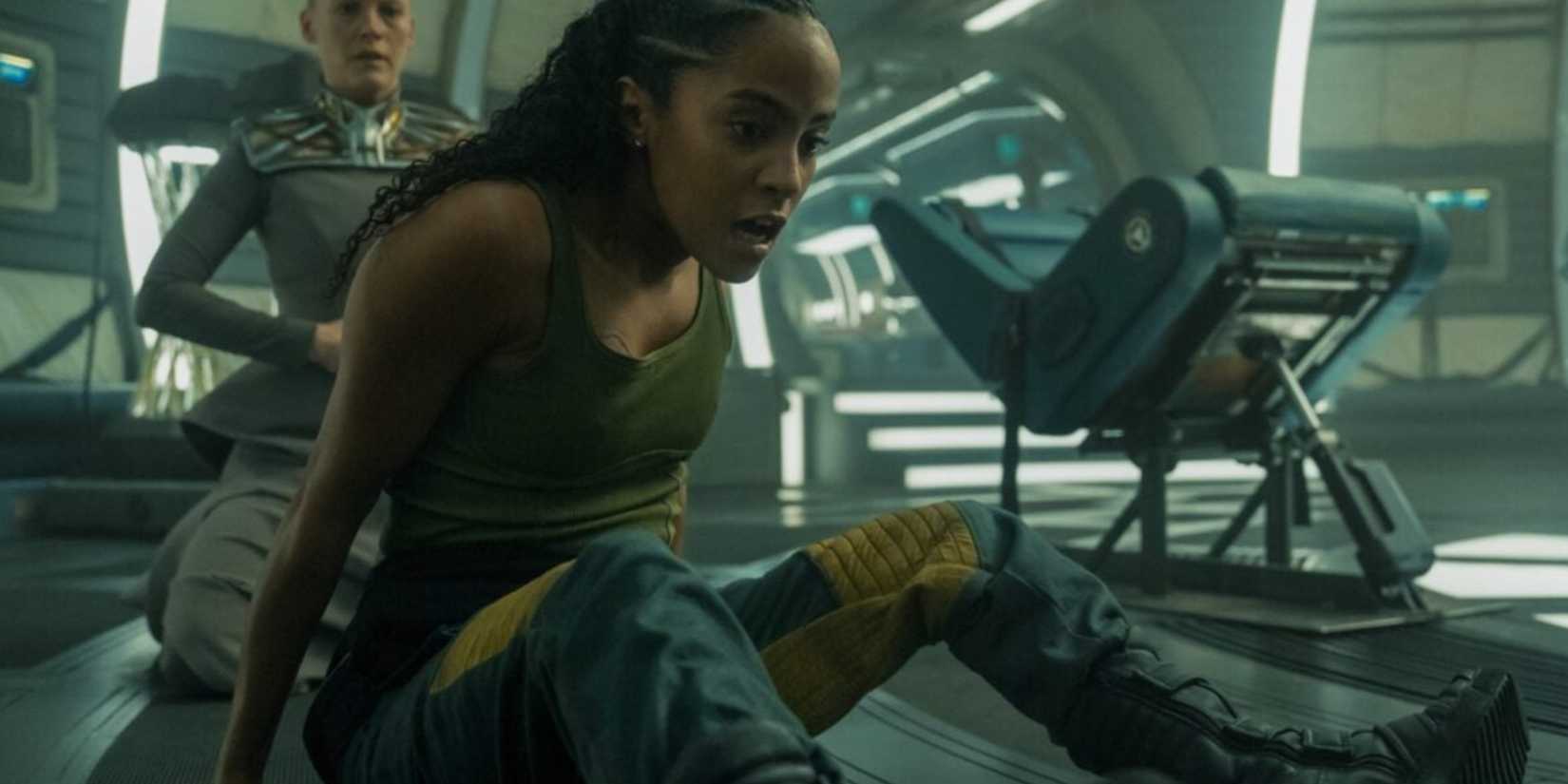
The sheer scale of the show and the effortlessness with which it seems to make it all work means that watching Foundation recalibrates viewer expectations. Scope, structure, and thematic density reach levels rarely attempted by sci-fi shows. Once audiences experience a narrative that spans generations with such confidence, smaller ambitions become harder to accept.
Above all else, Foundation proves that viewers are much more ready for complexity than many studios give them credit for. Multi-timeline storytelling, abstract theory, and political philosophy aren’t barriers; they’re features. Audiences will follow demanding narratives when emotional anchors and visual clarity guide the experience.
This shift is especially significant for literary adaptations. Historically, dense source material like Asimov’s novels were streamlined to fit perceived attention limits. Subplots vanished. Concepts softened. World-building shrank. Foundation rejects that model and succeeds precisely because it does.
Its success should send a clear signal to studios and networks everywhere. Faithfulness to big ideas can be commercially viable for sci-fi TV shows, and cerebral storytelling can coexist with blockbuster production values. Future adaptations now face a higher bar. Compressing complexity or simplifying themes risks feeling outdated thanks to the trail Foundation has blazed.
Viewers have seen what happens when a series fully commits to intellectual and visual scale. Foundation doesn’t just stand out within the sci-fi landscape. It reshapes the genre’s creative baseline, proving that ambition, patience, and trust in the audience can produce something truly era-defining.
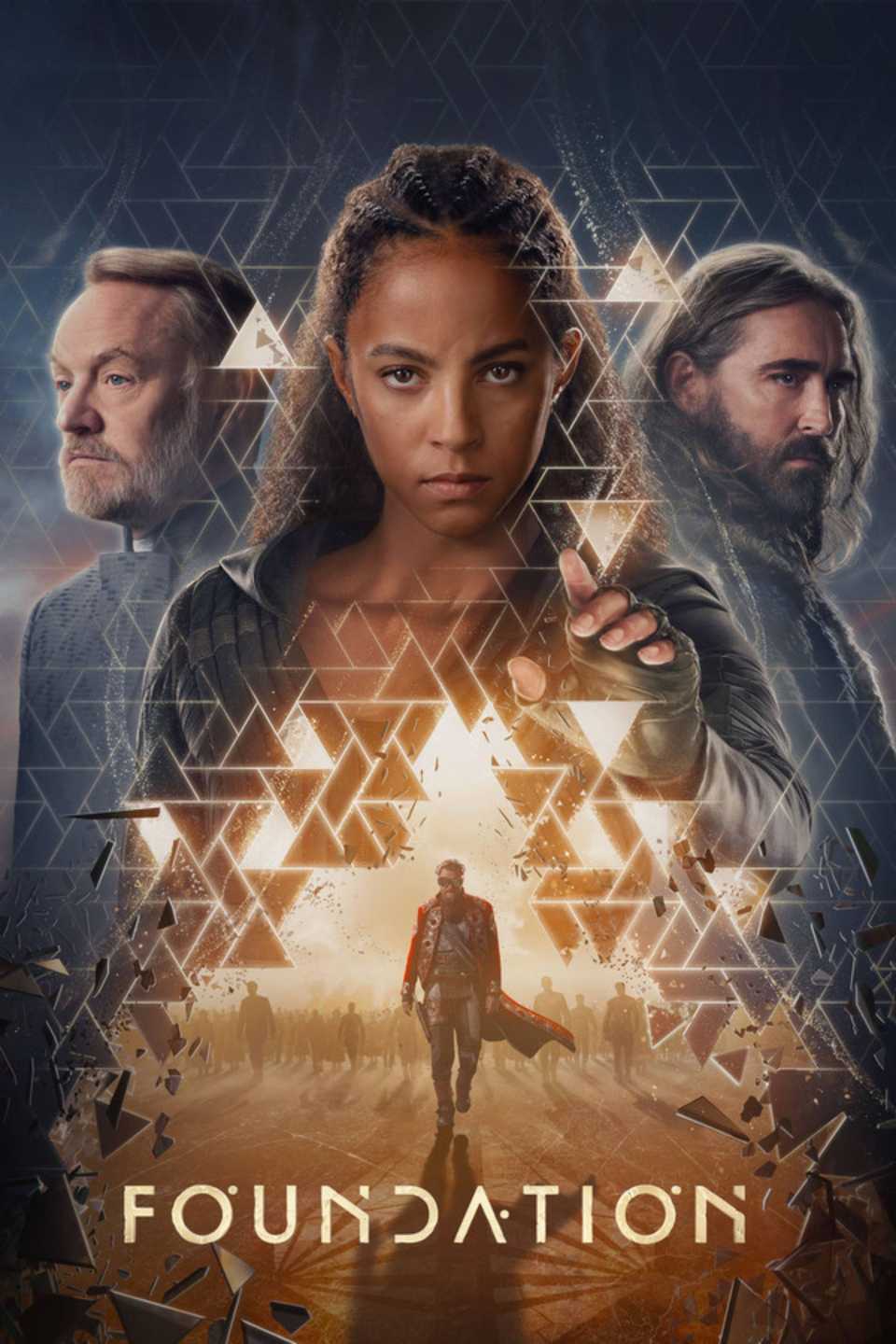
- Release Date
-
September 23, 2021
- Network
-
Apple TV+
- Showrunner
-
David S. Goyer
- Directors
-
Alex Graves, Roxann Dawson, Jennifer Phang, Mark Tonderai, Andrew Bernstein
- Writers
-
Jane Espenson, Leigh Dana Jackson, Liz Phang, Eric Carrasco, David Kob, Addie Manis, Marcus Gardley, Lauren Bello, Olivia Purnell