
Shares of Muthoot Finance gained 3.5% on Tuesday climbing to ₹3,470 a share.
Gold prices, which typically escalate during periods of geopolitical uncertainty, have already surged more than 80% over the past one year and are ruling near $5,400 a troy ounce. Over the weekend, Iran’s top leadership was killed in US-Israel attacks, plunging the already volatile Middle East into another bout of chaos.
For MSMEs and self-employed, high prices enhance working capital availability without additional pledges, which can provide short-term cash flow

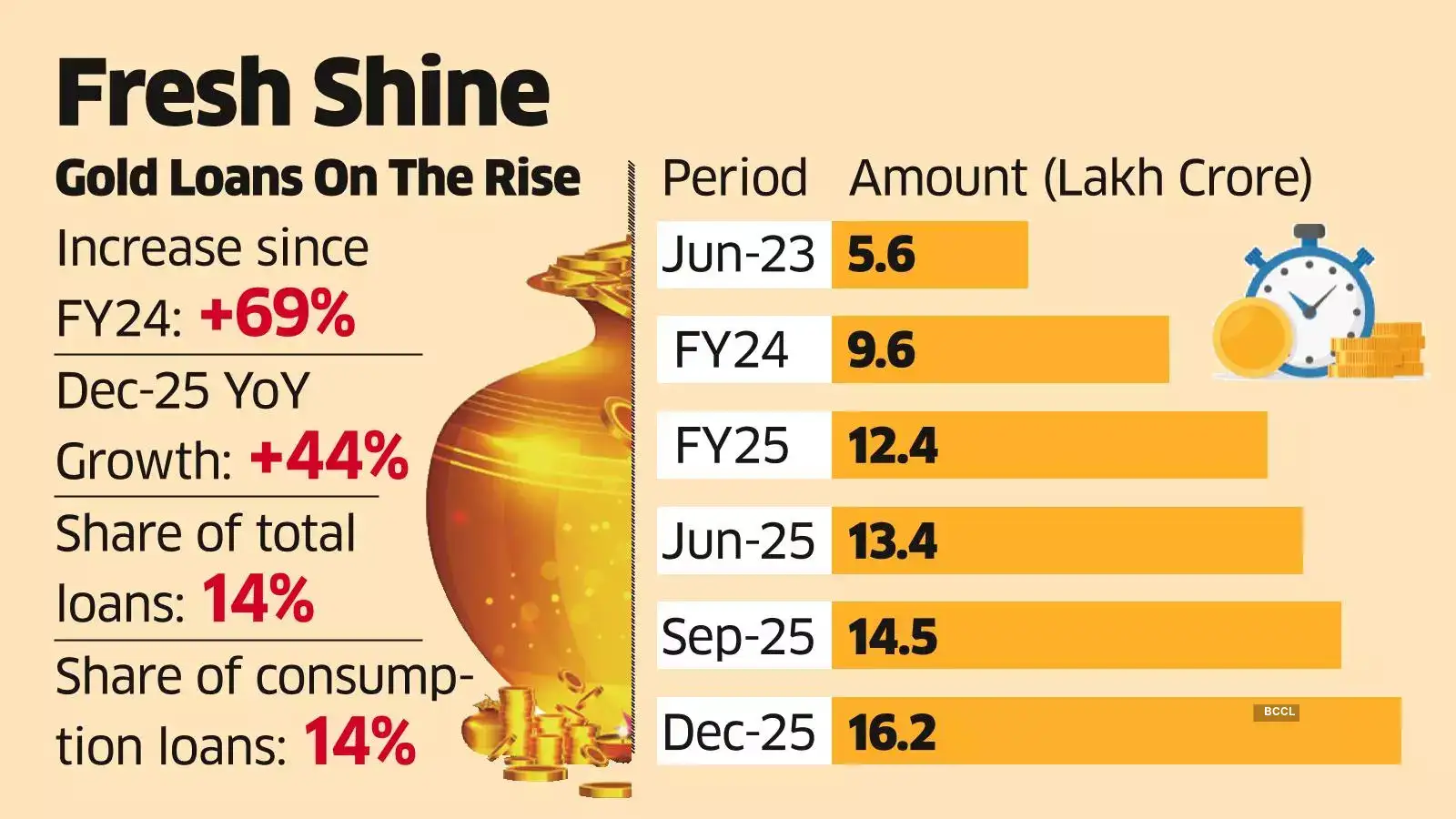
Gold loans have recorded a CAGR of over 30% in the past couple of years across the system – more than twice the growth rate of personal loans. They are now the largest retail loan category after housing, accounting for 14-15% of the portfolio. A significant portion of this growth has been driven by rising gold prices, which have doubled over the past few years.
While PSU banks account for 45-50% of total gold loan originations by value, NBFCs contribute 45-50% by volume.”While earlier expectations suggested that gold prices may have plateaued, the renewed geopolitical developments and global macro uncertainties are likely to keep prices firm,” said Manish Mayank, business head, gold loan, IIFL Finance. “In such an environment, we generally see a pick-up in gold loan demand, especially from small business owners, traders, and households who prefer leveraging their existing gold assets for short-term liquidity rather than liquidating investments or taking unsecured credit.”
Gold has historically served as a safe-haven asset during periods of geopolitical uncertainty, and the tensions in the Middle East have once again reinforced that trend. Rising gold prices improve customer sentiment and enhance borrowing capacity, as the value of the collateral increases.