

The epic poem is a behemoth, coming in at just under 600 pages. The Greek mythology movie will run longer than an ordinary film, with estimates coming in at 3+ hours. However, it would take at least five or six hours of film to include every part of the story. Something will have to give.
Due to limited time, I’d also be surprised if they included the Lotus Eaters, since they are often forgotten. I could also see them taking out the Laestrygonians and starting the journey with just one ship for simplicity’s sake. However, there is one underrated moment that they absolutely cannot cut.
Multiple translations of The Odyssey exist, and they differ slightly. For the sake of this article, all details and quotations will come from Emily Wilson’s translation of Homer’s epic poem.
Odysseus’s Encounter With Scylla & Charybdis Is An Underrated Moment Of Homer’s The Odyssey
The Odyssey’s trailer confirms that a few key moments will appear in Christopher Nolan’s interpretation of the story. We get the first glimpse of Polyphemus’s cave, the undead army that appears before Odysseus’s men go to the underworld, and possibly the aftermath of Helios’s cattle. The six-minute prologue also shows the Trojan Horse.
All of these are popular moments of The Odyssey that the general public seems to remember. Similarly, the sirens will almost definitely appear, even though they only appear in about 50 lines of the poem, because they’re another fan-favorite moment and an extremely cinematic sequence.
The Odyssey shouldn’t just stick with the most popular choices, though. The film also needs to include Scylla and Charybdis, a monster duo who don’t get enough love. For those who need a refresher, Scylla and Charybdis are the two unescapable sea monsters on opposite sides of a narrow strait.
Scylla has twelve legs and six heads, each with three rows of teeth. Scylla sits in a cave at the top of a tall rock, and each head will swoop down to take a crew member. Meanwhile, Charybdis lies next to a low-down rock with a fig tree atop. She sucks the water down three times a day and spits it back out three times a day. Colloquially, she’s often described as a sentient whirlpool.
If people remember one of them, it’s Scylla. She picks off Odysseus’s six strongest men, and the attack profoundly affects Odysseus. Unfortunately, my girl Charybdis doesn’t get the attention she deserves, even though she’s just as important to the story.
Odysseus’s choice to face Scylla doesn’t make sense without the threat of Charybdis. The crew of the ship is also distracted by her whirlpool, preventing them from reacting to Scylla’s heads swooping down. Plus, Charybdis almost kills Odysseus during Zeus’s storm after Odysseus’s men kill Helios’s cattle. For this reason, The Odyssey can’t cut her out of the movie.
Scylla & Charybdis Need To Look Epic In Christopher Nolan’s The Odyssey
The least cool but easiest way to handle Scylla and Charybdis in The Odyssey is for Christopher Nolan to present them as forces of nature. He could just make it a rough storm that makes Odysseus choose between rocky shoals and a whirlpool. This would be a cop-out and would weaken the impact of The Odyssey, as the gods and monsters are integral to the epic.
However, Christopher Nolan seems bold enough to include the monsters Scylla and Charybdis in The Odyssey. If the creative team goes this route, they need to do it right. The Odyssey team took the time to build a life-sized animatronic of Polyphemus (via MovieWeb), and they need to put the same time and energy into the sea monsters.
I’d rather have a boring storm than a half-assed monster. Scylla looks so much cooler than a hydra, which is usually how she’s depicted onscreen. Her attacks should also be a truly horrifying spectacle. Similarly, Charybdis can be so much more than just a normal whirlpool. The Odyssey describes the monster this way:
On one side, Scylla; on the other, shining
Charybdis with a dreadful gurgling noise
sucked down the water. When she spewed it out,
she seethed, all churning likea boiling cauldron
on a huge fire. The froth flew high, to spatter
the topmost rocks on either side. But when
she swallowed back the sea, she seemed all stirred
from inside, and the rock around was roaring
dreadfully, and the dark-blue sand below was visible.
A whirlpool is destructive, but it certainly doesn’t match the terrifying description of this beast. If they created Charybdis as she is described, she could be the most visually impressive and unique moment of Christopher Nolan’s The Odyssey.
Christopher Nolan’s Movie Needs To Get Odysseus’s Heartbreaking Decision Right
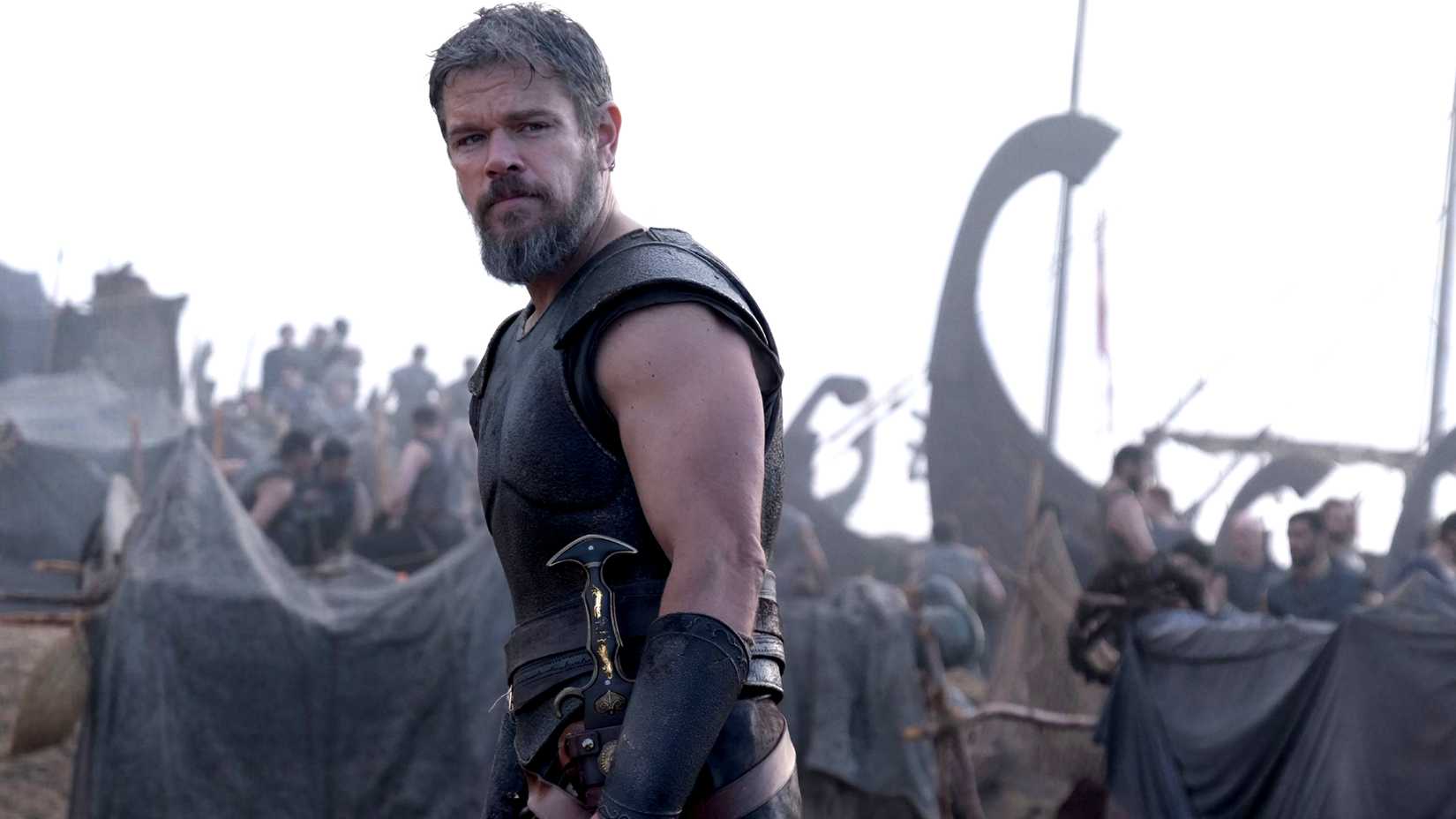
In addition to making Scylla and Charybdis look good, Odysseus’s choice when it comes to the sea monsters needs to have weight. Odysseus knows before he leaves Circe’s island that the crew will have to face the sirens and then the monsters Scylla and Charybdis.
Circe explains that Charybdis is deadly if the ship tries to pass when she’s swallowing water. Theoretically, they could get by if she’s spitting water out, but it would be a huge gamble. She also makes it clear to him that he’s guaranteed to lose at least six men if he goes to Scylla. Circe explains, “She is not moral. She is deathless evil, terrible, wild and cruel. You cannot fight her.”
When he and his men set sail, Odysseus informs the men about the danger of the sirens. However, he makes the morally dubious decision not to tell them about Scylla and Charybdis.
He has chosen Scylla over Charybdis, so he knows six of his men will have to die. However, he doesn’t trust them with this information, believing they would try to hide below deck. Whether this decision was right or not is debatable, but either way, it’s an important moment with serious implications.
Odysseus describes Scylla’s attack as “the most heartrending sight I saw in all the time I suffered on the sea.” It should have an appropriate emotional impact on the main character in Christopher Nolan’s The Odyssey. If Odysseus is not affected by the incident, he will look like a completely irredeemable monster, and we still need to root for him to get home.
Additionally, the decision is also the final nail in the coffin for Odysseus’s leadership. After Scylla, his crew becomes more distrustful of his orders, so they push him to stop at the island of the Sun. On top of that, he repeats his decision not to share critical information with them.
He could have warned them that they would all die if they killed the animals on the island. Circe directly told him this. Instead, he just gives the crew a vague warning that it would be foolish. This doesn’t impart the seriousness of the situation. The combination of these two factors leads to the rest of the crew’s deaths.
Ultimately, the heartbreaking decision between Scylla and Charybdis can’t be ignored in Christopher Nolan’s The Odyssey because of its significant emotional and narrative impact. If his decision is treated flippantly, the events with the cattle of the Sun will fall flat.