

When you look closer at Loki, you quickly realize that absolutely nothing about this show is typical. It doesn’t follow the typical rules of the Marvel Cinematic Universe, it doesn’t follow the rules of the superhero genre, and it doesn’t even follow the general rules of storytelling. Loki should have been a disaster with the amount of rules it broke, but like the character himself, it surprised us all and became a masterpiece.
Loki Completely Changed Tom Hiddleston’s Character After Years In The MCU
On paper, the way Loki handled Tom Hiddleston’s eponymous character shouldn’t have worked. Loki was an established character in the Marvel Cinematic Universe. He had appeared in six movies, had an entire complete character arc that ended with his redemption in Thor: Ragnarok and Avengers: Infinity War, and was very well known by viewers. Then, Loki decided to use a different version of him.
The Loki that appears in Loki is a variant from an alternate universe, taken from a single scene in Avengers: Endgame where Loki stole the Tesseract during the time travel portion. That decision undid five movies worth of characterization across a full decade. It also fully removed Loki from the larger context of the MCU. His relationship to Thor, to Asgard, and all the Avengers, didn’t matter in Loki.
Disney+’s 2-Part Sci-Fi Series Is One Of Its Best
Loki is arguably the best MCU show ever made, but it’s also one of the best science fiction shows on Disney+ in general, and it’s worth streaming.
Not only did Loki undo so much of Loki’s backstory, it also completely deconstructed the character. In the Time Variance Authority, Loki wasn’t the god of mischief, he was just a criminal sent to stop another criminal from tampering with the sacred timeline. Loki literally deconstructed its main character in essentially a pocket dimension and laid out this god of mischief in his most basic elements.
No other show would have approached the character of Loki the way Loki did. This concept shouldn’t have worked. It should have alienated long-time fans of the MCU and failed to draw in new fans due to its direct connection to a single scene from Endgame, but none of that materialized. Instead, Loki succeeds precisely because it broke all the rules, which resulted in a story that was impossible to predict and delighted viewers with surprises around every turn.
Another major storytelling rule that Loki broke that ended up working in its favor was its unique blend of meta and personal elements. Loki‘s premise is deeply meta. The entire show is about the unwanted variants of the main Marvel universe. Every version of Loki and world they travel to is literally something too weird to have made it into the MCU. The whole series is a commentary on the weirdness of the superhero genre.
On top of its superhero-specific meta moments, Loki also took a very meta approach to time travel. The very concept of a “sacred timeline” based on the main MCU movies is incredibly self-referential. The idea of pruning stray variants, of a law enforcement agency specifically dedicated to time variants, and everything else in Loki is a direct response to the popular conception of time travel.
It’s not particularly uncommon for a television show to be as meta as Loki is, but it is uncommon for a show to simultaneously be as personal and intimate as it is. As previously mentioned, Loki is a deconstruction of Tom Hiddleston’s character. For all the time travel and commentaries on the MCU, the show is primarily about a damaged man learning that he doesn’t have to be the villain, and he doesn’t have to punish himself for the past.
Smashing these two opposing approaches together and trying to be both earnest and human while also being self-referential and meta shouldn’t have worked. In Loki‘s case, however, it made the show a masterpiece. Loki bounces between these tones so effortlessly that it delights viewers and keeps them on their toes. If it hadn’t broken so many rules, Loki wouldn’t be the masterpiece it is.
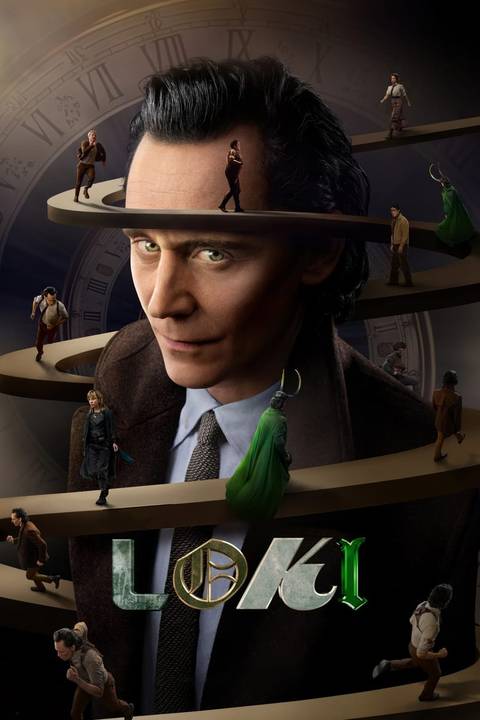
- Release Date
-
June 9, 2021
- Network
-
Disney+
- Showrunner
-
Michael Waldron
- Directors
-
Kate Herron
- Writers
-
Bisha K. Ali, Michael Waldron