

While popularized in the mid-2000s, Disney’s live-action remakes began a few years earlier than most audiences realize. The 1994 film, The Jungle Book, marks the first official live-action adaptation of a Disney animated classic. However, this movie is generally absent from purportedly complete lists of all Disney live-action remakes.
The Jungle Book of 1994 has little in common with the Disney adaptations audiences know today, including the 2016 live-action Jungle Book. While producing the pioneering film, Disney did not have the adaptation formula or the technology that it enjoys today.
Disney Made a Live-Action Remake of The Jungle Book in 1994
The ’90s Jungle Book was originally planned as an independent production. However, Chairperson, Jeffrey Katzenberg, identified it as an opportunity to expand an existing franchise, and Disney acquired the film (via Syfy). A 1994 Los Angeles Times article asserted said that Disney was taking a gamble by remaking their own successful animated film. However, time has proven that Katzenberg’s gamble paid off.
Walt Disney released its live-action adaptation of The Jungle Book on December 25, 1994—the 100th anniversary of Rudyard Kipling’s 1894 story. Unlike today’s live-action Disney remakes, which largely stick to the original blueprint, the 1994 Jungle Book was a departure from its animated predecessor.
Directed by Stephen Sommers (The Mummy), it expanded on Mowgli’s life story and primarily followed him as an adult, interacting with the jungle animals and later falling in love with socialite, Kitty (played by Lena Headey). Sommer’s Jungle Book also put the action in live-action, crafting a jungle adventure movie more than a kids’ movie.
The movie included wild stunts performed by martial artist Jason Scott Lee as Mowgli. Lee would later star in modern Disney adaptations such as Mulan and Lilo and Stitch. Despite Lee’s astounding stunts, swinging from trees and jumping down wells, the film’s primary action came from its real-life animals.
The 1994 Jungle Book Used Real Animals and No Special Effects
A notable absence of CGI makes 1994’s The Jungle Book standout against future live-action adaptations, including the 2016 Jungle Book. At the time, CGI technology remained somewhat of a novelty, with the first computer-animated feature still a year away. This meant that every aspect of the ’90s jungle movie had to be real, including the stunts, sets, and animals.
“You don’t get a jungle movie without real animals doing phenomenal things,” says a crew member in The Making of Rudyard Kipling’s The Jungle Book. This short making-of documentary describes the joys and difficulties of using real animals. The unpredictability of these wild animals created an electricity in scenes, but also posed risks.
Ultimately, the safety of both the actors and the animals was top priority. The American Humane Society carefully reviewed the script, and scenes considered impossible or too dangerous were cut.
All scenes deemed possible and safe were carefully coordinated and choreographed. While the 2016 Jungle Book’s crew was dominated by visual effects technicians, the 1994 Jungle Book’s crew was dominated by animal trainers and handlers. Mowgli actor, Lee, spent significant time bonding with the animals to establish trust that was vital to the story.
While a lack of special effects gave The Jungle Book a raw and tangible air, evolving technology has enabled Disney remakes to explore new possibilities. The motion-capture technology used in 2016’s The Jungle Book brought Rudyard Kipling’s distinctive animals to life.
The CGI animals truly embodied the human characteristics and personalities of their animated counterparts. CGI innovations also open up a range of stunts and scenes that would be impossible to achieve with real animals. Although it does not have the feel of today’s films, 1994’s The Jungle Book remains the original Disney live-action remake.
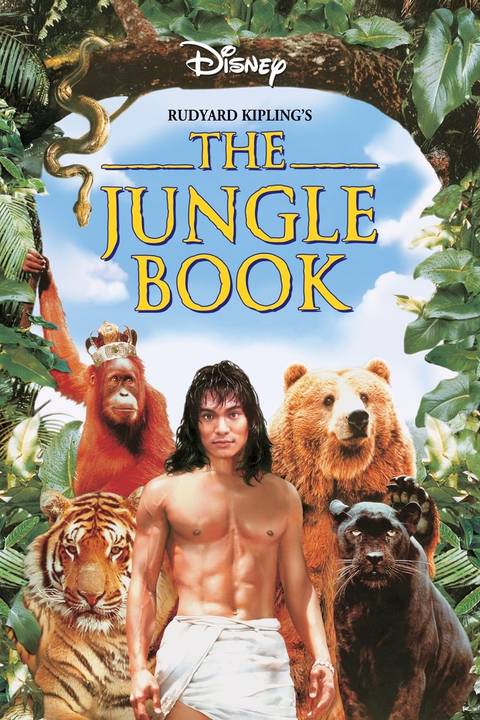
The Jungle Book
- Release Date
-
December 23, 1994
- Runtime
-
111 minutes
- Writers
-
Mark Geldman, Ronald Yanover
- Producers
-
Edward S. Feldman, Lawrence Mortorff, Mark Damon, Raju Patel

