
 Agencies
UNDER FIRE The sector, heavily reliant on crude-linked feedstock, to also take a hit from rising freight prices & insurance premiums
For most commodity chemical companies, raw material and solvent costs are tied to crude-linked derivatives such as naphtha, ethylene, benzene, propylene, methanol, styrene and vinyl chloride monomer. When crude oil prices rise, these feedstocks also become more expensive. Brent crude has jumped nearly 74% in 2026 so far.
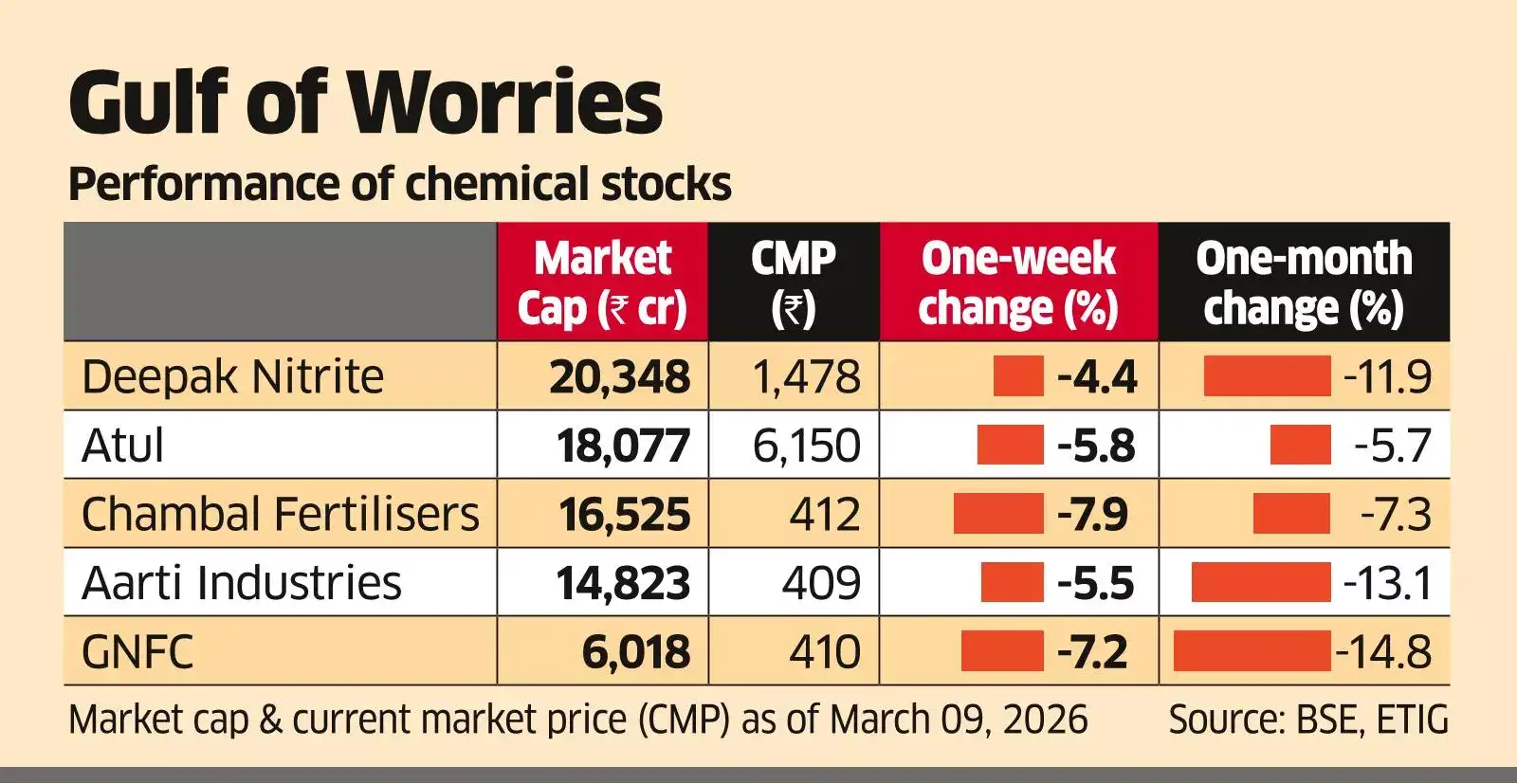
Companies such as Deepak Nitrite, Finolex Industries, DCM Shriram, Supreme Petrochem, Styrenix, LG Polymers, GNFC, Balaji Amines, RCF, Chemplast Sanmar, Aarti Industries and Atul are expected to be impacted.
Rising tensions have also heightened risks across Gulf shipping routes, causing delays in consignments. Rerouting not only drives freight costs up but also adds war-risk insurance premiums, pushing up working capital needs for chemical companies.

According to ICICI Direct, a prolonged geopolitical logjam may lead to higher raw material and freight prices, which result in margin compression given the limited ability to pass costs to customers in a challenging environment.
According to Emkay Global Financial Services, major Asian refiners are rationalising existing output and may probably run at 20-30% lower production levels if the current situation persists. The fertiliser industry faces a double blow of tightening supplies of ammonia, DAP, and urea from the Gulf countries and the suspension of LNG output from Qatar. India relies on imports for nearly half of its LNG needs. With ammonia being a crucial feedstock for fertilisers, supply constraints may impact agrochemical producers, including Chambal Fertilisers, Deepak Fertilisers, and Gujarat Narmada Valley Fertilizers (GNFC).