

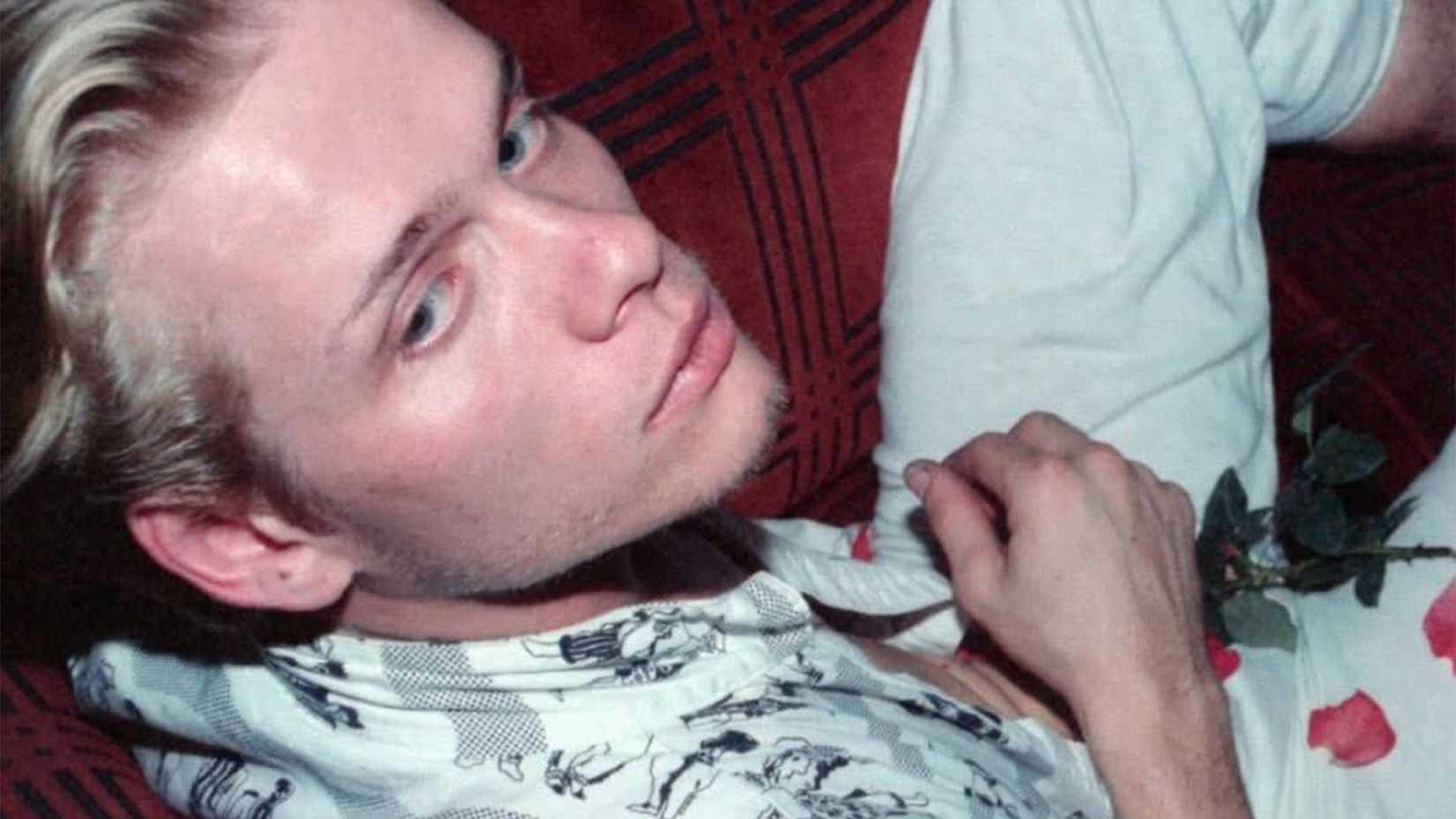
Rather than sensationalizing it as a true crime tale, Mason sought to explore Billy’s life and situate his tragic end in a turbulent time for the LGBTQ community. With AIDs ravaging countless lives and conservative culture alienating those who did not conform to heterosexual standards, even a murder as brutal as Billy’s could fall to the wayside, but Mason hoped that starting up the conversation after several decades would inspire those with information to come forward. What she didn’t expect, however, was to actively help solve the urban legend in the process of making My Brother’s Killer.
But as she looked into Billy’s life and spoke to his loved ones, she found a community ready and willing to find a semblance of justice for someone who meant so much to so many. Mason shared more about her journey in an interview with ScreenRant at SXSW, revealing how her approach to the documentary shifted as she filmed, why she also holds empathy for the killer, and how she hopes Billy’s story can affect the LGBTQ community and its allies today.
How Rachel Mason Got Involved In Billy London’s Case
ScreenRant: My Brother’s Killer is about the horrible murder of Billy London, or William Arnold Newton. You said that once you heard his story, you wanted to tell it. What was that process like? How did you first hear about him, and what clicked for you?
Rachel Mason: I first learned of this awful tragedy when I was making Circus of Books, which is a film about my parents’ store, in the heart of the gay community in Los Angeles. I grew up, without realizing it, in a community that was basically under siege with the AIDS crisis happening. But there was also an epidemic of violence, and I was a lot less familiar with that before I started making this film.
When I heard about this brutal murder, I was researching guys who had died of AIDS. I encountered a person who was an unofficial anthropologist of gay adult video models, and because I wanted to humanize these young men I grew up knowing, he gave me a book to look through and said I could use anything I wanted. In this binder was an article about this brutal murder, and he was just like, “Yeah, it’s horrible and unsolved. It was a traumatic time.” I was like, “But this guy’s head was cut off!” That was a very grizzly thing, and it stuck with me.
Gay people at that time were used to so much horror, so what was another horror to them? But I couldn’t let it go. Having grown up in that environment, with so many of the most important people in my life being gay, Billy felt like a brother to me. That’s partially where the title My Brother’s Killer came from. He’s not my actual brother, but he felt like a brother, and everyone who worked to solve this murder ended up feeling that way about him.
ScreenRant: Who was the first point of contact for you in telling this story? Who was the easiest to locate, and who was the most open to investigating further with you?
Rachel Mason: Initially, my goal was to create a portrait of the victim and talk about this one young man whose life ended tragically in the middle of this AIDS crisis. There was an unsolved murder, so maybe if I completed this film, that would solve the murder because somebody with information might come out to speak after it was done. I didn’t expect that while we were making the film, we would solve it collectively, which is what happened. As I say that sentence, it still comes as a surprise and a shock to me, even though that’s what happened.
The first person was a guy named Mike Szymanski, also known as Mickey Skee, because a lot of people had double names and aliases. These were names that they enjoyed having; it wasn’t like it was just a casual thing to have a name. They went by it. He was a reviewer of gay adult movies, and he told me about the murder and that my parents employed the prime suspect, who was also the victim’s lover. That person, Mark Rabins, was the first person I informally sat down to interview.
The Art Of The Documentary: Behind The Scenes Of My Brother’s Killer
ScreenRant: You actually had to ask him on camera if he killed Billy, and have him say no and tell his story again. What was that experience like?
Rachel Mason: Uncomfortable. I don’t like having to ask somebody, “Did you kill this person?” Also knowing now that Mark not only did not kill Billy, but he always knew he was the prime suspect. Mark actually loved him and would not have wanted to kill him, and yet everything pointed to Mark.
It was circumstantially possible that Mark was there. He had an alibi, but it didn’t fully feel like there were enough pieces of evidence. The police could never corroborate certain aspects of his story, and that’s why they kept coming back. And yet his story was so consistent and constant that it was not possible to say he was lying.
ScreenRant: You not only paint a portrait of Billy, but also of the killer themselves. One important element you pointed out is that one’s environment and family life can really affect one’s outcome. How much did you explore or engage with that as you were working on the documentary, and what realizations came out of that?
Rachel Mason: It’s a really sad thing, but the victim doesn’t get to tell their story. You can only piece it together from all of the anecdotes or facts, and Billy’s story came together in part because of the great work of a researcher and social worker named Clark Williams, who retraced his footsteps and came to understand the terrible challenges that Billy experienced in his childhood while growing up in Northern Wisconsin.
He was born in 1965, when gay people were basically treated like pariahs or outcasts. You could be attacked just for being gay, or ridiculed. It was a very widely known thing. At that time, if you were gay and came from a conservative part of the country, the culture itself did not accept you. It was particularly hard for kids in rural areas, and that was Billy’s struggle.
It was also the struggle of DarraLynn Madden, the killer. They had different but similar experiences in their young adult years. One of them was poverty, one was coming from a rural area, and another was the era. They had families that were also struggling, and when somebody is wired to be capable of murder, these little triggers could push a person over the edge. Another contributing factor is child sexual abuse, which is the worst trigger, and also just creates horrific trauma.
It doesn’t ever excuse anyone committing violent acts, but it can help understand, if somebody might be prone to that, what might have initiated this next step. We try to have an understanding and compassion for everyone involved, especially families on all sides. Because Billy’s family suffered horribly, but Darrelln’s family also suffers with that weight, the burden of that pain.
It’s also just a human portrait. This is our society having to change and learn from these kinds of things.
ScreenRant: You’re also a part of the documentary. We see you asking the questions, and we see you talking with your mom. At what point did you make the decision to be onscreen rather than just behind the camera?
Rachel Mason: My editor [actually] had to insist that I’d be in the film. We tried to do variations of the film without me. It must seem so odd because here I am, in the film, so people must think, “You must want to have wanted it. ” But I’m much more comfortable on the other side of the camera. I would prefer not to be in it, even doing these interviews where I’m promoting the film. It’s uncomfortable for me to be on camera, but in this scenario, I truly was connecting and communicating with others, and there was no way to not be in it.
Especially with my mom, who will only tell me that she’s pissed off at me on camera, and I need that reverse shot. My editor would be like, “We need this. We need these reverse shots.” Going to the prison, we need to make sure the viewer feels my reaction. I started to understand that, and I wanted the viewer to feel like they were with me. We had to go on that journey together, because that is the feeling of the film. I did feel like a community was behind me, and it wasn’t just me trying to piece this together alone.
Over many years, people wanted to know what happened to Billy, and I happened to be in a position where I could get those answers.
What Happens Now? The Status Of My Brother’s Killer And The State Of The LGBTQ Community
ScreenRant: This terrible tragedy took place at a time of deep insecurity and rising violence against the gay community, and it feels like we’re backsliding today. What do you hope to convey to audiences, or how do you hope that this film can contribute to that conversation?
Rachel Mason: It’s so painful to experience this moment we’re living in, because I think every single marginal community that gets thrown into a political conversation. You need to have safety all around you, and especially LGBT conversation is a very personal one. Many of these things that are being tossed around in the world of our political discourse are people’s most personal stories, and it’s always so frustrating when politics weaponizes something like that because every single case is unique and different and requires sensitivity.
It’s a horrifying time, seeing that LGBT causes have again been weaponized, and laws are coming into place that are totally dropping the hammer on critical things without the nuance that is required. It absolutely hearkens back to the ’90s when the gay community at that time was experiencing the epidemic that needed, similarly, a type of sensitivity and care that the culture was not there for. What’s worse is that, when AIDS was hitting the community, the government and people in power were saying things along the lines of, “This was God’s punishment for your evil sinning ways.” That was mainstream discourse!
ScreenRant: What gives you hope for the current moment to push forward and stop that backsliding?
Thankfully, I don’t think it’s to that degree yet, although it’s gotten pretty bad. But we are in a moment where I think we have seen a rise among the mainstream that wasn’t there. Enough people are like, “You know what? My friends are gay. My family members are gay.” People have LGBT loved ones, and there have been media organizations like GLAAD and public figures like Ellen DeGeneres. People can have their opinions, but there are faces out there that stand up for this community and are relatable who weren’t there in the ’90s. These people were doing that work, they were coming forward, and that’s why they’re heroic and should be recognized for the world they’ve helped create for us.
That’s why I think we’re in a different moment. There are voices from the community that have achieved levels of prominence, like Pete Buttigieg, that weren’t there at that time. I think that’s a hopeful thing, and this film feels like the most hopeful message you could see. Especially when it comes to law enforcement, because in a way, I had a bias before I saw this through.
I thought, “This case was not investigated because the LAPD probably didn’t care. Another gay man in 1990 would not have mattered.” And then I discovered that there was a rare female detective, Wendy, who was working as hard as she could on a case like this in 1990. She did care, and she was there. When you look at the police file, you see that it was incredible work. In fact, the gay community at that time feeling afraid to be open was part of the problem. Now, because we had a new generation looking at the file, we had a new type of collaboration. People of my generation were saying, “You know what? Let’s work with the LAPD. Let’s work with law enforcement to solve this.” You can find the good detectives out there if you try to collaborate.
That, to me, is the hopeful message of My Brother’s Killer. A minority community can come together, can try to solve crimes themselves, and can find those internal advocates.
ScreenRant: Where can one see my brother’s killer outside of SXSW? Do you have distribution yet?
Rachel Mason: We are going to be playing film festivals in different places in the country, in the Midwest, on the East and West Coast, and all over as much as possible. We’re working on distribution, but we don’t yet have it. As soon as that is announced, people can follow us at @MyBrothersKillerFilm on Instagram to find out. We will absolutely post all of our updates on distribution.
My Brother’s Killer premiered at SXSW on March 13 and is currently seeking distribution. For updates, please visit @mybrotherskillerfilm on Instagram.