

In a 2004 interview with The Guardian, Le Guin was asked about Harry Potter. To put it bluntly, Le Guin was dismissive of the series, which was in between its fourth and fifth books at the time.
Yet Le Guin’s opinion of Potter was also perceptive. Now that the franchise is making its grand return to HBO Max, and with J.K. Rowling’s tarnished reputation in mind, it’s worth revisiting Le Guin’s take.
From An Online Q&A Circa ’04; Transcript Published By The Guardian
Ursula K. Le Guin was asked about Harry Potter during an online Q&A hosted by The Guardian in 2004; a forerunner of what would be a Reddit AMA or an Instagram Live session today. First, let’s take a look at the full exchange:
Q: Nicholas Lezard has written ‘Rowling can type, but Le Guin can write.’ What do you make of this comment in the light of the phenomenal success of the Potter books? I’d like to hear your opinion of J.K. Rowling’s writing style.
UKL: I have no great opinion of it. When so many adult critics were carrying on about the “incredible originality” of the first Harry Potter book, I read it to find out what the fuss was about, and remained somewhat puzzled; it seemed a lively kid’s fantasy crossed with a “school novel”, good fare for its age group, but stylistically ordinary, imaginatively derivative, and ethically rather mean-spirited.
Okay, so, there’s a lot to unpack there. For starters, we should clarify that Le Guin only read The Sorcerer’s Stone, the first Potter book.
(At least, up to this point. It’s unclear if Le Guin ever gave the books another shot. Based on subsequent comments she made about Potter and J.K. Rowling, though, which we’ll get to in a bit, it didn’t improve her opinion of either even if she did. In any case, back to her comments from ’04.)
First, there’s a bit of faint praise Le Guin damned Harry Potter and the Sorcerer’s Stone with. She admitted the book was “lively,” and acknowledged it as “good fare” for its target audience: children. What bothered Ursula K. Le Guin was that “adult critics” were obsessed with the book. Which she dinged on three counts.
Le Guin’s Sci-Fi/Fantasy Credentials, Explained
Back in ’04, Ursula K. Le Guin called Harry Potter “stylistically ordinary” and “imaginatively derivative.” Now, whether we like Harry Potter or not, we can’t argue that Le Guin is an authority on prose style and imaginative writing. She’s one of the undisputed GOATs of sci-fi and fantasy literature. Her lauded career stretched from the 1960s to her death in 2018.
As a sci-fi writer, she’s best known for her sprawling “Hainish Cycle,” consisting of more than half-a-dozen novels and many short stories. In the fantasy genre, she’s beloved as the creator of the Earthsea franchise. Notably, 1968’s A Wizard of Earthsea, is about a young boy who attends a school for magic and fights the forces of darkness. Sound familiar?
In fact, the questioner who prompted Le Guin’s critique of Harry Potter in 2004 evoked a 2002 review of the final Earthsea novel, The Other Wind, by Guardian writer Nicholas Lezard. The review kicked off by unfavorably contrasting the two fantasy franchises. Lezard wrote:
You can’t get away from the Harry Potter comparisons. A young, orphaned boy is discovered to have magical powers. He is sent to a school for wizards. He struggles with the minor arts of illusion and other trivia. He dabbles unwisely in necromancy. And so on. As I slogged my way through the first two Potter books, wondering how much more of Rowling’s mumsy, artless prose I could stand, I was nagged by a memory of a richer and more bewildering story. It came to me fairly quickly: Ursula Le Guin’s Earthsea trilogy, which I read between the ages of 11 and 13. And, turning back to it, to cleanse the palate as it were, I was somewhat staggered: Rowling can type, but Le Guin can write.
As you can see, Le Guin’s own take was kind by comparison. But there’s one thing Le Guin clocked about Harry Potter that few people were talking about in 2004.
Ursula K. Le Guin Called Harry Potter “Mean-Spirited”; This Hits Different In The Light Of J.K. Rowling’s Reputation Today
Le Guin Recognized Something Most People Missed
Le Guin was a stylistic wizard herself, and a juggernaut of imagination. As such, it’s understandable that she would hold Harry Potter to a higher standard than readers. Her reading of Potter doesn’t have to undermine your enjoyment of the books, if you’re a Potter fan. But what really sticks out 20+ years later is Ursula K. Le Guin’s third demerit against J.K. Rowling’s writing.
Ursula K. Le Guin was a 2-time winner of the Hugo Award for Best Novel, in 1969 for The Left Hand of Darkness and 1974 for The Dispossessed. Rowling also won the Hugo, in 2001, for Goblet of Fire. Incidentally, this was the last time either was nominated for the award.
That is, her comment that the first Harry Potter book felt “ethically mean-spirited” to her. Especially for readers raised on the Potter novels, this might feel like a bit of a head-scratcher. Isn’t the series about compassion, and learning to wield power in the right ways, and standing up for people who can’t stand up for themselves?
Considering J.K. Rowling’s subsequent embrace of anti-transgender rhetoric, we have to re-evaluate whether those lessons were intentional, even if we took them from Harry Potter. Unfortunately, Ursula K. Le Guin didn’t elaborate on what struck her about Sorcerer’s Stone as “ethically mean-spirited,” so we have to consider the books from this perspective ourselves in hopes of understanding.
Ursula K. Le Guin Took Issue With J.K. Rowling’s “Ungenerous” Attitude Toward Her Predecessors
Le Guin Also Called Out Critics Who Treated Rowling Like She “Invented Fantasy”
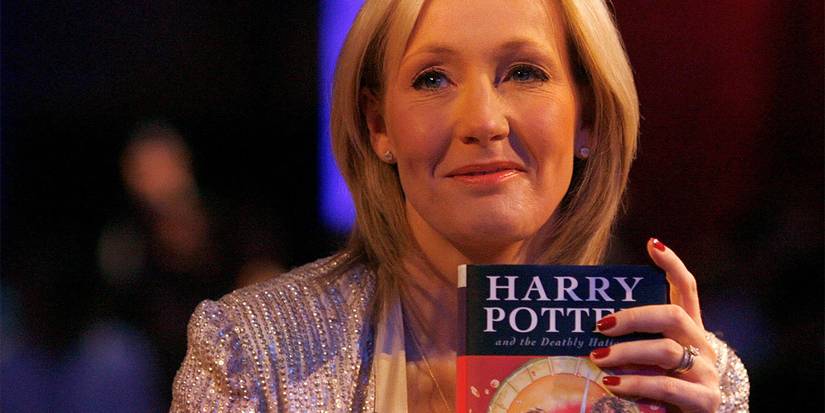
The controversy surrounding J.K. Rowling’s transphobia is inescapable when talking about Harry Potter these days. We can separate the art from the artist all we want, but in Rowling’s case, she’s one of the most popular authors of the 21st century, and by using her platform the way she’s chosen to, she’s turned away legions of fans.
Ursula K. Le Guin didn’t exactly see this all coming, but she evidently sensed something bitter behind the saccharine appeal of Harry Potter. That “ethically mean-spirited” streak she sensed all the way back in The Sorcerer’s Stone might not be reflective of the Potter franchise as a whole, but J.K. Rowling has since revealed it in herself.

10 Fantasy Books Better Than Harry Potter
Harry Potter captured a generation, but there are other fantasy books with similar elements and settings that are even better than the 7-book series.
And, ultimately, it was Rowling who Le Guin always had beef with, moreso than Harry Potter. In 2010, Le Guin echoed her earlier comments, dinging the “style, spirit, and everything” about Potter. Again, she criticizing the critics who venerated Rowling’s work as something unique, or something that wasn’t built on the foundation laid by authors like Le Guin herself.
Here’s what Le Guin wrote that time:
This last is the situation, as I see it, between my A Wizard of Earthsea and J.K.Rowling’s Harry Potter. I didn’t originate the idea of a school for wizards — if anybody did it was T.H. White, though he did it in single throwaway line and didn’t develop it. I was the first to do that. Years later, Rowling took the idea and developed it along other lines. She didn’t plagiarize. She didn’t copy anything. Her book, in fact, could hardly be more different from mine, in style, spirit, everything. The only thing that rankles me is her apparent reluctance to admit that she ever learned anything from other writers. When ignorant critics praised her wonderful originality in inventing the idea of a wizards’ school, and some of them even seemed to believe that she had invented fantasy, she let them do so. This, I think, was ungenerous, and in the long run unwise.
In other words, in Ursula K. Le Guin’s mind, a better writer would have been out there in the press citing and honoring their influences. Instead, Rowling accepted her fame, and basked in the praise. Which rubbed her iconic predecessor the wrong way.
Are You A Former Potter Fan Looking For A Replacement Obsession? Read Ursula K. Le Guin
The Earthsea Series & Hainish Cycle Rank Among The Greatest In Their Respective Genres
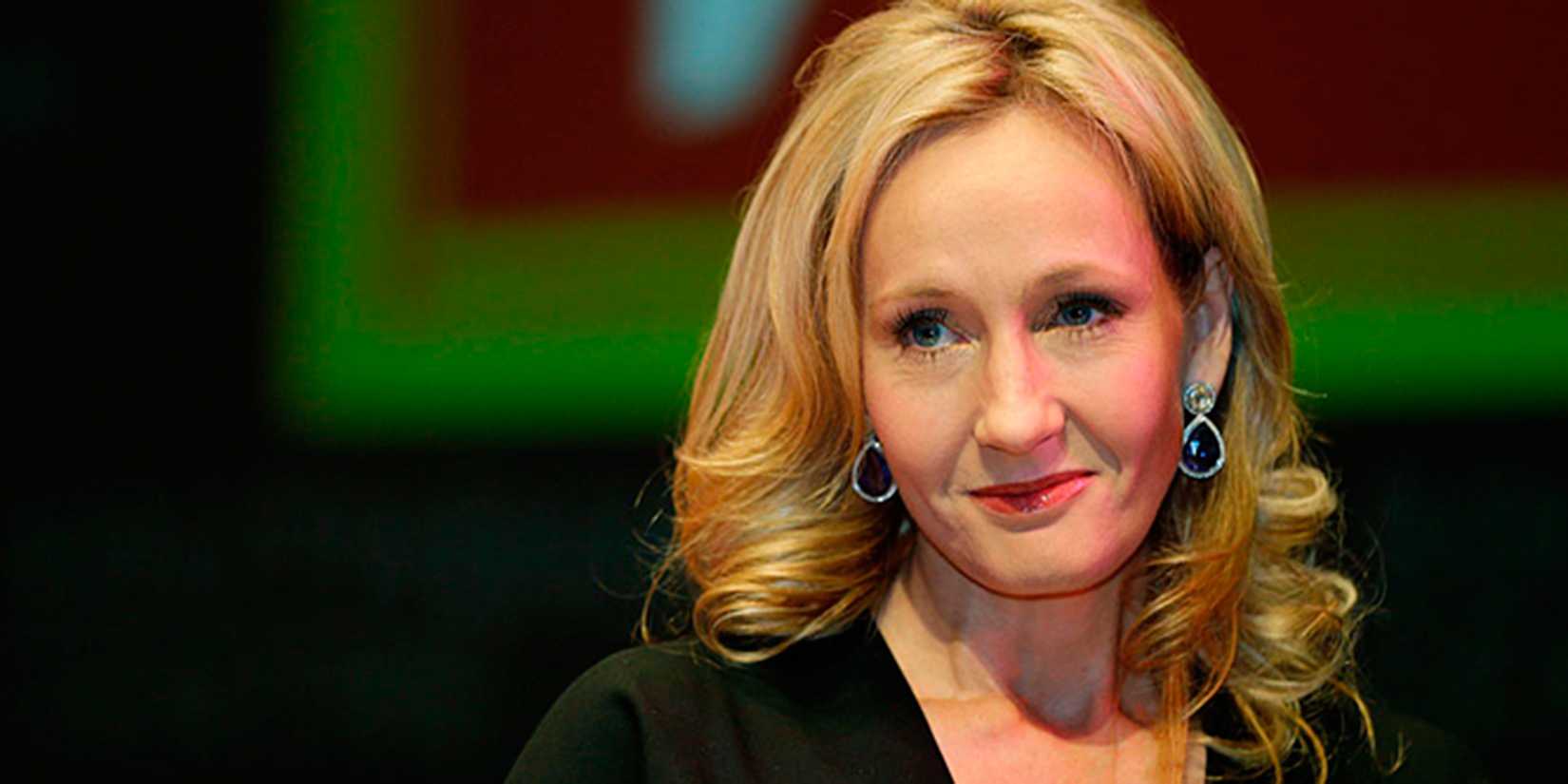
It’s safe to say that J.K. Rowling and Ursula K. Le Guin couldn’t have been more different. From their understandings of gender, to their literary styles, to their public personas as writers, the two were diametrically posed. And Le Guin’s concise criticism of Harry Potter from 2004 shows that she saw that from the jump.
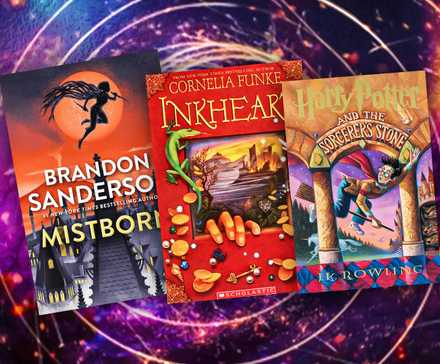
If You’re Just Getting Into Fantasy Books, Don’t Skip These 10 Series
Many of the big fantasy book series can be intimidating for those just dipping their toes in, but there are several that are far easier to digest.
For people whose Harry Potter fandom has been soured by Rowling’s modern-day public person, there’s a perfect alternative: Ursula K. Le Guin’s work. Her books are everything Harry Potter isn’t, including, yes, being challenging to read sometimes. Yet for adult readers trying to recapture the magic of Harry Potter, books like Le Guin’s Earthsea fantasy novels or her award-winning science fiction could be your next obsession.
What do you think, readers? What about Sorcerer’s Stone do you think Ursula K. Le Guin felt was “mean-spirited?’
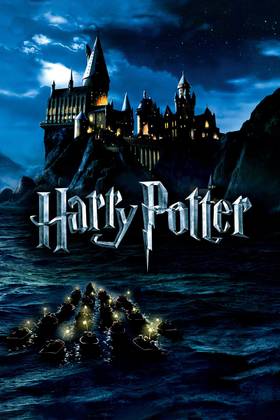
- Cast
-
Daniel Radcliffe, Emma Watson, Rupert Grint, Tom Felton, Alan Rickman, Matthew Lewis, Bonnie Wright, Evanna Lynch, Maggie Smith, Michael Gambon, Richard Harris, Ralph Fiennes, Helena Bonham Carter, Alfred Enoch, Harry Melling, Gary Oldman, Robert Pattinson, Warwick Davis, Oliver Phelps, James Phelps, David Bradley, David Thewlis, Katie Leung, Jason Isaacs, Imelda Staunton, David Tennant, Jamie Campbell Bower, Timothy Spall, Robbie Coltrane, Eddie Redmayne, Jude Law, Katherine Waterston, Ezra Miller, Dan Fogler, Alison Sudol, Johnny Depp, Mads Mikkelsen
- Movie(s)
-
Harry Potter and the Sorcerer’s Stone, Harry Potter and the Chamber of Secrets, Harry Potter and the Prisoner of Azkaban, Harry Potter and the Goblet of Fire, Harry Potter and the Order of the Phoenix, Harry Potter and the Half-Blood Prince, Harry Potter and the Deathly Hallows – Part 1, Harry Potter and the Deathly Hallows – Part 2, Fantastic Beasts and Where to Find Them, Fantastic Beasts: The Crimes of Grindelwald, Fantastic Beasts: The Secrets of Dumbledore