
The urgency reflects deep concern about the rupee, which has slid to successive record lows following the Iran war. That is pushing the RBI to shift away from relying mainly on spot and forward market interventions — tools that have already contributed to a more than $30 billion drawdown in foreign-exchange reserves in the first three weeks of March, according to people familiar with the matter, to more direct measures targeting financial institutions.“The move signals clear discomfort with rupee weakness and reflects a shift from direct intervention to controlling market positioning, offering near-term stability but limited influence on longer-term fundamentals,” said Kunal Sodhani, head of treasury at Shinhan Bank in Mumbai.
Lenders are seeking to delay the deadline to comply, warning that such a rapid unwind may trigger large losses, and urging that the rule apply only to new bets, people familiar with the matter told Bloomberg News.

 Bloomberg
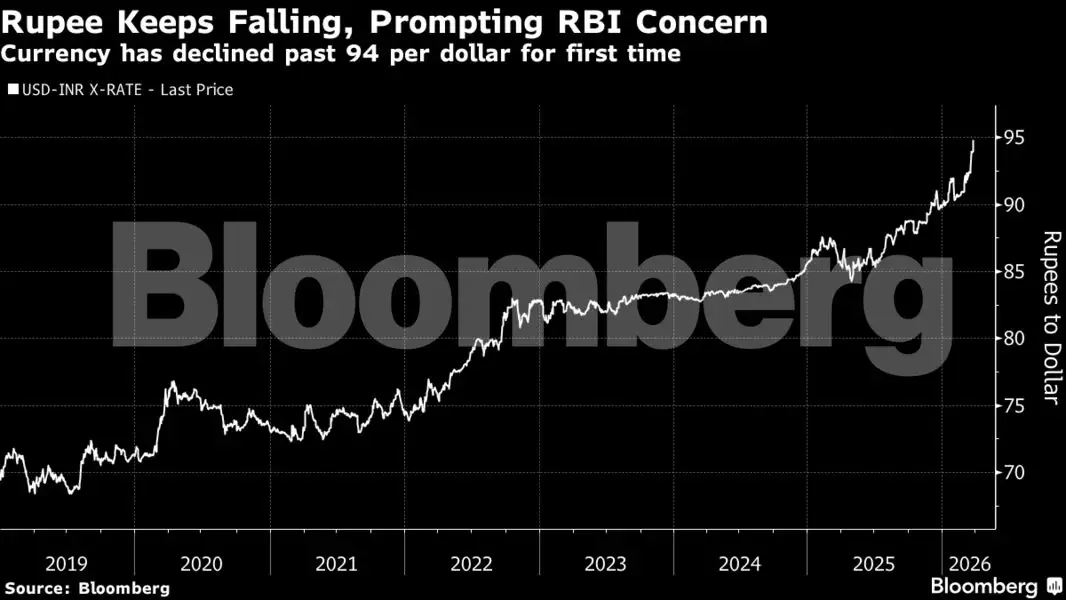
Pressure on the rupee has mounted since the Iran war broke out a month ago. The currency has fallen more than 4% over that period to 94.82 as of Friday, and is Asia’s worst performer this year. Uncertainty over the duration of the conflict has prompted global funds to pull more than $11 billion from Indian equities, while index-eligible bonds have seen record outflows of $1.6 billion in March.
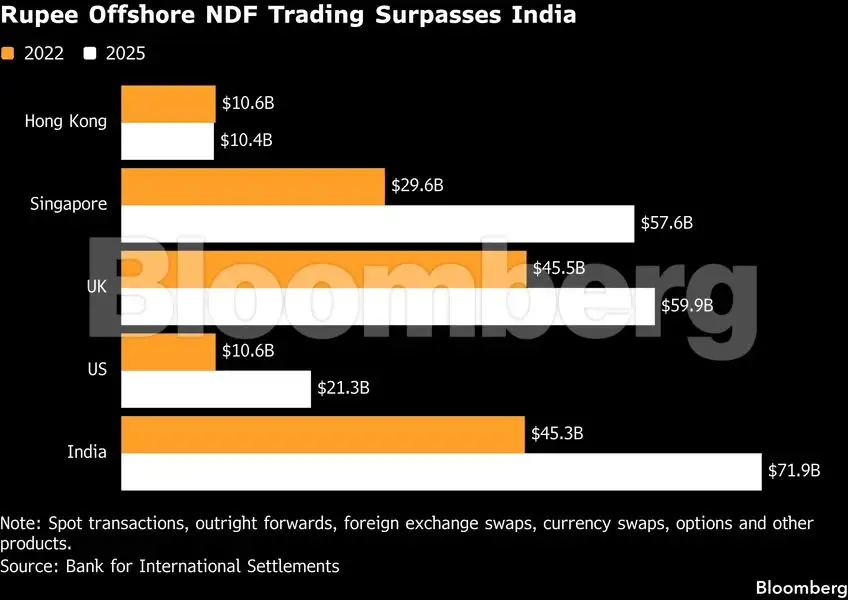
Part of the challenge for policymakers is where that pressure is coming from. While the rupee trades in Mumbai, price signals are increasingly determined overseas in hubs like Singapore, London and New York, through derivatives that let investors take positions without access to domestic markets.That makes traditional intervention less effective. Large positions can build outside India’s regulatory reach and feed back to domestic markets via arbitrage, forcing the RBI to respond by selling dollars, draining reserves while doing little to curb the underlying build-up.
By capping how much risk banks can carry, authorities are trying to make it harder for those positions to accumulate in the first place — echoing steps taken in 2011, when the RBI tightened banks’ net open position limits.
“This is a period of extreme stress for the rupee because of an unprecedented energy shock,” said R. Gurumurthy, a former RBI regional director who previously oversaw dollar-rupee interventions. “If you look at past instances where the rupee has faced such rapid depreciation in such a short time, the RBI has always stepped in with exceptional steps.”
 Bloomberg
The growth in offshore trading has long unsettled the RBI. When London overtook Mumbai as the top center for rupee trading in 2019, officials warned that offshore rupee trading was being driven by “speculators and arbitrageurs.”
Most of this activity is in non-deliverable forwards — contracts commonly used in emerging markets, especially for currencies that are not freely traded — allowing investors to hedge or bet on future values without physically exchanging the rupee.
The market’s rapid expansion has coincided with a persistent slide in the rupee, even as India remains one of the fastest-growing major economies, expanding at more than 7% annually in recent years. Capital markets have also grown, drawing about $16 billion from foreign investors into Indian bonds since their inclusion in JPMorgan Chase & Co.’s flagship index in June 2024.
Yet the rupee has weakened more than 25% since 2019, underscoring the disconnect between strong domestic fundamentals and currency performance.
The offshore market “exhibits exaggerated movements,” said G. Mahalingam, a former RBI executive director who was part of a 2019 task force set up to examine overseas rupee trading. “It takes the lead and the domestic market follows.”
Root Problems
Intervention alone has struggled to close that gap. The RBI was a net seller of $51.7 billion of dollars last year, the most on record, and has continued to step in during bouts of volatility, including at the onset of the Iran conflict.
The impact has been limited, highlighting the constraints of direct intervention when it runs up against broader macro forces like a strong dollar and shifting global risk sentiment. Other emerging-market currencies like the Philippine peso and South Korean won have also tumbled after the Middle East conflict broke out.
“Trying to stem currency depreciation by putting the squeeze on offshore markets rarely has the intended effect of staving off speculative pressures,” said Eswar Shanker Prasad, senior professor of trade policy at Cornell University. “The root problems underlying a currency’s falling value need to be addressed.”
With intervention proving costly, the central bank has widened its approach. Besides the limits on open positions, it has also proposed stricter reporting rules requiring overseas affiliates of lenders to disclose rupee-linked trades to a clearing house supervised by the RBI, in a bid to better understand who is driving offshore activity and why.
The plan has met resistance. Global banks said it could breach client confidentiality, conflict with data and reporting rules in other jurisdictions and require major changes to their systems, data formats and legal agreements.
“Some banks may need time to set up their reporting mechanisms, which could result in a temporary, limited decline in liquidity,” said Rajeev De Mello, global macro portfolio manager at Gama Asset Management.