However, comedy movies often age poorly, and the premises of many major rom-coms wouldn’t hold up today, like the workplace harassment in The Proposal. One of Heigl’s biggest comedies, 27 Dresses, is death by a thousand cuts — the premise isn’t too bad, but so many smaller elements sting with the worst tropes of the 2000s. Interestingly, it’s currently trending on Netflix.
27 Dresses Wed Katherine Heigl’s Star Power To The Writer Of Devil Wears Prada
While still saving lives as Izzie Stevens on Grey’s Anatomy, Katherine Heigl made a strategic pivot into movies, effectively building a parallel career as a rom-com lead. Her breakout movie moment came in 2007 with Knocked Up, where she proved she could hold her own in a major studio comedy and connect with mainstream audiences.
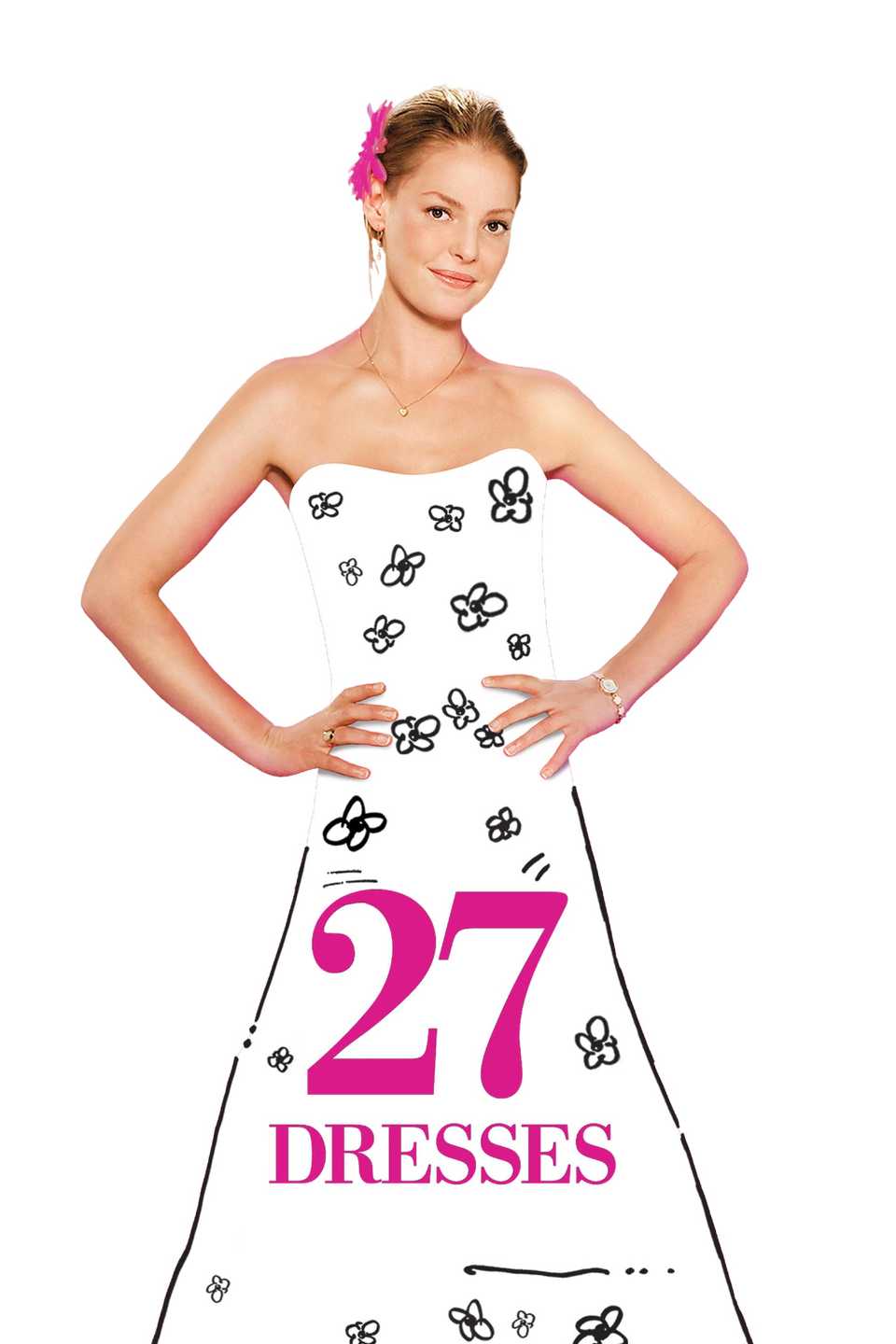
That momentum carried directly into 2008’s 27 Dresses, pairing her with screenwriter Aline Brosh McKenna, who was coming off the success of The Devil Wears Prada. Brosh McKenna drew from her own experiences as a serial bridesmaid, heightening them into a winning concept: a woman perpetually supporting others’ love stories while sidelining her own.
It’s a premise that feels tailor-made for the 2000s: high-concept, visually driven, and rooted in a distinctly female perspective, but still broadly commercial. Like Mean Girls, Legally Blonde, or Mamma Mia!, it occupies that middle ground between female-led comedy and traditional romance.
Opposite Heigl, James Marsden brings an easy charm to 27 Dresses as her love interest. The movie leaned into a successful formula, and delivered: 27 Dresses grossed over $162 million worldwide against a $30 million budget (via Box Office Mojo), solidifying Heigl as one of the era’s most bankable rom-com stars.
27 Dresses Cracks Netflix’s Top 10 Over 18 Years After Its Theatrical Release
Nearly two decades after its theatrical debut, 27 Dresses found a new audience when it hit multiple Netflix territories in late March 2026, quickly cracking the platform’s top 10 worldwide (via FlixPatrol). The film checks nearly every box for algorithm-friendly viewing: a nostalgic feel-good movie led by recognizable stars in Heigl, Marsden, and Judy Greer.
Interestingly, part of its renewed popularity is fueled by social media chatter debating how well the movie has or hasn’t aged well. This mix of fondness and critique around 27 Dresses creates a perfect storm for streaming engagement, proving that even nearly 20-year-old rom-coms can find new life.
|
27 Dresses Overview |
|
|---|---|
|
Release Date |
January 18, 2008 |
|
Budget |
$30m |
|
Box Office Worldwide |
$162.7m |
|
Writer |
Aline Brosh McKenna (The Devil Wears Prada) |
|
Director |
Anne Fletcher (Step Up, The Proposal) |
|
Jane |
Katherine Heigl (Grey’s Anatomy, The Ugly Truth) |
|
Kevin Doyle |
James Marsden (X-Men, Enchanted) |
|
Casey |
Judy Greer (13 Going On 30, Ant-Man) |
In 2026, 27 Dresses is a reminder that the mid-2000s female-driven rom-com boom still resonates, even if some of its conventions haven’t aged gracefully. Because fewer and fewer big-budget romantic comedies are released theatrically today, older titles often get a Netflix bump for audiences who love the genre.
27 Dresses remains a visually and musically memorable rom-com, buoyed by star power and the undeniable chemistry of Heigl and Marsden. Certain moments land perfectly, like the montage of Heigl trying on dozens of bridesmaid dresses, and the movie even introduced “Bennie and the Jets” to a new generation of viewers.
For fans of romantic comedies from the 2000s, these scenes still deliver charm and comfort. Yet the movie is hampered by a weak script. Jane, Heigl’s character, is essentially a “pick me girl” before the term existed: her identity revolves almost entirely around self-sacrifice, and her storyline reinforces the tired notion that women must choose between career and romance.
Even in 2006, this framing felt outdated, and it leaves the movie struggling to resonate beyond nostalgia. The sister-on-sister betrayal, played for laughs, walks a fine line between broad comedy and mean-spiritedness, undercutting any warmth the film builds elsewhere.
The movie flirts with critiquing the wedding-industrial complex, but it never fully commits. Its satire is too soft and its commentary too hesitant, leaving the film straddling a line between affectionate comedy and dated gender messaging.
Tropes like the self-sacrificing female lead and romance through manipulation make the film instantly recognizable as a product of its time. Ultimately, 27 Dresses is a study in contrasts: charming, star-driven, and visually fun, yet structurally tethered to the problematic tropes and limitations of mid-2000s rom-com storytelling.
- Release Date
-
January 10, 2008
- Runtime
-
107 minutes
- Director
-
Anne Fletcher