The sophomore season had massive shoes to fill, coming on the heels not only of an incredible season 1, but also Peter Berg’s 2004 film of the same name and the Friday Night Lights non-fiction book on which both the movie and TV series are inspired. Friday Night Lights season 2 stumbled in its attempt to deliver on season 1’s promise of quality, but the show quickly found its way back to solid ground.
Friday Night Lights Season 1 Was An Excellent Start
A tear-jerking pilot episode is rare considering how unfamiliar the world and characters are to its viewers, but that is exactly what Friday Night Lights delivered. The town of Dillon, Texas quickly becomes a character in and of itself, and the show’s key players are easy to understand and follow.
The episode’s climax, where star quarterback Jason Street is carried off the field on a stretcher, creates high emotional stakes and pushes each and every character out of their comfort zone. The rest of the season continues to challenge them, taking characters that represent traditional high-school archetypes and deepening them into memorable, one-of-a-kind individuals.
While the show spends plenty of time on the characters’ interpersonal relationships, home lives, and faith, it never loses sight of the glue that holds it all together: football. There’s no one in Friday Night Lights who doesn’t love football, and the show displays the game with such reverence that it’s nearly impossible for viewers not to love it too.
You don’t have to be a sports person to get behind the gameplay in Friday Night Lights. There’s a lot of mud, tackling, and helmet-clashing, but well-written announcer commentary, frequent cutaways to the scoreboard, and palpable emotion make every Panthers’ game completely digestible and riveting to watch. All in all, Friday Night Lights season 1 knew exactly what it was about.
What Went Wrong In Friday Night Lights Season 2
The series’s second outing didn’t share its predecessor’s confidence. Ultimately, it confused drama and melodrama, and this was evident in every facet of Friday Night Lights season 2’s story. A show that had established itself as powerfully heartwarming, that had coined the catchphrase “clear eyes, full hearts, can’t lose,” suddenly became excessively dark, with characters facing trauma that simply felt out of place.
The show’s most infamous plot line brought Landry and Tyra together. It’s a pairing that had great potential to showcase a different side of both characters, but was executed in a manner more befitting a crime drama than a heartwarming sports show. When a man attempts to sexually assault Tyra, Landry intervenes and kills him. The two then dump the body and attempt to keep it a secret.
The secrecy and emotional burden of the whole situation labored Friday Night Lights with a heaviness that was out of sync with the show’s promise. Simply put, Friday Night Lights was not a murder show, and this storyline proved it.
But Friday Night Lights season 2’s problems extended beyond this plot line. The season also opened with Coach Taylor leaving the Panthers — and Dillon — to take a coaching job at Texas Methodist University. Of course, a subpar coach took his place with the Panthers, and the team fell into disarray. This also coincided with the arrival of his baby daughter, Gracie, creating upheaval at home.
On the whole, this felt like a major step backward. Season 1 explored the exciting team-building of the Panthers, as they came together to work without Jason Street, and with great success. The main allure of the show is seeing Coach Taylor create cohesion and camaraderie among the Panthers, and season 2 took that away.
Like the Landry/Tyra murder plot, Coach Taylor’s new job is short-lived. He returns to coach the Panthers in season 2, episode 5, “Let’s Get It On.” The way Friday Night Lights abandons these plots almost as quickly as they came feels like confirmation that they weren’t in the spirit of the show.
Luckily, Friday Night Lights‘ identity is so strong that its characters practically walked themselves away from misplaced storylines, and the show was quickly able to get itself back on track.
Friday Night Lights Recovered In Season 3 And Never Looked Back

Friday Night Lights made the smart decision to linger as little as possible on the events of season 2. Coach Taylor returns and, after some pushback, re-establishes himself as the Panthers’ trusted leader. Landry comes clean about the killing, and the case is seen through — and dismissed — allowing him to put it all behind him. This opened season 3 up for the stories that truly advanced the show.
Season 3 sees the senior year of key players, which brings inherent drama, tension, and natural evolution as new players also join the ranks. Coach Taylor’s work in season 4 to invigorate the looked-down-on East Dillon High also creates a natural opportunity for new characters, and is much more in keeping with the show’s themes of love, acceptance, and hard work.
The sports drama has a structure that invites longevity as new Friday Night Lights characters are able to arrive and establish themselves before existing players transition out of the team. Season 3 and beyond saw a pleasant mix of both freshness and familiarity. It can be a risk for a high-school-focused show to continue after the graduation of its main characters, but Friday Night Lights handled this with care.
The show’s true anchor is Coach Taylor, rather than the players, allowing Friday Night Lights to continue to feel natural as its younger characters spread in different directions. This is exactly why Coach Taylor’s departure in season 2 felt so incorrect, a lesson the show proved it had learned in later seasons.
Friday Night Lights‘ series finale rivals the quality of its pilot, offering an emotionally satisfying conclusion for all its characters that embraces an openness towards the future rather than a need to answer every question. This allows the show to breathe and, in itself, demonstrates maturity and growth among its characters. After a prompt course correction in season 2, Friday Night Lights sticks the landing.
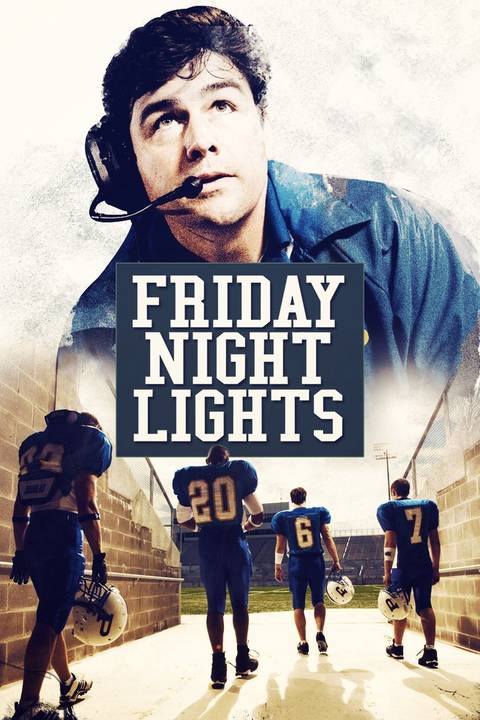
- Release Date
-
2006 – 2011
- Showrunner
-
Jason Katims
- Directors
-
Patrick R. Norris, Jonas Pate, Allison Liddi-Brown, Adam Davidson, Dean White, Peter Berg, Seith Mann, Jason Katims, Chris Eyre, Ami Canaan Mann, Charles Stone III, Dan Lerner, Josh Pate, Kyle Chandler, Mark Piznarski
- Writers
-
Brent Fletcher
-
 Kyle Chandler
Eric Taylor
-
Connie Britton
Tami Taylor