From Prime Video’s upcoming Blade Runner: 2099 to The Expanse creator SA Corey’s upcoming series The Captive’s War, to Apple TV’s long-awaited adaptation of William Gibson’s Neuromancer, sci-fi TV is undergoing a renaissance right now. However, this isn’t the first time the genre has enjoyed a fertile period.
In the ‘90s, the mainstream success of hits like Star Trek: The Next Generation and The X-Files led to a slew of new sci-fi shows, including a lot that are now seen as influential classics. As well as spawning many more Star Trek shows, The Next Generation helped shape Stargate, Babylon 5, Farscape, and the Battlestar Galactica reboot.
Battlestar Galactica Deliberately Avoided Including Aliens
First airing as a three-hour miniseries on the Sci-Fi Channel in 2003, Battlestar Galactica was a reboot of the original 1978 series of the same name. While the original show lasted only one season, the Battlestar Galactica reboot ran for four seasons and spawned three spin-offs, earning widespread critical acclaim.
The Battlestar Galactica reboot’s propulsive story followed the last remnants of humanity after an apocalyptic attack by sentient man-made robots known as Cylons. Although mechanical Centurions are the most aggressive Cylons, the show’s human characters also had to deal with another, more insidious threat. It was these villains that came to shape the show’s story.
Before overthrowing and almost annihilating humanity, the Cylons infiltrated human civilization with models that were indistinguishable from real humans. In practical terms, this meant that any human character in the Battlestar Galactica reboot could be revealed to be a Cylon, something the series delighted in using as a twist throughout its four seasons.
Of course, Battlestar Galactica’s reboot needed this twist, since the show was missing another important element of the usual space opera series formula. Unlike almost all of its competitors in the genre, the series had no alien characters, as either antagonists or members of its central team.
This was a plot element common to Stargate, Babylon 5, Farscape, and many other shows in the genre, meaning many sci-fi fans were shocked to find this trope missing from the reboot. However, the show’s creators knew exactly what they were doing, and this pivotal choice helped make the Battlestar Galactica reboot as critically celebrated as it was.
Battlestar Galactica Opted For Retro & Analogue Technology
By eschewing alien characters altogether, Battlestar Galactica’s reboot ensured that the show’s story only had one major sci-fi element for viewers to get their heads around. This made the series feel more grounded, allowing the reboot to end up listed alongside grounded dramas like Deadwood and The Sopranos as one of the decade’s most acclaimed TV shows.
While it is not impossible for a show to feature aliens and take itself seriously, the more far-fetched sci-fi story elements a series has, the campier its tone is likely to become. The Battlestar Galactica reboot strived to prioritize verisimilitude, resulting in the show’s lack of aliens and its singular focus on humanity’s futuristic war with Cylons.
Meanwhile, Battlestar Galactica’s reboot also borrowed the retro-futuristic aesthetic of the original ‘70s series, with the main characters using analogue technology instead of its digital replacements. This could have seemed bizarrely anachronistic, since such technology was already largely outdated by the time the show aired in the early 2000s, and would be long since irrelevant by the reboot’s far-flung future setting.
However, this discrepancy is justified within the show’s universe, as Battlestar Galactica‘s reboot explained that Cylons can hack digital networks but are unable to compromise analogue devices. This worked on two levels, giving the reboot a refreshingly retro visual aesthetic while also deepening the paranoia its human characters felt about potential Cylon infiltration.
Battlestar Galactica’s Unconventional Approach To Sci-Fi Made It A Success
MovieStillsDB
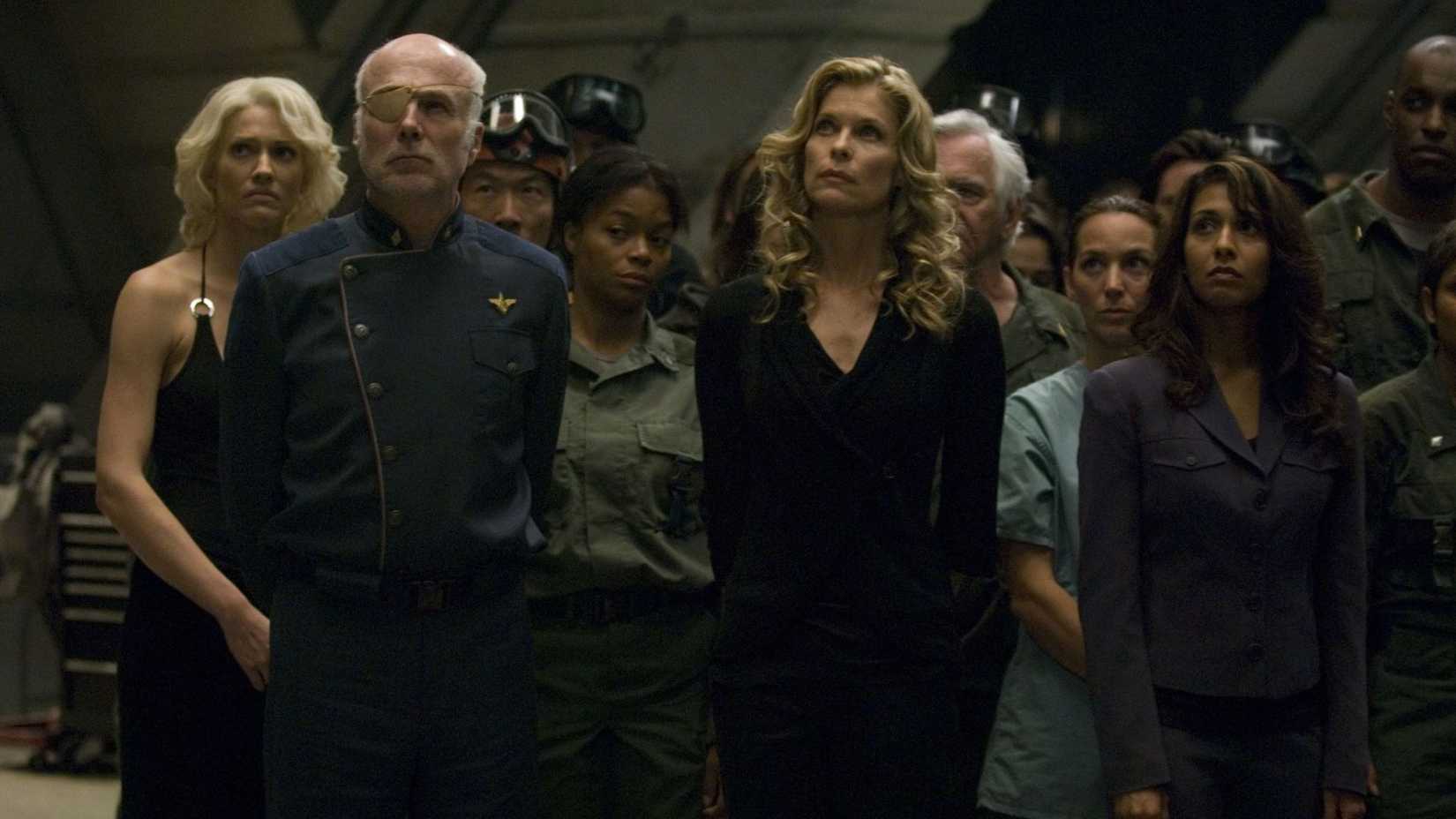
Between its lack of aliens and its unusual, seemingly outdated technology, it is fair to say that Battlestar Galactica’s reboot took an atypical approach to the sci-fi genre. TV had plenty of space opera shows before and since, but few of them were as successful as the acclaimed reboot, and it is hard to avoid the conclusion that Battlestar Galactica’s singular approach paid off.
When Star Trek: Starlet Academy lasted only two seasons, the fact that a far less famous sci-fi franchise was able to sustain a universally acclaimed four-season reboot is clearly cause for celebration. Battlestar Galactica’s outsized critical success came down to the show’s decision to avoid alien characters, which made it feel more realistic, and its use of antiquated technology.
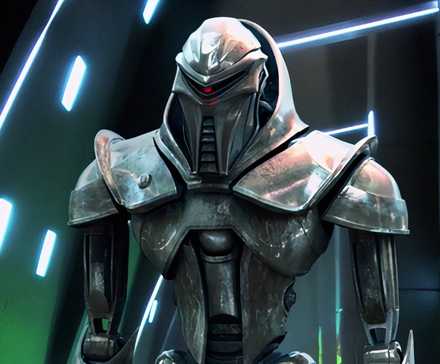
Battlestar Galactica’s Cylon Plan Explained (In Full)
The Cylons’ plans in Battlestar Galactica were steadily revealed across the course of the sci-fi series and played into the show’s overall themes.
The retro-futuristic look of Battlestar Galactica stood out amid a sea of similar space opera shows, as the series battled for attention from viewers of Firefly, Star Trek: Enterprise, and Stargate among others. Meanwhile, Battlestar Galactica‘s lack of aliens meant the show felt substantially different from its competitors, further reinforcing its status as a critical standout.
- Release Date
-
2004 – 2009-00-00
- Showrunner
-
Ronald D. Moore
- Directors
-
Wayne Rose, Michael Nankin, Rod Hardy, Sergio Mimica-Gezzan, Edward James Olmos, Robert M. Young, Jeff Woolnough, Félix Enríquez Alcalá, Jonas Pate, Allan Kroeker, Anthony Hemingway, Jean de Segonzac, Marita Grabiak, James Head, Paul A. Edwards, Gwyneth Horder-Payton, Brad Turner, Ronald D. Moore, Bill Eagles
- Writers
-
Carla Robinson, Michael Taylor, Bradley Thompson, David Weddle, Jane Espenson, Mark Verheiden, Michael Angeli, Anne Cofell Saunders, Jeff Vlaming, Michael Rymer, Dawn Prestwich, Nicole Yorkin, Seamus Kevin Fahey
-
 Edward James Olmos
William Adama
-
Mary McDonnell
Laura Roslin