

Synopsis: Financial markets often go through periods of excitement where prices rise quickly, followed by sharp falls. Over the past 100 years, several major bubbles have formed across stocks, property and new technologies. This story looks at some of the biggest booms and busts that changed markets and investor behaviour.
Financial markets often move in cycles, where periods of strong growth and excitement are sometimes followed by sharp declines. Over the last 100 years, several major asset bubbles have formed as easy money, new ideas and investor optimism pushed prices far above their true value before eventually correcting. Here are the biggest asset bubbles in the last 100 years.
The Great Crash of 1929
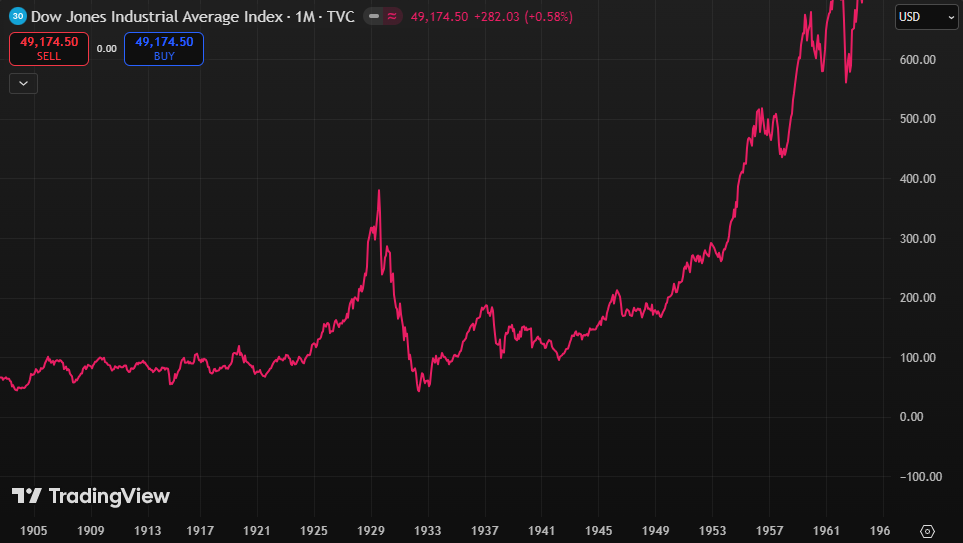
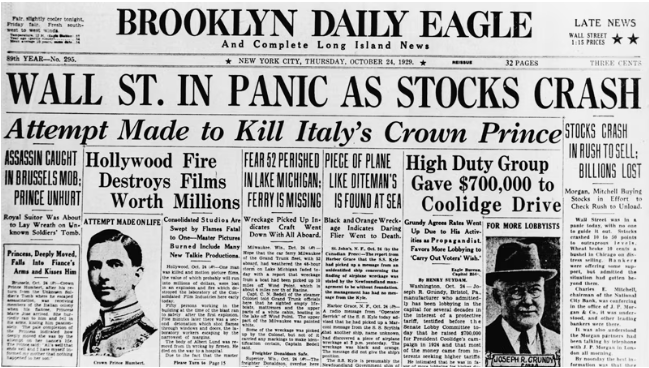
The Wall Street Crash of 1929, often called the Great Crash, was a major collapse in U.S. stock prices that began in October 1929 on the New York Stock Exchange. It led to a sharp loss of confidence in the banking system and marked the start of the Great Depression, which lasted until 1939, making it the most devastating financial crash in U.S. history. The crash is closely linked with October 24, known as Black Thursday, when a record 12.9 million shares were traded, and October 29, known as Black Tuesday, when trading surged to about 16.4 million shares as panic selling intensified.
The years leading up to the crash, known as the Roaring Twenties, saw strong industrial growth and rising optimism. Much of the profits during this period flowed into stock market speculation as low interest rates pushed people to invest their savings in equities. However, by 1929, underlying economic problems were already visible. The agricultural sector was struggling with overproduction and falling prices, pushing farmers into debt, while low wages limited consumer demand, leaving manufacturers with unsold goods. Companies responded by cutting production and laying off workers, which further reduced spending power. Despite these warning signs, investors kept buying stocks, pushing prices far above their true value.
By September 1929, more experienced investors began selling as they realized the rally could not continue. Prices started to stall and fall, triggering wider selling and eventually panic. After Black Thursday, major bankers tried to stabilize markets by buying shares above market prices, briefly restoring confidence. However, the recovery was short lived, and the market plunged again on Black Tuesday. The decline continued until July 1932, by which time stock prices had fallen by about 90 percent from their peak.
In response, policymakers introduced major reforms. The Banking Act of 1933, also known as the Glass-Steagall Act, separated commercial and investment banking to reduce risk, and stock exchanges introduced trading halts to curb panic selling. Economists still debate how much the crash itself caused the Great Depression, with some arguing it was not enough on its own to trigger the downturn, while others see it as a key event that worsened existing economic weaknesses as part of broader business cycles.
Source: https://www.goldmansachs.com/our-firm/history/moments/1929-financial-crash
The Silver Crash of (1979-1980)
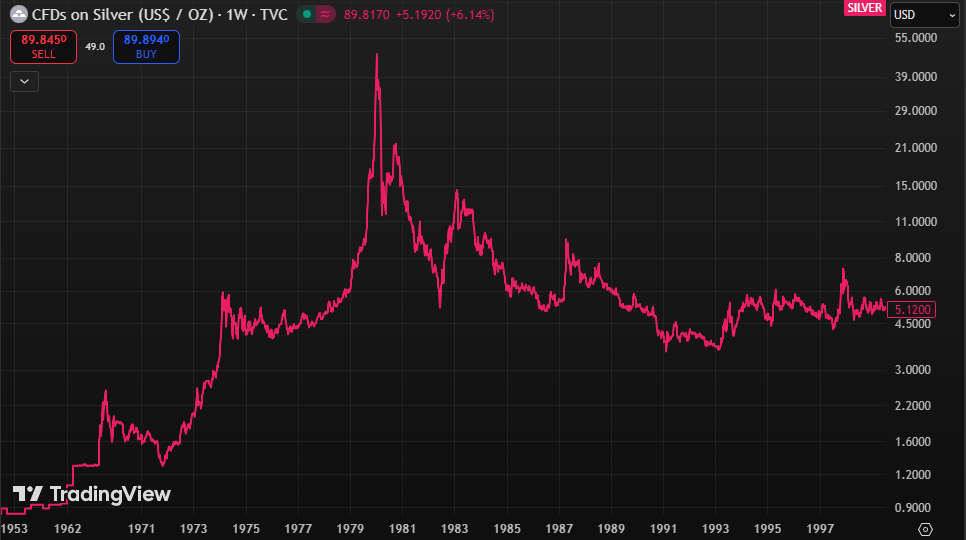
The silver bubble of 1979 to 1980 saw prices surge dramatically in a short period. Based on the London Fix, silver prices rose from about USD 6.08 per troy ounce on January 1, 1979, to a record USD 49.45 per troy ounce by January 18, 1980, a jump of around 713 percent. Silver futures also touched an intraday high of USD 50.35 on COMEX, while the silver to gold ratio fell to about 1:17, with gold itself peaking near USD 850 per ounce the same day. During the final nine months of 1979, the Hunt brothers accumulated more than 100 million troy ounces of silver along with large futures positions.
At their peak, the Hunt brothers were believed to control roughly one third of the world’s privately held silver supply, creating severe shortages for other buyers. The situation became so extreme that on March 26, 1980, jeweller Tiffany’s published a newspaper advertisement criticizing the hoarding of billions of dollars worth of silver, arguing that it pushed prices to artificially high levels and hurt consumers who relied on silver products.
In response to the Hunts’ massive accumulation, exchange authorities introduced new rules on January 7, 1980, including COMEX’s “Silver Rule 7,” which imposed strict limits on buying commodities using leverage. Because the brothers had borrowed heavily to finance their purchases, the sharp reversal in prices proved disastrous. Silver prices fell more than 50 percent within four days, leaving them unable to meet their obligations and triggering panic across markets.

The Hunt brothers suffered huge losses, and some banks and brokerage firms that had supported them also collapsed. The government chose not to step in because it did not want to be seen rescuing speculators. Eventually, they arranged a private rescue package with a group of banks and companies. They were later called before Congress, criticised, fined, and pushed into bankruptcy. It took them more than ten years to sell off their silver holdings and repay creditors. Although they lost billions, they were still considered wealthy by most standards.

Japan’s Bubble Economy (1986-1991)
The Japanese asset price bubble was a period from 1986 to 1991 when real estate and stock prices in Japan surged to extremely high levels due to rapid asset inflation, easy credit, and strong speculation. The government’s policies encouraged asset market growth by making credit widely available and supporting financial conditions that fueled optimism and risk taking. Overconfidence, loose money supply, and credit expansion drove overheated economic activity, pushing prices far beyond fundamentals. By early 1992, the bubble burst, triggering a prolonged period of economic stagnation.
The collapse led to a massive buildup of non performing loans, putting severe pressure on financial institutions and contributing to what became known as Japan’s Lost Decade, with land prices only showing a slight nationwide rise again in 2018 after many years of decline.
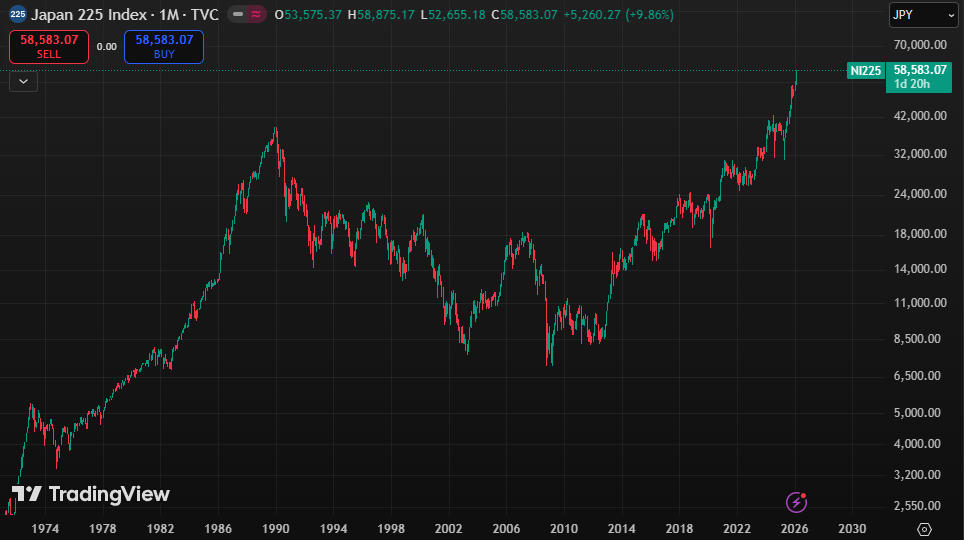
During the 1980s, structural shifts in markets also supported the bubble. Corporate share ownership rose sharply, reducing the number of shares available for public trading and making prices easier to influence and less tied to corporate performance. Stock prices were closely linked to rising land prices, especially in Tokyo, which began climbing in the mid 1980s and pushed equities higher. The Nikkei 225 moved within a range of around 9,900 to 11,600 in 1984 but crossed 13,000 by late 1985 as the rally began. The surge accelerated in 1986 with gains of about 45 percent in a year, continuing through 1987 despite a temporary setback from the global Black Monday crash. By December 29, 1989, the Nikkei reached a record high near 38,957, marking a gain of over 224 percent since early 1985, largely supported by rising asset values that attracted further speculation.
The turning point came as monetary policy tightened in 1989, sharply increasing borrowing costs and slowing land price growth. This triggered a steep market decline, with the Nikkei falling from about 38,921 at the start of 1990 to around 21,902 by December, a drop of more than 43 percent in a year. Prices continued to fall into the early 1990s, with the index touching roughly 14,338 by August 1992. Although asset prices had clearly collapsed by 1992, the broader economic slowdown lasted for more than a decade, leaving lasting scars on Japan’s financial system and economic growth.
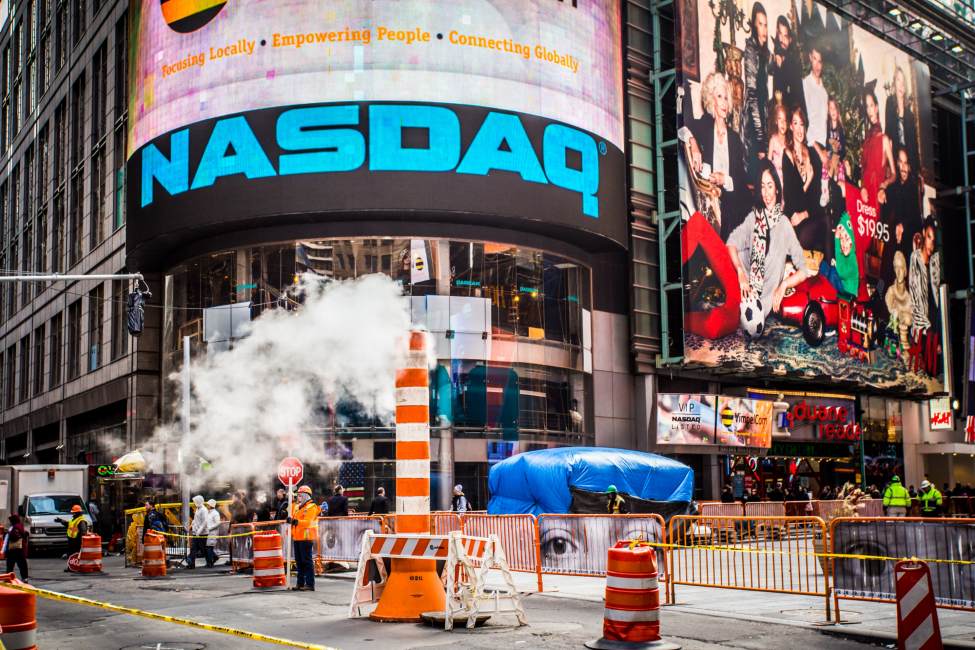
The dot com bubble emerged in the mid 1990s during a period of rapid global growth in information technology and telecommunications. Falling costs of storing and sharing information, the widespread adoption of personal computers, and the rise of the World Wide Web transformed industries and created excitement around online businesses. Entrepreneurs rushed to launch internet companies, while venture capital flowed in as investors were drawn by the promise of high future profits. This period also coincided with the longest economic expansion in the United States after World War II, with falling inflation and unemployment alongside strong growth and productivity. From late 1998, markets enthusiastically welcomed a wave of IPOs, often ignoring whether these companies had viable business models, even though many startups had large valuations despite having little or no revenue.
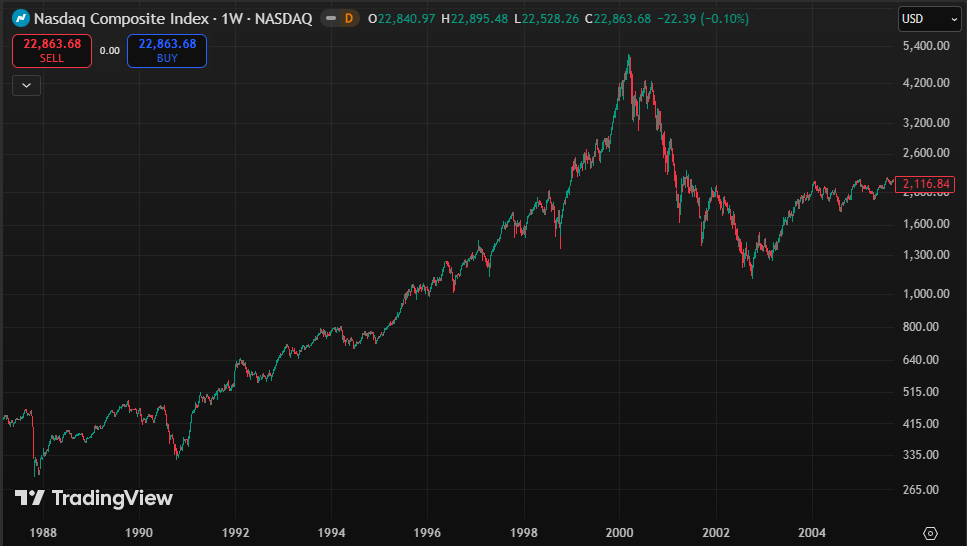
Easy liquidity further fueled the boom after the Federal Reserve cut interest rates following the collapse of Long Term Capital Management in 1998. Encouraged by analysts, both retail and institutional investors poured money into technology stocks, expecting prices to keep rising. The scale of the surge was dramatic, with the value of Nasdaq listed stocks rising from just 11 percent of the New York Stock Exchange in 1990 to about 80 percent by December 1999. The Nasdaq index jumped 86 percent in 1999 alone and peaked at 5,048 on March 10, 2000, while major deals like the AOL and Time Warner merger reinforced confidence in the idea of a “new economy.”
The bubble soon burst as technology stock prices collapsed, leaving many cash strapped startups worthless within months and bringing the IPO market to a halt. By October 4, 2002, the Nasdaq had fallen to around 1,139.90, a decline of about 77 percent from its peak. The downturn spread beyond the United States to global tech markets including Tokyo’s Mothers Market, Seoul’s Kosdaq, Frankfurt’s Neuer Markt, London techMARK, and Paris’s Nouveau Marché. The crash also preceded the economic recession of 2001, and the Nasdaq would not reach a new record high again until April 23, 2015.
Source: https://internationalbanker.com/history-of-financial-crises/the-dotcom-bubble-burst-2000/
2008 Housing Bubble
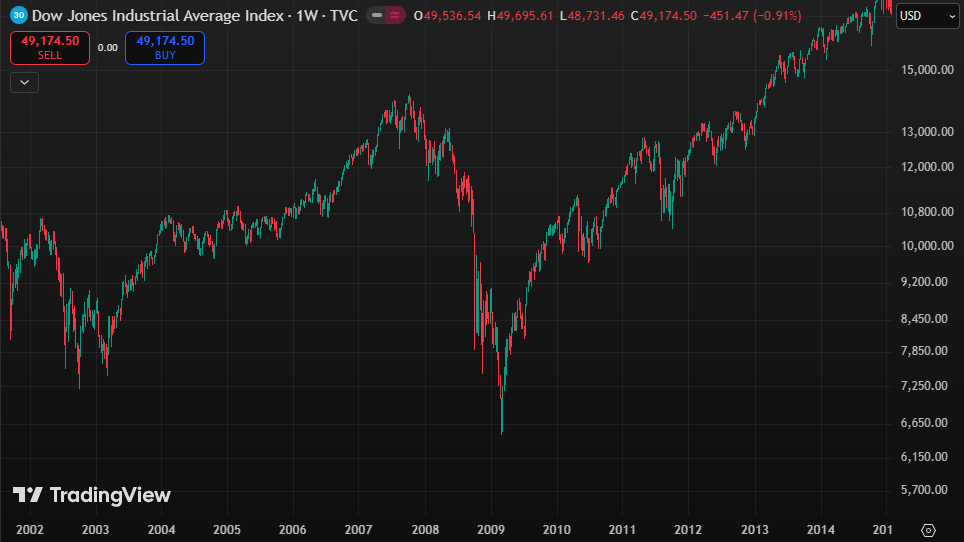
The 2008 financial crisis, also known as the Global Financial Crisis or the Panic of 2008, was a major worldwide financial meltdown centered in the United States and driven largely by the housing bubble of the 2000s. Excessive speculation in property, risky lending to subprime borrowers, weak regulation, and heavy use of mortgage backed securities and complex derivatives created deep vulnerabilities in the financial system. Easy refinancing had boosted consumer spending, but when home prices began falling, the system started to unravel. The crisis began with the subprime mortgage collapse in early 2007 and spread into a global liquidity crisis by mid 2007, eventually peaking with the bankruptcy of Lehman Brothers in September 2008, which triggered market crashes and bank runs worldwide and worsened the Great Recession and the 2007 to 2009 bear market.
Policy and structural factors had built the foundation for the bubble. Laws passed in the 1990s encouraged easier housing finance, while the partial repeal of the Glass Steagall Act in 1999 allowed financial institutions to combine low risk and high risk activities. After the Federal Reserve cut interest rates between 2000 and 2003, lenders increasingly targeted low income borrowers with high risk loans, often without adequate oversight. When rates rose between 2004 and 2006, mortgage costs increased and housing demand weakened, leading to rising defaults by early 2007. Lenders began collapsing, global credit markets were hit by August 2007, and major events followed including the collapse of New Century Financial, the fire sale of Bear Stearns in March 2008, and mounting stress across global markets.
Governments and central banks responded with massive rescue measures to stabilize the system. Fannie Mae and Freddie Mac were taken over by the U.S. government in September 2008, Lehman Brothers filed for the largest bankruptcy in U.S. history, American International Group was bailed out, and Washington Mutual failed in the largest bank collapse ever. The U.S. approved the USD 700 billion Troubled Asset Relief Program, launched quantitative easing, and passed fiscal stimulus under the American Recovery and Reinvestment Act in 2009, helping end the worst phase of the recession by mid 2009. The crisis had severe economic consequences, with about 8.7 million jobs lost, unemployment rising to 10 percent, poverty increasing to over 15 percent, the Dow Jones falling 53 percent, and estimates suggesting that one in four households lost at least three quarters of their net worth.
The AI-Bubble (2023-Now)
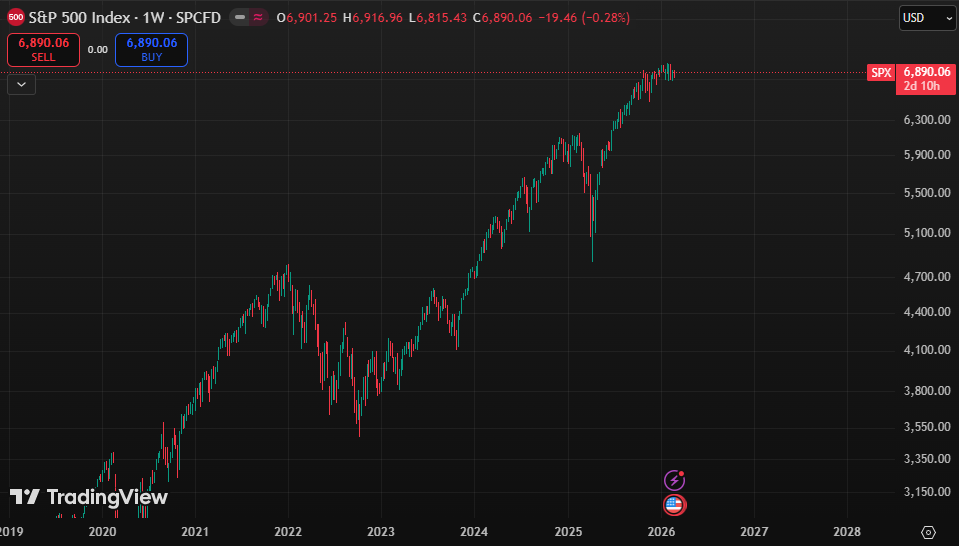
The AI bubble refers to a widely debated possibility that stock prices are being inflated during the current boom in artificial intelligence investment. Rapid spending on AI technologies has fueled strong market gains, but concerns have emerged that valuations are being pushed higher by speculation and circular investment flows among major technology companies. Comparisons are often drawn to the dot com era, with sceptics warning that the current financing environment may be creating unsustainable expectations. Concerns intensified in January 2025 after the launch of the Chinese chatbot DeepSeek, which briefly shook markets and led to sharp declines in several AI stocks, including a 17 percent one day drop in Nvidia before a partial recovery. A report from MIT’s Media Lab later noted that despite tens of billions of dollars invested in generative AI, most organizations were seeing little to no financial return, even as projected spending by major companies is expected to exceed USD 1.6 trillion in the coming years.
The boom has been driven largely by surging demand for semiconductors, which helped Nvidia become the world’s most valuable company and the first to reach a USD 4 trillion valuation in July 2025, quadrupling its value since 2023 and accounting for about 7.3 percent of the S&P 500. By October 2025, its value had crossed USD 5 trillion, larger than the GDP of every country except the United States and China. AI related companies accounted for roughly 80 percent of stock market gains in 2025, leading some analysts to warn that excessive financial engineering may be driving valuations. Microsoft also ramped up spending, investing nearly USD 35 billion in AI infrastructure in one quarter and becoming the second most valuable company largely due to its stake in OpenAI, though investor concerns about rising costs caused its shares to fall despite solid revenue and profit growth.
Market concentration has also reached historic levels, with the five largest companies making up about 30 percent of the S&P 500 and 20 percent of the MSCI World Index by late 2025, the highest concentration in decades. Valuations appeared stretched, with the S&P 500 trading at about 23 times forward earnings, raising concerns about how expensive the market had become compared with global peers. Some experts warned that leading AI companies may be overvalued and that the market’s reliance on a small group of firms increases risk if sentiment shifts.
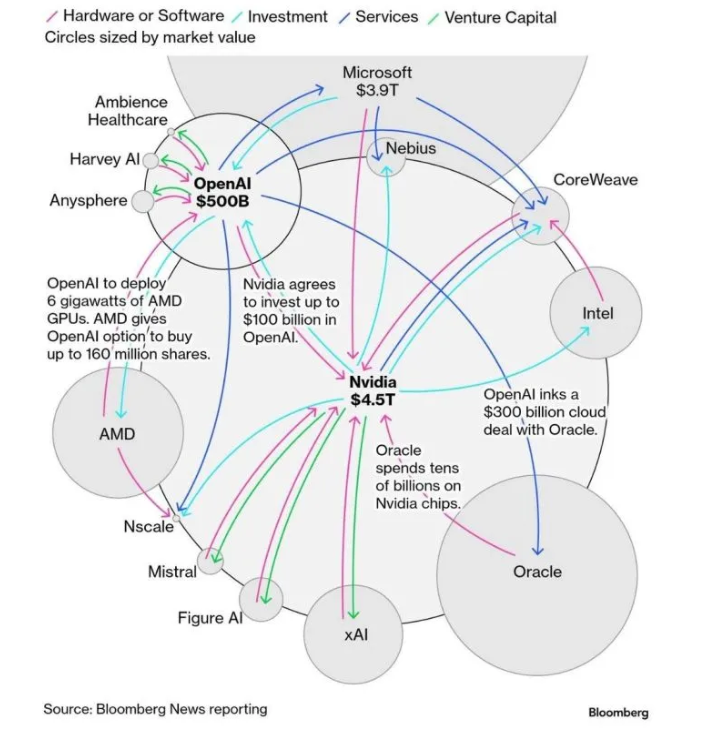
Another major concern has been the circular flow of capital between leading AI firms. Nvidia expanded its investment in OpenAI with a USD 100 billion deal tied to future data center demand for its chips, while also signing a USD 6.3 billion agreement with CoreWeave to purchase unused data center capacity through 2032, in addition to holding an equity stake and supplying GPUs. OpenAI also bought billions of dollars worth of chips from AMD and became one of its largest shareholders, while Microsoft and Oracle entered major partnerships and investment agreements with the company. These interconnected investments have raised concerns that valuations may be reinforcing each other rather than being driven purely by underlying demand.
Disclaimer: The views and investment tips expressed by investment experts/broking houses/rating agencies on tradebrains.in are their own, and not that of the website or its management. Investing in equities poses a risk of financial losses. Investors must therefore exercise due caution while investing or trading in stocks. Trade Brains Technologies Private Limited or the author are not liable for any losses caused as a result of the decision based on this article. Please consult your investment advisor before investing.