

But The Drama is not really about what she did. Despite the way it zips along and entertains us with the mess Emma’s confession creates, this is not the kind of movie that throws something provocative at us for the sake of giving its story an edge of controversy. Instead, Borgli provokes us because he’s interested in how we respond. Underneath the big, flashy distraction at its center is an exploration of what it means to know another person, especially a romantic partner; the impact of a revelation like this on our conception of them; and whether what we latch onto about it is really all that important.
Emma’s Confession Is Designed To Lead Us To The Drama’s Real Focus
Warning: Spoilers for The Drama below!
Emma’s secret is carefully chosen to make for a compelling thought experiment. As a lonely, bullied teenager, she planned to perpetrate a mass shooting at her school. The mere invocation of school shootings, especially in an American context, provokes a strong response. The scale of the (potential) tragedy is part of it; unlike Charlie, who can’t seem to pinpoint a single “worst thing,” Emma can answer with complete certainty.
But our response is also fueled by the image of a prototypical “school shooter” we have in our heads after enduring years of such tragedies, which Zendaya is about as far from as you can get. Indeed, Charlie, best man Mike (Mamoudou Athie), and maid of honor Rachel (Alana Haim) all react at first with utter disbelief, and many viewers may never shake that feeling. This is where The Drama risks verging into exploitative territory, but thankfully, the movie doesn’t underline the “What if someone like Emma…” aspect of its premise too much.
Instead, it employs a darkly playful logic, which Charlie spells out in a later scene: If so many mass shootings happen in this country, then there must be plenty of people who planned one but never went through with it. There must also be even more people who never went as far as planning it, but at least considered it. In both cases, outside a context like the one The Drama creates for its characters, there’d likely be no reason to ever share that with another living soul. So, how unlikely is it really that someone you’ve met, maybe even someone you know, has been in Emma’s shoes?
This isn’t really the point of the movie either, but it helps to flesh out an important part of our response to this confession. Some people will jump directly to condemnation (Rachel is the film’s representative of this approach), but I’d expect most will have follow-up questions. Why? Because, as even my set-up of the above logic implies, “worst” is a matter of degree. We need more information to understand exactly how bad we think this is. The Drama is ultimately trying to get us to reflect on this instinct.
Charlie Is Asking All The Wrong Questions About Emma’s Past
After Rachel’s story of locking the neighbor boy in an abandoned RV and leaving him there, her friends probe in specific ways, searching for the telling details that influence our great moral calculus. We experience these fluctuations along with them as they happen. That the boy was left there overnight makes it worse, but for a brief moment, we’re allowed to wonder whether he actually died there, and the reality is clearly better than that. It matters that she never went back for him, nor confessed what happened to help him get found. It matters, too, that she never apologized. Through this scene, as the other characters extract information that changes their perspective, we experience a rollercoaster of judgment that prepares us for what’s to come.
Once mass shootings are brought into this, the degrees magnify significantly. Obviously, it matters a lot that Emma didn’t go through with it. But does it matter why? Charlie seems to think he can find some absolution there, but her answer – that someone else perpetrated a shooting at the local mall before she had the chance to go through with it – doesn’t give him what he needs. It seems to matter that she had already secured a weapon, but does it make a difference that it was easily accessible at home, versus something she had to painstakingly seek out? Charlie is desperate for there to have been some untreated childhood trauma that fueled Emma’s pain, going as far as inventing some for their friends’ benefit. But how much of a difference would that make? Or, rather, how much of a difference should that make?
The answer depends on what it is we’re trying to accomplish. If our goal is simply to judge the event, then, sure, every little thing counts. Everyone has a line they draw on what they’re willing to forgive, and digging into the mitigating circumstances can determine whether someone has crossed it. But if we’re trying to understand who Emma really is, then our questions should aim to square this story with what we already know about her.
The keystone scene in The Drama is not Emma’s confession, but a conversation that happens just before it.
Through flashback, The Drama shows us teenage Emma’s experience, and it approaches her with a great deal of empathy. It captures how transformative it was to connect with her fellow students in the wake of the mall shooting – how she was confronted with the pain and loss she would have caused, and how she was given a healthy, productive context in which to share many of the feelings that had nearly consumed her. (Quietly the movie’s most provocative suggestion is that the various empathy workshops that stereotypically define a school’s response to a shooting event would be a whole lot more effective before one happens.)
There is a darkly comic tinge to her somewhat opportunistically becoming an anti-gun activist, but the movie isn’t particularly cynical about it. Instead, it’s easy to draw the connection between this back-from-the-brink experience and Emma’s quickness to forgive. She is a firm believer in second chances – in “starting over” – because she was lucky enough to have one herself.
Charlie, who claims to love her, is not nearly as good at this as the film itself is. He seems more desperate to move on from this than actually understand it, searching for some detail that will allow him to file it away without ever disrupting the image of Emma he’s built in his head. Perhaps this is always how it’s been, and every part of Emma that didn’t align with who he wanted her to be was something he could just prune and ignore. But this time, he’s unable to see past her confession. He finds himself uncontrollably recontextualizing moments in their relationship through this new prism, and eventually, his grip on life just collapses.
The Drama’s Ending Is Defined By The Movie’s Key Theme
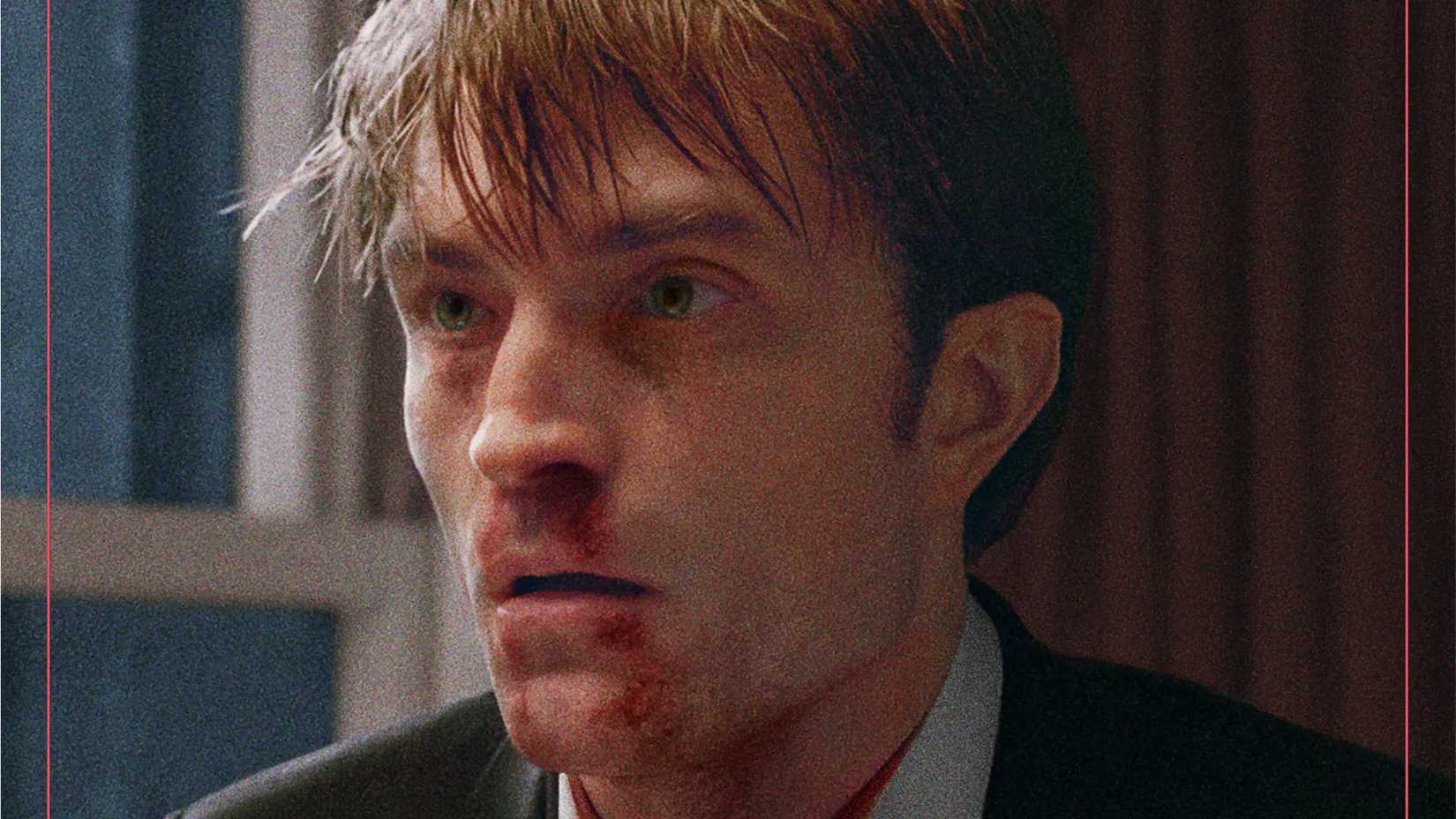
The keystone scene in The Drama is not Emma’s confession, but a conversation that happens just before it. She and Charlie are relating to their friends how they’ve just seen their wedding DJ smoking what appeared to be heroin on the street the night before, and the four of them debate what to do about it. Charlie wants to fire her, but Emma, as usual, argues for understanding. They could’ve seen her at the worst moment of her life, and if they hadn’t spotted her by chance that night, they’d never have known. But Mike points out that they did see her, and isn’t that what matters?
How you read the ending of The Drama depends on whether you believe he’s right. Charlie implodes, nearly cheats with/sexually harasses a coworker, ruins his wedding with an all-time nightmare speech, and is left injured and alone. The relationship he believed he had is in tatters. But Emma, in the film’s final scene, offers him another do-over. They can just hit the reset button, pretend they’d never met each other, and go from there, as if they’re the only two people who matter.
Borgli’s film is less about what you think of Emma’s secret than what you think of this final moment. On the one hand, it can be read very cynically, and not just in terms of whether they actually can start over after what happened. Though Emma might seem unwilling to deal with her past transgression or to have fully moved on from it, her tendency to look past Charlie’s many flaws (evidence of them littered throughout the film) could be understood as her own internalized self-loathing. She believes this is the relationship she deserves, maybe even more than she deserves, and so she tolerates whatever her now-husband does – even nearly sleeping with his colleague and dramatically ruining their wedding in front of their friends and family. Seen in that light, this relationship is a trap that they can’t seem to get out of.
On the other hand, if Emma’s forgiveness comes from a genuine, caring place, then her final offer to start over is a refutation of Mike’s early argument. With enough empathy, it is possible to love someone even after experiencing the worst thing they’ve ever done; that experience is actually an opportunity to know them more intimately than you ever could by looking at them through rose-colored glasses. The Drama‘s ending could be a true starting point for Emma and Charlie, who finally see each other for who they really are and choose to move forward anyway.
- Release Date
-
April 3, 2026
- Runtime
-
105 minutes
- Director
-
Kristoffer Borgli
- Writers
-
Kristoffer Borgli
- Producers
-
Ari Aster, Lars Knudsen, Tyler Campellone