

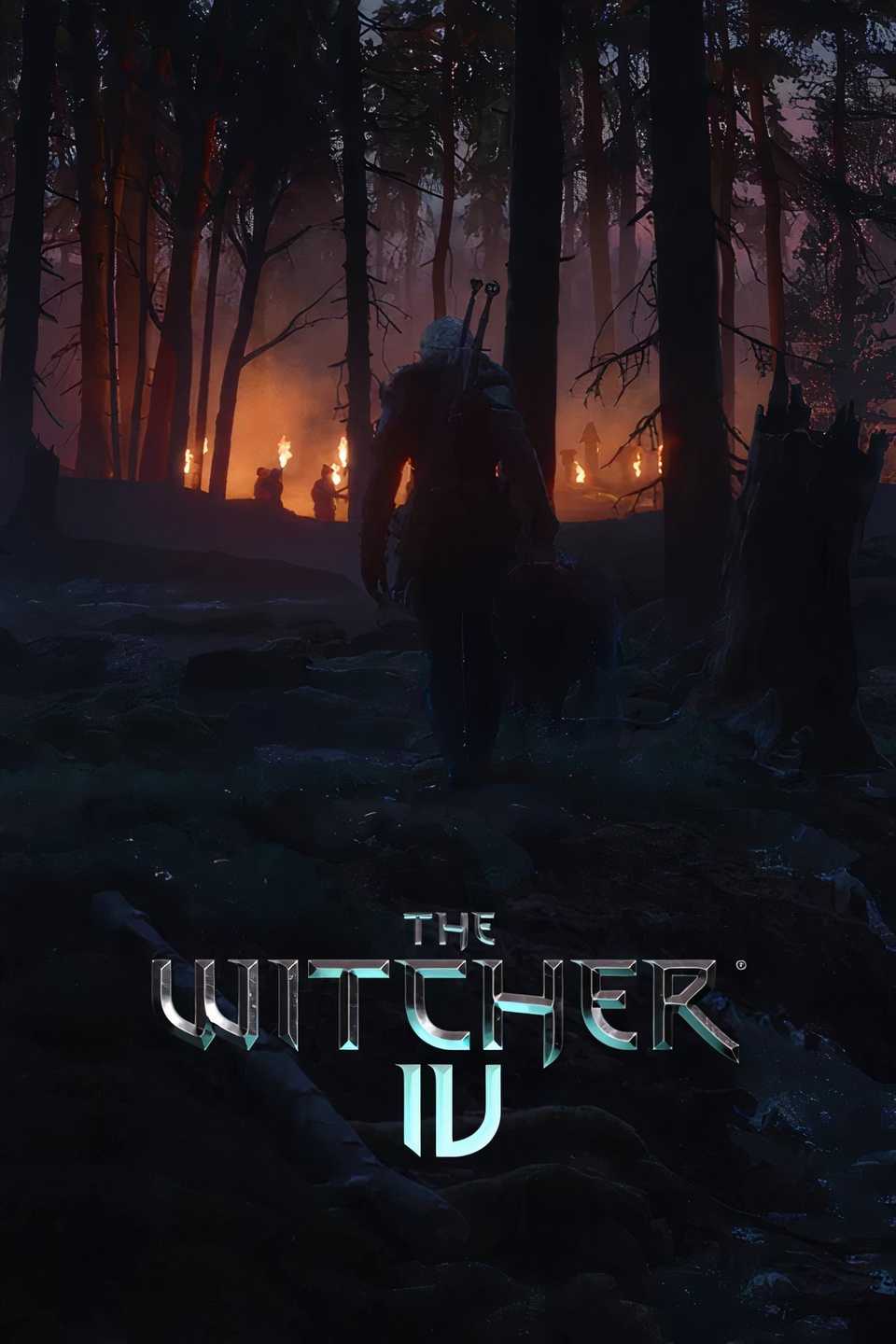
A specific branch of megageometry called megageo foliage will be used in The Witcher 4, and the tech was showcased at GDC in a very impressive demo from NVIDIA. The video shows a landscape that contains over 60 million plants, including one million trees, all rendered in-memory, meaning there’s no asset streaming. Every single polygon is rendered as individual geometry, even individual pine needles, meaning some trees in the tech demo have over 10 million polygons.
This isn’t necessarily a landscape from The Witcher 4, but NVIDIA’s tech demo does use The Witcher 4‘s tree assets, provided by CD Projekt Red. With other processes that a game like TW4 has to conduct in the background, it seems unlikely that the game’s forests will be this ultra-dense, but it’s a fascinating look into how foliage rendering is going to be used for impressive results.
The Witcher 4 Is Looking Stunning
We haven’t yet seen true gameplay from The Witcher 4; this joins a previous Unreal Engine tech demo that provides only a glimpse into the game’s systems. Expectations should be kept in check, but combined, these two early looks at CDPR’s next game are quite promising. As games grow ever closer to photorealistic graphics, things like foliage density, crowd and NPC reactions, and lighting are where large strides can be made.
Dense, realistic foliage can be taxing on performance because of the sheer number of assets that need to be rendered on-screen – throw in complex lighting like path tracing and the issue only gets more complex. NVIDIA’s tech demo shows that The Witcher 4‘s trees actually use only a handful of distinct branches, each instanced hundreds or thousands of times to form a single tree. Their placements can be switched up for variety’s sake, and they’re attached to similarly modular, repeatedly instanced animation skeletons so that they believably blow in the wind.
Each individual branch has different levels of detail (LODs), and various parts of each tree are rendered at different LODs based on their proximity to the camera (the further they are, the more simplified their geometry). Similarly, the tech demo’s path tracing works on individual pine needles that are nearby, but when you get further from the camera, path tracing isn’t even rendered, since the player in a game like The Witcher 4 wouldn’t even be able to see such detail at a distance.
When Will The Witcher 4 Release?
The Witcher 4‘s marketing has been a bit odd so far. There has only been one bona fide trailer for The Witcher 4, and these tech demos don’t really give a clear indication of how far along the game is in development. Another look at the game is scheduled for Unreal Engine Fest in June, but all we know for now is that The Witcher 4 is not expected to be released in 2026 – the earliest it will arrive is 2027, but even that feels a little unlikely.
Triple-A game development as a whole has become a long, unwieldy process, and huge open-world RPGs like those from CD Projekt Red are the most affected. Impressive as the foliage may be, such tech demos are little more than an idea of what the game might contain. The Witcher 4 is still a long way away, but at least we know it’s likely to be very technically impressive.

- Engine
-
Unreal Engine 5
- Franchise
-
The Witcher