

Most importantly, as far as cinema is concerned, the novel inspired 1982’s Blade Runner, Ridley Scott’s rain-soaked masterpiece. While the movie significantly reworked Dick’s plot, tone, and even its central mysteries, its DNA is unmistakable. The same is true of Denis Villeneuve’s sequel, Blade Runner 2049, which expanded the universe while doubling down on its existential core.
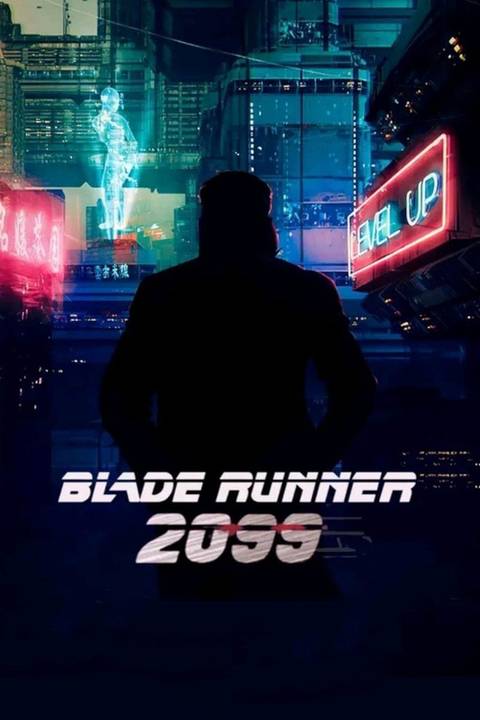
Now, Prime Video is returning to that world with Blade Runner 2099. A new series set in this universe is exciting on its own, but it also marks a turning point. For the first time, the themes Philip K. Dick imagined feel dangerously close to reality, making this adaptation potentially more relevant than the source material itself.
Blade Runner 2099 Comes Out During Unprecedented Times For Technology
The Prime Video Series Arrives As Sci-Fi Concepts Become Everyday Reality
Blade Runner 2099 wrapped filming in 2024 and is currently expected to premiere in 2026, though Prime Video hasn’t confirmed a precise release date. In the grand scheme of things, however, the exact month matters less than the cultural moment 2099 is entering within.
The 2020s have seen technological advancement accelerate at a staggering rate. Artificial intelligence has moved from research labs into creative industries, education, and daily communication. Organic 3D printing, neural interfaces, and synthetic biology are no longer fringe concepts. They are active areas of development.
In Philip K. Dick’s novel, androids were speculative creations that raised philosophical dilemmas. In Blade Runner, replicants were chilling hypotheticals. Even in Blade Runner 2049, bioengineered beings still felt just distant enough to remain cinematic abstractions. However, the distance between the proposed futures of Dick’s novel and the Blade Runner movies and the present of the audiences/readers engaging with them is shrinking.
AI systems now generate art, mimic voices, and simulate conversation with unsettling realism. Laboratories are experimenting with growing organic tissues and integrating synthetic components into living systems. The building blocks of replicant-style life are not fully formed, but they no longer feel impossible.
This is what makes Blade Runner 2099 culturally potent. It won’t simply showcase futuristic gadgets; it will project forward from technologies we already possess. Rather than imagining an unknown tomorrow, it will extrapolate from today’s headlines.
Unlike its predecessors, which felt like cautionary visions of what might be, Blade Runner 2099 risks feeling like a roadmap of what is already underway. That shift in proximity changes everything.
Sci-Fi Cautionary Tales Have Never Been More Relevant
Stories About The Future Now Feel Like Warnings For The Present
Cyberpunk, the sci-fi subgenre that the original Blade Runner helped shape, has always thrived on anxiety about unchecked technological growth. Neon skylines and corporate dominance are visual shorthand for deeper fears about autonomy and identity. Blade Runner 2099 arrives at a moment when those fears feel less theoretical.
Modern audiences are already grappling with AI ethics, data privacy, automation, and digital identity in the real worl. The cyberpunk genre’s traditional questions – What makes us human? Who controls technology? Can progress outpace morality? – are now part of real-world policy debates and dinner-table conversations.
Contemporary speculative sci-fi hits like Black Mirror have built entire seasons around near-future scenarios that feel alarmingly plausible. Episodes such as “Nosedive” or “Joan Is Awful” don’t depict distant centuries; they tweak the present. Meanwhile, classic anthology sci-fi shows like The Twilight Zone proved decades ago that speculative fiction works best when it mirrors contemporary fears.
The difference between existing shows from previous decades and 2020s speculative futurism like Blade Runner 2099 is immediacy. Viewers are no longer watching cautionary tales about their grandchildren’s world. They are watching stories about systems that could shape their own careers, relationships, and freedoms within years.
Blade Runner 2099 is poised to continue that tradition, but with the added weight of an iconic universe behind it. When replicants question their humanity, it won’t just echo Philip K. Dick’s philosophy or the questions he raised in Do Androids Dream Of Electric Sheep. It will resonate with audiences navigating a world where machines increasingly mirror human behavior.
How Blade Runner 2099 Will Be Different From The Movies
A New Era, A New Protagonist, And A Post-Revolution World

The most obvious difference between Blade Runner 2099 and its cinematic predecessors is format. As a miniseries, it will have significantly more runtime than Blade Runner or Blade Runner 2049. That extended canvas allows for slower pacing and deeper world-building.
However, there are bigger and more important differences than runtime and pacing. Set 50 years after Blade Runner 2049, 2099 will likely explore a society living in the aftermath of the replicant uprising teased in the films. Instead of building toward revolution, it can examine the consequences.
It also introduces a markedly different lead. Harrison Ford’s Rick Deckard in Blade Runner and Ryan Gosling’s K in Blade Runner 2049 were Blade Runners navigating moral gray zones. In contrast, Blade Runner 2099 centers on Olwen (Michelle Yeoh), a female replicant nearing the end of her life.
That perspective shift is significant. While she is also a Blade Runner, Olwen’s mortality reframes the franchise’s recurring question of personhood. Rather than asking whether replicants deserve life, the series can explore what it means to approach death as an artificial being.
Combined with the long-form structure, this focus could allow Blade Runner 2099 to probe identity, memory, and legacy with greater depth than the Blade Runner films ever could. In doing so, it may not just extend the franchise, but redefine it for a new technological era.
- Network
-
Prime Video
- Directors
-
Jonathan van Tulleken
- Writers
-
Silka Luisa
- Franchise(s)
-
Blade Runner